
Arm Exercises After Stroke: How to Improve Function Through Daily Activities
Every year, nearly 800,000 people in the United States experience a stroke, and many require targeted arm exercises after stroke to regain independence in daily life [1]. Upper limb weakness or limited mobility is common, making everyday activities such as brushing hair, eating, dressing, or cooking more difficult.
Hemiplegia (weakness on one side of the body) often leads to compensation, where the stronger arm takes over most tasks. While this helps short-term function, it can reduce use of the affected arm and limit long-term recovery.
The encouraging reality is that the brain can adapt and rewire through neuroplasticity when the affected arm is used consistently. This guide explains how to integrate arm exercises after stroke into daily routines, combining task-based practice, passive movement, and occupational therapy principles to support recovery.
Why Stroke Survivors Stop Using Their Affected Arm (Learned Non-Use)
Understanding Learned Non-Use
After repeated difficulty using the affected arm, many stroke survivors gradually reduce attempts to move it. This process, known as learned non-use, occurs when early movement efforts feel slow, weak, or unsuccessful.
Over time, the brain adapts by favoring the stronger arm because it produces more reliable results. This reinforces compensatory movement patterns and further reduces use of the affected side.
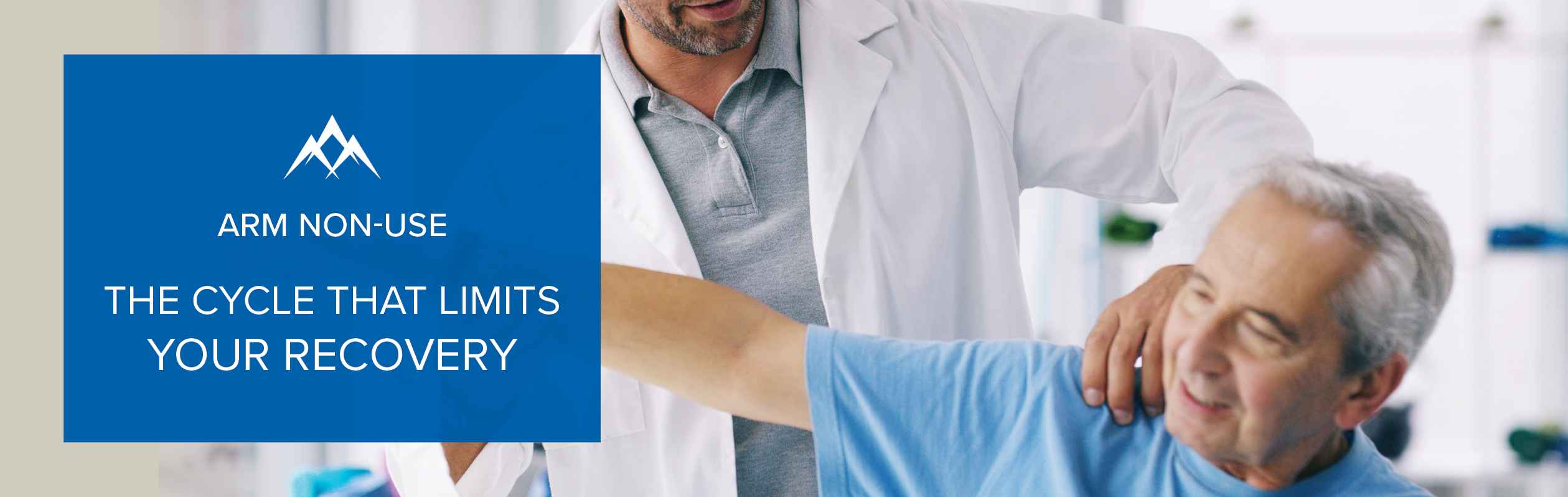
The Cycle That Limits Recovery
Several factors contribute to this cycle:
- Initial weakness or paralysis limits early movement success
- Reduced practice leads to further loss of function
- The stronger arm becomes the default for daily tasks
- Ongoing disuse slows neural recovery in the affected arm
Upper extremity impairment can persist long after the initial stroke, which is why early and consistent rehabilitation is critical. Many individuals continue to experience difficulty with arm and hand function months later, and full fine motor recovery is not always achieved.
Without regular use, the brain’s representation of the affected arm becomes less active, making coordination even more difficult over time.
The Psychology of One-Handed Compensation
Behavioral and environmental factors strongly influence arm use after stroke. Many survivors use the affected arm less in public due to embarrassment, fear of dropping objects, or concern about performance.
Cognitive factors also play a role. Attention, memory, fatigue, depression, and anxiety can reduce motivation for repeated practice. At the same time, focusing too heavily on “perfect movement” can sometimes increase avoidance rather than encourage use.
Acceptance and gradual exposure to movement challenges are key factors in improving real-world arm use.
Physical Barriers to Arm Involvement
Several physical impairments can limit participation of the affected arm:
- Muscle stiffness and fatigue, especially during longer tasks
- Abnormal movement patterns (synergies), where attempting shoulder movement triggers unwanted elbow or finger flexion
- Reduced coordination and reach ability
- Fear of dropping objects, spilling, or injury during tasks like cooking or carrying items
These barriers are real, but they can improve with repetitive, task-specific practice.
How Neuroplasticity and Repetition Support Arm Recovery After Stroke
How Your Brain Rewires After Stroke
Neuroplasticity refers to the brain’s ability to reorganize its structure and function in response to injury and experience. After stroke, recovery is driven by activity-dependent reorganization—meaning the brain strengthens and builds networks based on how often and how meaningfully the affected limb is used.
Several key mechanisms support this process:
- Synaptic strengthening: Frequently activated neural pathways become more efficient, improving signal transmission for movement and coordination
- Unmasking and rerouting of pathways: Previously underused neural connections can be recruited to support motor function
- Axonal sprouting: Nearby neurons extend new projections to reconnect with motor networks impacted by injury
- Cortical reorganization: Functional areas of the brain can shift, with undamaged regions partially taking over lost motor control functions
Neuroimaging studies consistently show that recovery is associated with changes in both perilesional (near-injury) and contralateral (opposite hemisphere) brain regions. Importantly, these changes are not spontaneous alone—they are strongly influenced by active, repetitive use of the affected arm during rehabilitation and daily life.
In other words, the brain does not simply “heal on its own”—it adapts based on use.
The Power of Daily Repetition for Hemiparesis
Repetitive, task-specific movement practice is one of the most important drivers of upper extremity recovery after stroke. The nervous system requires a high volume of meaningful motor input to drive lasting neuroplastic change.
Clinically, this means that improvement is not typically driven by isolated exercise sessions or low-repetition movement, but by frequent, goal-directed practice integrated into functional tasks.
Current rehabilitation evidence suggests that:
- Higher repetition volumes are associated with greater improvements in arm motor control and functional use
- Task-specific practice (using the arm in real activities) produces stronger carryover than isolated movement drills
- Consistency over time is critical—neuroplastic changes accumulate gradually rather than occurring from single sessions
From a motor learning perspective, repetition reinforces motor engrams (movement patterns) and improves both cortical efficiency and movement automaticity. A practical takeaway is that recovery is less about how “hard” a session feels and more about how often the affected arm is meaningfully used throughout the day.
The underlying principle remains consistent in both research and clinical practice: more frequent, purposeful repetitions create more opportunities for neuroplastic adaptation and functional recovery.
Task-Specific Training: Real Daily Activities That Improve Arm Function After Stroke
What Makes Functional Training More Effective
Task-specific training focuses on improving your affected arm's function through repeated activity practice. This approach incorporates everyday objects and involves four distinct steps: reaching for the object, grasping it, moving or manipulating it, and releasing it. Research demonstrates that completing 60 minutes of task-specific training four times per week can produce most important arm function improvements [2].
Studies suggest that repeated, meaningful practice with manageable rest breaks may help improve arm function and endurance. You should want to achieve 100 to 300 repetitions within each hour during practice sessions.
To name just one example, everyday activities make excellent training goals:
- Using utensils or cups
- Brushing hair
- Turning door handles or faucets
- Table towel slides for reaching
- Picking up coins or small objects
- Folding laundry with both hands
- Supported countertop weight-bearing
- Cup grasp and release practice
A feasibility trial found that 56 hours of task-specific training over 6 weeks led to meaningful improvements on the Action Research Arm Test, with participants completing high-repetition practice during supervised sessions and daily home practice [2].
When to Use Passive Range of Motion Exercises
If you have minimal or no active movement, task-specific training may need to begin with assisted movement or passive range of motion exercises. Passive range of motion exercises remain beneficial, but. Early passive range of motion exercise during the acute phase after stroke improves motor function. Studies show that starting passive exercises within the first 48 hours following stroke can result in improved mobility outcomes.
Passive range of motion may help reduce stiffness, support joint mobility, and improve awareness of the affected arm. Studies suggest that a significant proportion of hospitalized stroke survivors develop joint contracture within the first 3–6 months, particularly when the affected limb receives limited movement or stretching. Practical Ways to Integrate Arm Exercises into Your Daily Routine
Morning Activities: Grooming and Dressing
Self-care tasks are ideal for incorporating affected-arm use in a functional way. Adaptive grooming tools (e.g., built-up toothbrush handles or suction-cup mirrors) can support engagement of the weaker arm during setup and stabilization. An electric toothbrush reduces fine motor demand but still allows bilateral use for positioning.
During dressing, sit in a stable chair and dress the affected arm first (e.g., threading the affected arm into a shirt sleeve before the stronger side). Adaptive fasteners such as Velcro or magnetic closures can reduce frustration while still requiring bilateral hand placement. Using a zipper pull or key ring can help improve grasp and pulling during jacket dressing.
Mealtime: Kitchen Tasks and Eating
Meal preparation provides repeated opportunities for upper extremity use. Adaptive tools such as a cutting board with food spikes or non-slip matting can allow one-handed chopping while the affected hand stabilizes the board when possible.
Built-up utensils (e.g., foam-handled fork or spoon) can improve grasp and control during self-feeding. Plate guards or high-sided bowls help with scooping without spillage. One-handed rocker knives can reduce the need for coordinated bilateral cutting. Non-slip materials like Dycem can stabilize bowls or cutting boards during food prep tasks.
Household Chores as Exercise Opportunities
Daily chores can function as repetitive, task-specific upper extremity training. Examples include using the affected hand to stabilize laundry while folding, or assisting with wiping a table by anchoring a cloth or surface.
Additional practice opportunities include opening drawers with the affected hand, turning faucets on/off, and reaching to place light objects on shelves. Even if the stronger arm completes most of the task, the weaker arm should be used for support or stabilization whenever possible (e.g., holding a laundry basket while the other arm sorts clothes).
Recreation and Hobbies for Arm Engagement
Leisure activities can improve adherence to arm use through meaningful engagement. Gardening tasks such as holding a pot steady or guiding a watering can encourage bilateral coordination. Cooking activities require sequencing and can involve stabilizing ingredients or containers with the affected hand.
Creative hobbies such as woodworking or crafting support fine motor engagement and problem-solving. Photography during walks can promote bilateral hand use for stabilizing the camera or phone while capturing images, encouraging sustained use without repetitive strain.
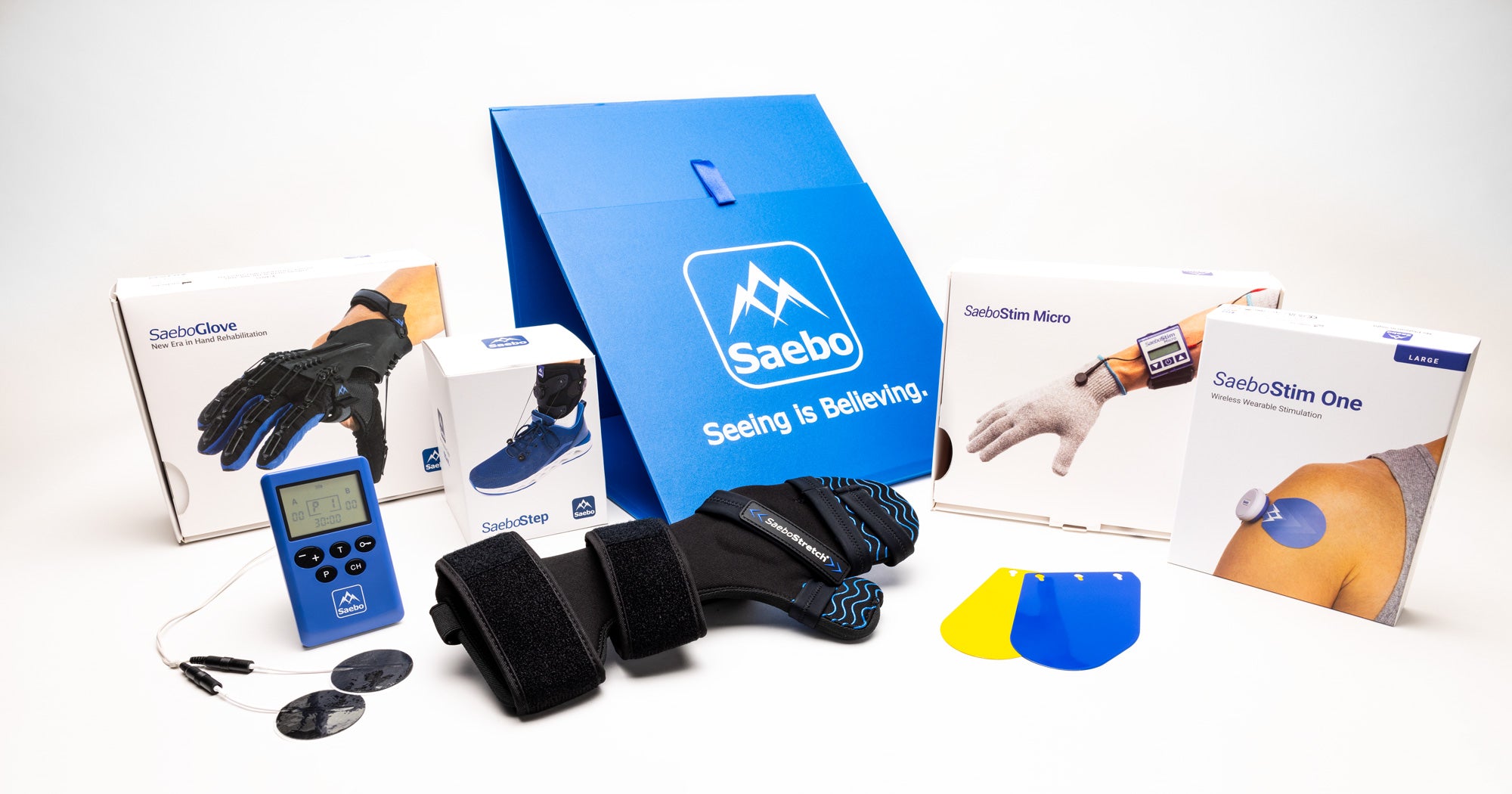
How Adaptive Tools and Saebo Products Support Practice
Adaptive equipment can increase participation by reducing compensation and promoting use of the affected limb during functional tasks.
The SaeboMAS provides mobile arm support that reduces the effects of gravity, allowing users to practice reaching tasks such as placing objects on a counter or bringing a cup to the mouth with less shoulder fatigue.
The SaeboReach may assist with guiding arm positioning during reaching and grasping tasks, such as picking up lightweight objects from a table or shelf.
The SaeboFlex supports grasp-and-release practice by assisting finger extension, allowing repeated task-based activities such as picking up small objects (e.g., blocks or cups) and releasing them into a container.
These devices are designed to increase repetition and functional participation during both structured therapy and home exercise programs.
Conclusion
Recovery after stroke depends less on perfection and more on consistent, repeated use of the affected arm in meaningful daily activities. Each time you actively involve the arm in real tasks, you reinforce neural pathways and support long-term motor recovery.
Progress is built through frequency and repetition rather than flawless movement. Even small attempts—reaching, stabilizing, or assisting with everyday tasks—send important signals to the brain that help drive adaptation over time.
Start small and stay consistent, focusing on using the affected arm throughout daily routines whenever possible. Adaptive tools can reduce difficulty and support participation, but it is real-world, task-based practice that ultimately drives functional change.
Arm recovery takes time, and improvement is often gradual. However, steady progress accumulates through repetition, patience, and ongoing daily use of the affected limb.
References
Todo el contenido de este blog es únicamente informativo y no sustituye el consejo, diagnóstico ni tratamiento médico profesional. Consulte siempre con su médico u otro profesional de la salud cualificado si tiene alguna pregunta sobre una afección médica. Si cree que puede tener una emergencia médica, llame a su médico o al 911 de inmediato. Confiar en la información proporcionada por el sitio web de Saebo es bajo su propio riesgo.
