
How to Do Stroke Exercises for Hand Recovery: A Stage-by-Stage Guide
Every year, more than 795,000 people in the United States experience a stroke, and impaired hand function is one of the most common challenges survivors face. Whether your hand is weak, stiff, or paralyzed, the right stroke hand exercises can improve movement by harnessing neuroplasticity—the brain's ability to reorganize and form new neural connections.
The best hand exercises depend on your stage of recovery. Exercises during the first week after stroke differ from those used months later for hemiparesis or hemiplegia. This guide walks you through evidence-based occupational therapy hand exercises for every stage of recovery, including when to progress, how often to practice, and how high-repetition training can maximize hand function.
Why Does Your Hand Stop Working After a Stroke?
Hand weakness after stroke occurs because damage to the brain interrupts communication with the muscles that control movement. Depending on the location and severity of the stroke, survivors may experience weakness (hemiparesis), complete paralysis (hemiplegia), muscle stiffness (spasticity), poor coordination, or difficulty opening the hand. Fortunately, the brain can reorganize through neuroplasticity, allowing healthy areas to assume some lost functions with consistent, repetitive practice.
Phase 1: First Week After Stroke (Acute Phase Hand Exercises)
Passive range of motion (PROM) exercises are commonly introduced early after stroke to help maintain joint mobility, reduce stiffness, support circulation, and minimize complications such as edema and contractures. During this phase, a caregiver or your unaffected hand gently moves the affected arm and hand through a comfortable range of motion when active movement is limited.
Passive Shoulder Flexion and Elbow Range of Motion
Passive movements of the shoulder, elbow, wrist, and fingers help preserve flexibility and prepare the arm for more active movement as recovery progresses. Stay within a comfortable, pain-free range and avoid forcing the joint beyond its natural resistance.
Passive exercise may be even more effective when combined with mental practice. Imagining yourself performing each movement activates many of the same brain networks involved in movement, supporting neuroplasticity—the brain's ability to form new neural connections after stroke.
Lie on your back and use your unaffected hand to gently lift your affected arm toward the ceiling before lowering it back down. You can also bend and straighten your elbows while keeping movements slow and controlled.
Table Slides with Assisted Reaching
Place a towel beneath your affected hand on a table and use your unaffected hand to help slide it forward. The towel reduces friction, allowing you to gently stretch the shoulder while practicing reaching. As you progress, gradually increase the distance within a comfortable range.
Finger Opening and Closing with Assistance
Use your unaffected hand to gently straighten and bend the fingers of your affected hand, then perform gentle wrist stretches as tolerated. These passive movements help maintain flexibility and prepare the hand for active movement as recovery progresses. Always perform the exercises within a comfortable, pain-free range.
Phase 2: First Month After Stroke (Subacute Hand Exercises for Stroke Patients)
The subacute phase typically begins within the first few days after a stroke and continues through the first month. As voluntary movement begins to return, rehabilitation progresses from passive movements to active and active-assisted exercises. This early recovery period is an important time for promoting neuroplasticity through repetitive, task-specific practice that helps improve arm and hand function.
Reach-and-Grasp Exercises Using Cups or Cones
Practice reaching for and moving lightweight objects such as cups, water bottles, towels, or food containers. Start with larger objects, which are often easier to grasp, and gradually progress to smaller or heavier items as your control improves. Everyday objects are ideal because they closely resemble daily activities, helping movement gains transfer into real-world tasks like eating, dressing, and meal preparation.
Supported Wrist and Finger Extension Exercises
If active movement is limited, use your unaffected hand to gently assist with wrist extension before progressing to active exercises as able. You can also practice opening your fingers on a tabletop or against light resistance, such as a rubber band, to improve finger extension, flexibility, and hand control.
Object Transfer Practice for Hand Coordination
Task-specific training focuses on reaching, grasping, manipulating, and releasing real-life objects. Practice transferring items of different sizes, textures, and weights, or complete everyday tasks such as moving beans between containers, sorting objects, or fastening buttons. These meaningful activities help improve coordination while promoting skills that carry over into daily living.
When to Progress to the Next Phase
You can advance to more intensive exercises when you show consistent active movement in your affected hand, can grasp and release objects with moderate control, and tolerate 30-60 minutes of continuous practice without excessive fatigue. Research suggests the 2–3-month window after stroke represents the optimal period for intensive motor rehabilitation [1].
How Many Repetitions Should You Perform?
Research consistently shows that recovery improves with high-repetition practice [2]. While every survivor is different, many rehabilitation programs aim for several hundred meaningful hand movements during a therapy session. Rather than focusing on exercise variety alone, prioritize quality repetitions that challenge your affected hand to reach, grasp, release, and manipulate objects.
Phase 3: 3-6 Months After Stroke (Intensive Hand Exercises Occupational Therapy)
This stage often focuses on increasing repetition and task-specific practice to maximize neuroplasticity. As movement improves, therapy typically shifts toward more challenging functional activities that strengthen coordination, dexterity, and independence. Research supports intensive rehabilitation during this period, with approaches such as constraint-induced movement therapy (CIMT) improving arm and hand function in appropriate candidates.
Constraint-Induced Movement Therapy Tasks
CIMT encourages greater use of the affected arm by limiting reliance on the unaffected arm during structured practice. While the original protocol is highly intensive, many occupational therapists use modified CIMT programs that better fit everyday life while still improving hand function. Common activities include reaching for household objects, picking up coins or buttons, folding towels, opening jars, and turning pages. CIMT is generally most appropriate for individuals who have regained some active wrist and finger extension.
Fine Motor Exercises with Coins and Pegs
Fine motor activities help improve finger coordination, dexterity, and thumb control. Practice tasks such as picking up coins, placing pegs into a pegboard, using clothespins, turning screws, or threading rings onto a dowel. These movements closely resemble everyday activities like buttoning clothing, handling medication, preparing meals, and managing small household items.
Functional Reach-Grasp-Release Activities
Occupational therapy often emphasizes practicing meaningful daily tasks that involve reaching, grasping, manipulating, and releasing objects. Varying the size, weight, and texture of objects helps challenge different grip patterns while improving coordination and preparing the hand for activities such as eating, dressing, cooking, and household tasks.
Task-Specific Practice for Hemiparesis
Task-specific training benefits stroke patients more than general exercise. Practice components of impaired movements to achieve task-related actions. Individuals with hemiparesis benefit most from task-specific practice that targets the arm and hand used during everyday activities. Reaching, grasping, releasing, carrying objects, manipulating household items, and practicing self-care tasks help reinforce meaningful movement patterns that transfer into daily life.
Who May Benefit from Assistive Devices
Some stroke survivors benefit from adaptive equipment or rehabilitation devices when hand weakness limits function. Simple tools such as universal cuffs or button hooks can make daily activities more manageable, while rehabilitation devices that support grasp-and-release practice may help increase successful repetitions during therapy. As always, device selection should be guided by your occupational or physical therapist based on your level of impairment.
Phase 4: Chronic Stroke Recovery (Beyond 6 Months)
Recovery often occurs more rapidly during the first few months after a stroke, but that doesn't mean progress stops after six months. Many stroke survivors continue improving hand function during the chronic stage through consistent, task-specific practice that promotes neuroplasticity.
Bilateral Arm Training During Functional Tasks
Bilateral arm training involves using both arms together during everyday activities such as folding towels, carrying objects, preparing meals, or dressing. Research suggests this approach can improve motor function and coordination, particularly for individuals with mild to moderate upper extremity impairment [3].
Electrical Stimulation Combined with Active Hand Opening
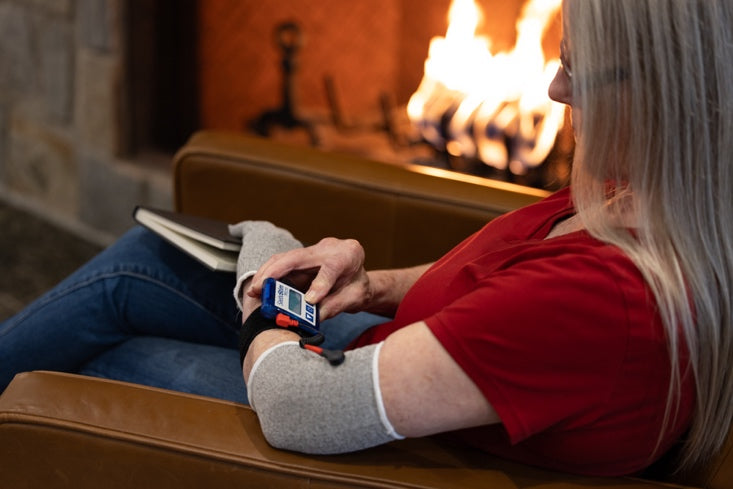
Functional electrical stimulation (FES) uses gentle electrical impulses to activate weakened muscles during movement. When combined with active hand-opening exercises, FES may improve hand function, increase voluntary movement, and support repetitive practice. Devices such as the SaeboStim Pro allow users to pair stimulation with active movement using a trigger button, helping coordinate stimulation with the intent to open the hand and encouraging high-repetition practice during rehabilitation. Your therapist can determine whether electrical stimulation is appropriate based on your level of recovery.
Task-Oriented Practice for Daily Independence
Task-oriented training focuses on practicing meaningful daily activities rather than isolated exercises. Activities such as preparing meals, grooming, dressing, carrying household items, or organizing objects help improve hand coordination while reinforcing skills needed for greater independence.
Exercises for Hemiplegia in Late Recovery
Even in the chronic stage, individuals with hemiplegia or significant hand weakness can benefit from repetitive, functional practice. While recovery may occur more gradually, continued therapy and consistent home exercise programs can improve hand function, coordination, and independence over time.
How to Practice Effectively Across All Recovery Stages
The High-Repetition Principle for Neuroplasticity
Repetition stimulates your brain and encourages neuroplasticity. If you repeat a movement like these stroke exercises to recover hand function, it encourages your brain to build and strengthen neural connections that help make the movement easier in the future. A common phrase in neuroscience is "neurons that fire together wire together," meaning repeated practice strengthens the neural pathways responsible for movement. Every successful repetition reinforces these pathways, making future movements easier and more coordinated over time.
Studies suggest 400-600 repetitions to open and close hands. Research on intensive motor training shows that recovery improves if you perform hundreds of functional repetitions per day, often in the range of 400 to 600 movements [4]. Survivors with mild-to-moderate impairment may benefit from 300-400 task-specific repetitions per session. Some studies suggest recovery can improve with up to 600 repetitions per day.
Why You Should Use Saebo Products In Recover
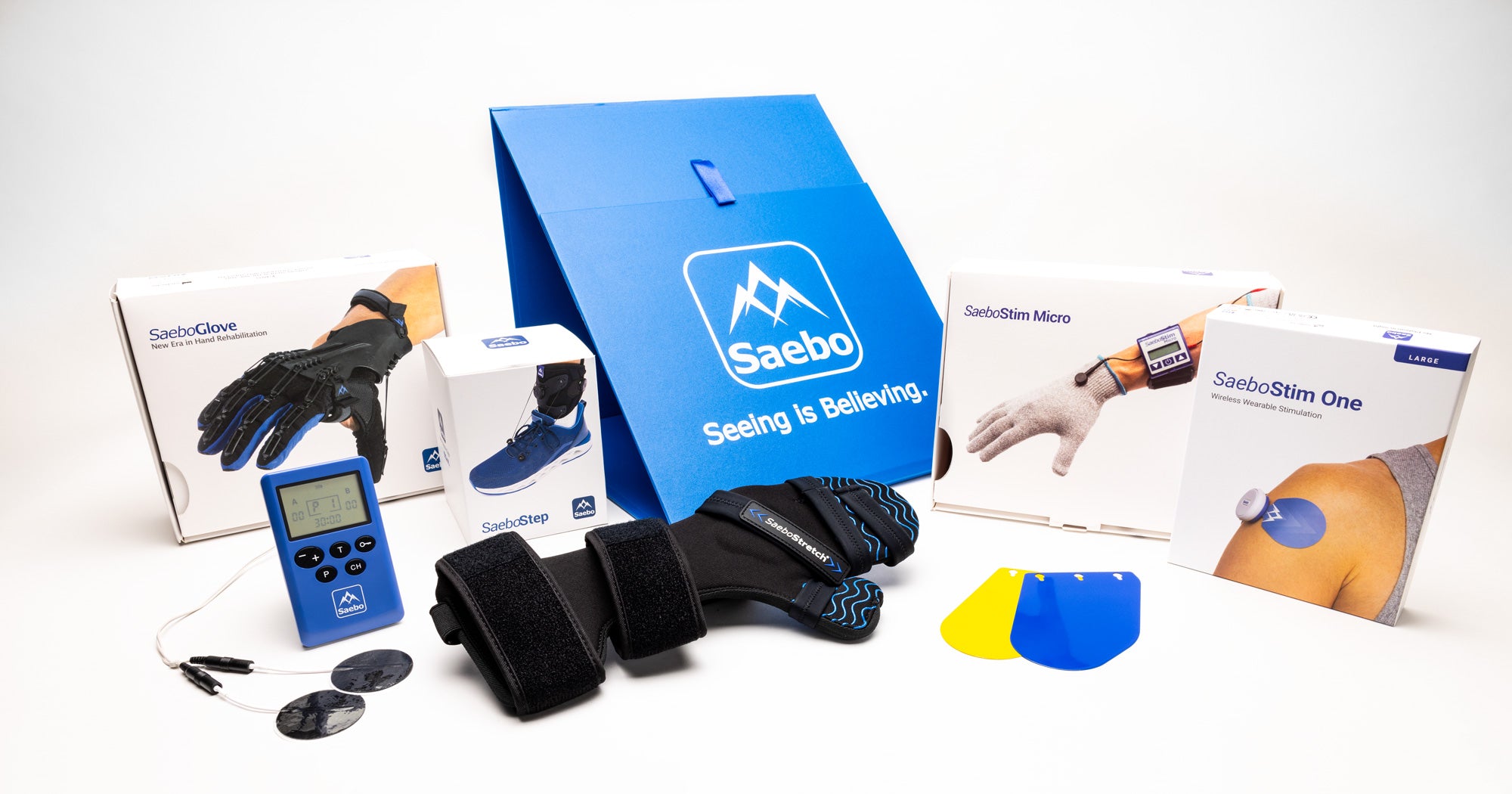
One of the biggest barriers to recovery is performing enough high-quality repetitions. Saebo rehabilitation products are designed to help stroke survivors complete more successful movements during therapy by supporting functional hand opening, grasping, reaching, and repetitive task practice. Because repetition is one of the strongest drivers of neuroplasticity, these devices can help maximize the effectiveness of home exercise programs and occupational therapy.
Saebo products combine state-of-the-art with evidence-based stroke rehab techniques. The SaeboFlex is designed for hands with moderate to severe spasticity. The SaeboGlove works if spasticity is mild. Nearly all Saebo products are designed to help you perform more repetitions. The SaeboGlove supports neuroplasticity, as the support it provides increases your capacity to complete numerous repetitions of any given task.
You can make progress during recovery with help from Saebo products.
Conclusion
You now have a stage-by-stage roadmap for hand recovery after stroke, from passive movements in week one to intensive task practice months later. The strongest evidence points to high-repetition training, with 400-600 meaningful repetitions producing the greatest neuroplasticity gains.
Recovery looks different for every stroke survivor, but evidence consistently shows that the combination of high-repetition practice, task-specific training, and consistent participation in occupational therapy can improve hand function throughout every stage of recovery. Whether you're just beginning rehabilitation or continuing therapy years after your stroke, meaningful progress remains possible. If additional support is needed, evidence-based rehabilitation tools like the SaeboGlove, SaeboFlex, and SaeboStim One can help increase successful repetitions and encourage continued recovery alongside guidance from your rehabilitation team.
Keep practicing and stay patient with your progress. Note that neuroplasticity continues working long after the six-month mark. Your dedication to these exercises will definitely translate into improved hand function and greater independence.
References
Todo el contenido de este blog es únicamente informativo y no sustituye el consejo, diagnóstico ni tratamiento médico profesional. Consulte siempre con su médico u otro profesional de la salud cualificado si tiene alguna pregunta sobre una afección médica. Si cree que puede tener una emergencia médica, llame a su médico o al 911 de inmediato. Confiar en la información proporcionada por el sitio web de Saebo es bajo su propio riesgo.
