
Stroke Recovery After 6 Months: Why Progress Can Continue Years After a Stroke

Stroke affects more than 12 million people worldwide each year, yet one of the most persistent myths in stroke rehabilitation is that meaningful stroke recovery stops after six months [1]. While the first three months remain the most important period for spontaneous recovery, research now shows that many stroke survivors continue improving months or even years later through neuroplasticity and consistent rehabilitation [2]. The first three months are critical for recovery, but emerging research challenges this outdated notion and supports that significant improvement can continue for years after stroke. Understanding the stages of recovery after stroke and what drives continued progress can help you recognize that a perceived plateau often reflects insufficient challenge rather than your brain reaching its limit. In this article, we'll explore the stroke recovery timeline, why recovery may slow after a stroke, how neuroplasticity supports long-term recovery, practical stroke recovery exercises, and evidence-based strategies to continue improving long after formal therapy ends.
Does Stroke Recovery Stop After Six Months?
The Origins of the Six-Month Myth
The belief that recovery stops at six months stems from older medical models that were focused on spontaneous recovery. Spontaneous recovery refers to natural healing that occurs in the brain during the early aftermath of a stroke, often without active intervention. During the acute stage of stroke recovery, spontaneous recovery and cortical reorganization are most active, particularly within the first 12 weeks following a stroke, known as the critical window. This period is promising for these automatic improvements.
Research shows that most recovery occurs within the first three months after stroke, ranging from 48% to 91% of total improvement. The greatest recovery happens faster during the first four weeks after treatment and then decelerates between three and six months. This pattern led many medical professionals to conclude that recovery ends when spontaneous healing slows down.
The Difference Between a True Plateau and Insufficient Challenge
A perceived stroke recovery plateau does not mean your brain has reached its recovery potential. It typically reflects insufficient repetition, reduced therapy intensity, or exercises that no longer challenge the nervous system enough to drive neuroplasticity. What appears to be stalled progress often reflects your brain adapting to your current routine. When improvements aren't obvious week to week, assuming recovery has stopped becomes easy. But plateaus signal the need to adjust your approach rather than abandon hope.
Current conceptualizations of plateau may limit potential recovery and hinder service development. The brain remains capable of change for years after stroke through neuroplasticity. Progress does slow over time, which feels discouraging, but that is not the end of the recovery road. Improvements, even small ones, can continue when the brain receives appropriate challenge and stimulation.
How Your Brain Continues to Change Throughout Life
Neuroplasticity Doesn't Have an Expiration Date
Your brain retains the ability to reorganize throughout life through neuroplasticity, allowing stroke survivors to continue recovering motor function months or even years after their stroke. We used to think that brain plasticity peaks in youth and declines with age, but mounting evidence shows practice leads to improvement in similar ways for both young and older adults. Neuroplasticity refers to the brain's remarkable capacity to reorganize its structure and function in response to stimuli and includes recovery from injury.
What Recent Research Shows About Long-Term Recovery
Recovery doesn't stop just because you've reached the six-month mark. While progress is usually fastest during the first few months after a stroke, improvements can continue for months or even years afterward.
Researchers have also found that people living with chronic stroke can continue making progress when they consistently challenge themselves with repetitive, meaningful practice [3]. Recovery may happen more slowly than it did early on but slower doesn't mean impossible.
The important thing to remember is that stroke recovery isn't a straight line. Many survivors see rapid improvements early, followed by periods where progress feels slower. Those slower periods don't necessarily mean you've reached your limit—they may simply mean it's time to adjust your rehabilitation program or try a new challenge. The stroke recovery timeline is rarely linear. Most survivors experience rapid improvements during the acute and subacute stages, followed by slower—but still meaningful—progress during the chronic stage. While recovery naturally slows over time, slowing does not mean recovery has stopped.
The Four Key Drivers of Continued Improvement
Progress after the stages of motor recovery after stroke depends on specific factors. Motor recovery requires repetition, with intensive and repetitive task-specific training recommended after stroke. Task-specific practice targeting meaningful activities drives brain recovery after stroke more than generic exercises. Progressive challenge proves critical, as sufficient difficulty signals the brain's adaptation. Meaningful functional activities that connect to ground goals sustain motivation during the subacute stroke timeline and beyond.
Common Reasons Your Progress May Have Slowed
These drivers must be present and sufficient, or the stages of motor recovery after stroke will appear to stall. Three specific factors account for most plateaus you see during the subacute stroke timeline and beyond.
Not Enough Repetition in Daily Practice
Traditional rehabilitation sessions provide around 30 repetitions of a given task. Research suggests performing approximately 300–400 repetitions daily may produce more meaningful improvements than the much lower repetition counts typically achieved during traditional therapy sessions. A gap exists between what formal therapy provides and what neuroplasticity requires. This creates a major obstacle. Survivors leave structured therapy sessions and lack the repetition volume needed to maintain momentum during the aftermath of a stroke.
Your Exercises May No Longer Challenge You
Progressive task-oriented training, with increasing challenge, guides you to the best results. You reach the last few repetitions of an exercise, and it should feel challenging. Your brain receives insufficient stimulus to adapt if it doesn't.
Neuroplasticity slows once exercises become routine. Just like strengthening a muscle, your brain requires progressively more difficult tasks to continue adapting. Increasing exercise difficulty is one of the most effective ways to promote continued neuroplasticity during chronic stroke recovery. Even consistent practice loses its effectiveness during the subacute stroke time frame and chronic stages without adjusting difficulty.
Compensation Patterns Can Replace Recovery
While compensation can improve independence, it should ideally complement—not replace—true motor recovery whenever possible. Recovery restores original movement patterns. Compensation substitutes new behaviors for lost ones. Common examples include leaning the torso forward instead of extending the affected arm and relying on the non-paretic hand for daily tasks.
These patterns feel efficient but can be mistaken for recovery. Research shows that 93.3% and 100% of participants recognized they were compensating after receiving feedback. Compensation strategies, though self-taught and well-practiced, may shape brain reorganization in suboptimal or even maladaptive ways. Forced use of the unimpaired limb reduces neuronal activation in the affected hemisphere and relates to poorer functional outcomes.
How to Continue Stroke Recovery at Home
You just need intentional adjustments to your home practice routine to restart progress during the stages of motor recovery after stroke. These strategies address the specific factors that slow improvement.
Increase Your Repetitions Safely
Formal therapy provides about 30 repetitions per session. Aim for a minimum of 300 to 400 daily repetitions to drive meaningful change. Whether practicing arm, hand, leg, or walking exercises, gradually increasing daily repetitions helps reinforce the neural pathways responsible for movement. Exercises should continue until muscles become fatigued, around 10-20 repetitions depending on the movement.
Make Your Exercises Progressively Harder
Examples include adding light resistance, increasing walking distance, practicing reaching tasks with smaller objects, reducing assistance, or performing functional activities like sit-to-stand transfers with less support. Partial squats, longer hold times, or additional distance walked in set timeframes create progressive challenge. The final set should make each repetition feel demanding.
Using Technology to Increase Repetition and Recovery
One of the biggest challenges after a stroke is getting enough quality repetitions to keep the brain engaged. Rehabilitation technology can help bridge that gap by making practice easier, more effective, and more achievable at home.
Different tools can support different stages of recovery:
- If you have little or no movement in your arm or hand, mirror therapy can help stimulate the brain by creating the visual illusion that the affected limb is moving. This can be a valuable way to begin engaging the brain even before active movement returns.
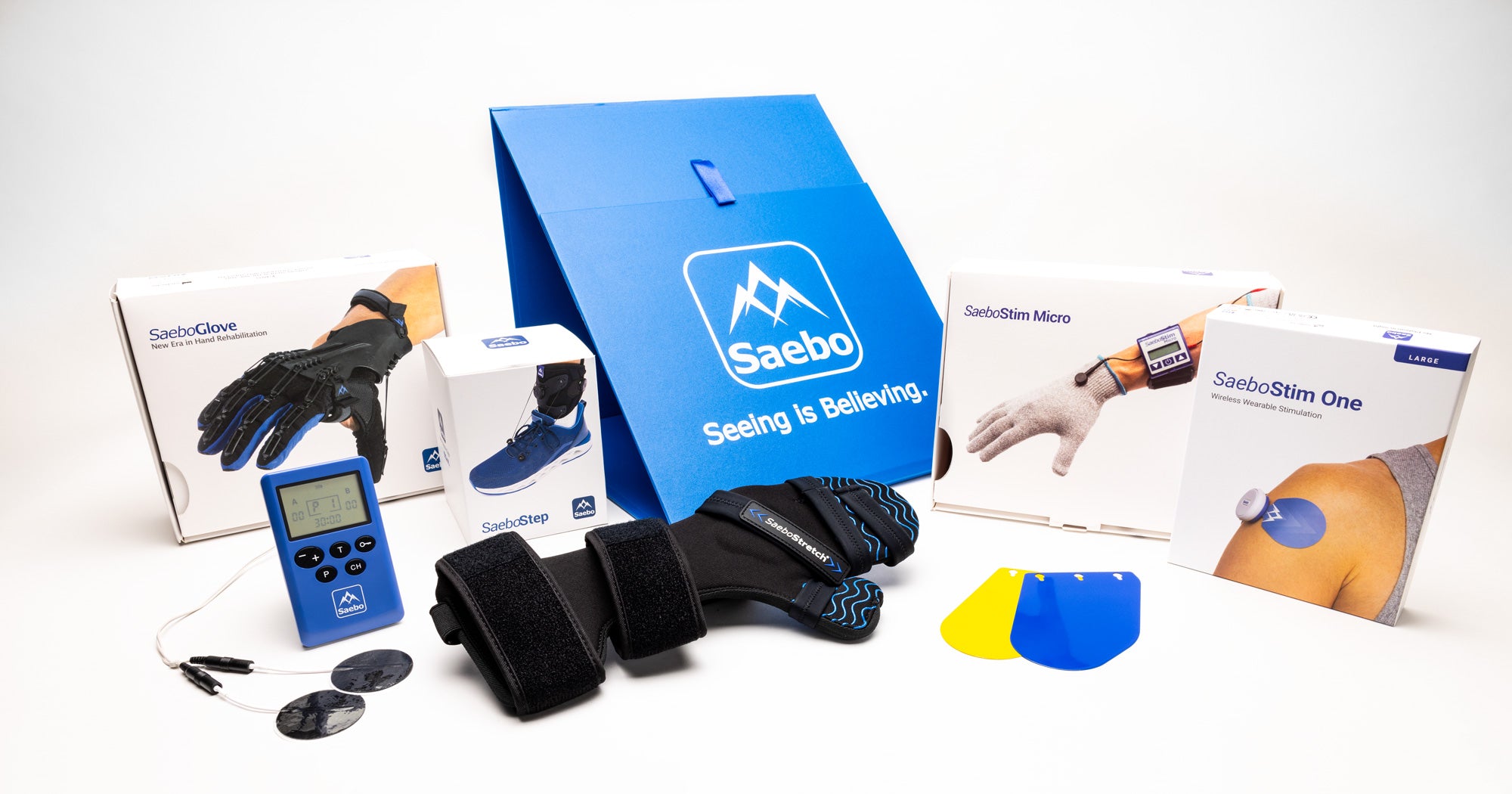
- If you need help opening or using your hand, devices like the SaeboGlove, SaeboReach, or SaeboFlex can assist with grasp-and-release activities. These devices allow many stroke survivors to practice functional tasks that might otherwise be too difficult, helping increase meaningful repetitions throughout the day.
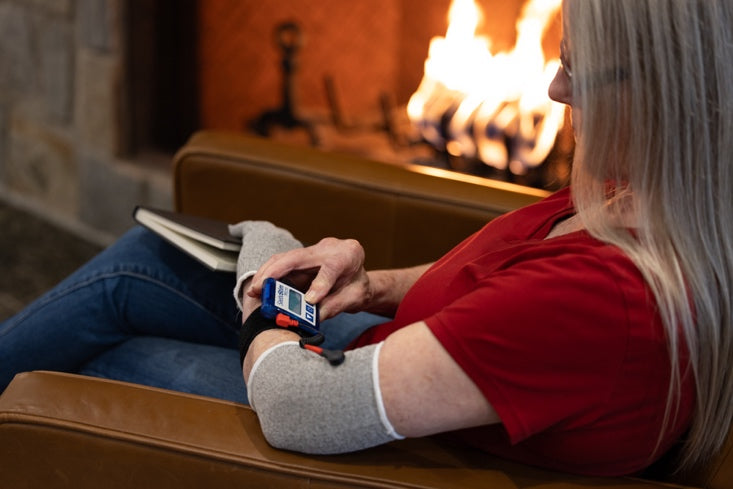
- If muscle activation is limited, electrical stimulation, such as SaeboStim One, can help activate weakened muscles during exercise. When paired with task-specific practice, electrical stimulation can encourage active participation and reinforce normal movement patterns.
- If shoulder weakness makes it difficult to lift your arm against gravity, the SaeboMAS provides adjustable arm support, allowing you to practice reaching and functional activities with less effort. This makes it possible to perform more repetitions while reducing fatigue and compensatory movements.
No single device restores movement on its own, but when combined with consistent, task-specific practice, rehabilitation technologies can help stroke survivors perform more repetitions, challenge themselves appropriately, and continue making progress throughout their recovery journey.
Conclusion
Recovery after a stroke doesn't follow a fixed timeline. While the greatest improvements often occur during the first few months, that doesn't mean progress ends when spontaneous recovery slows. Your brain retains the ability to adapt throughout life through neuroplasticity, especially when it's challenged with meaningful, repetitive, and progressively difficult practice.
If your recovery feels like it has plateaued, don't assume you've reached your limit. Instead, consider whether your rehabilitation program needs more repetitions, greater challenge, or a different approach. Small improvements can add up over time, and meaningful recovery is still possible months—or even years—after a stroke.
Whether you're working with a therapist or practicing at home, every repetition is an opportunity to strengthen the neural pathways that support movement. At Saebo, we believe stroke recovery is a lifelong journey, and our mission is to provide evidence-based education and rehabilitation solutions that help survivors continue making progress at every stage of recovery.
Key Takeaways
- Recovery doesn't stop after six months. While progress naturally slows over time, many stroke survivors continue improving months or even years after their stroke.
- Neuroplasticity lasts a lifetime. Your brain can continue forming and strengthening new neural connections when it is consistently challenged.
- Plateaus don't always mean recovery has ended. They often signal that your rehabilitation program needs more repetition, greater intensity, or new challenges.
- High-quality repetition matters. Task-specific practice performed consistently is one of the most effective ways to promote long-term recovery.
- Recovery isn't one-size-fits-all. Every stroke survivor follows a unique recovery timeline, making individualized rehabilitation essential.
- Technology can help increase meaningful practice. Rehabilitation tools, mirror therapy, electrical stimulation, and assistive devices may help increase repetitions and improve participation when combined with a comprehensive therapy program.
- It's never too late to improve. Whether you're weeks, months, or years after a stroke, consistent practice and the right rehabilitation strategy can still support meaningful gains.
References
Todo el contenido de este blog es únicamente informativo y no sustituye el consejo, diagnóstico ni tratamiento médico profesional. Consulte siempre con su médico u otro profesional de la salud cualificado si tiene alguna pregunta sobre una afección médica. Si cree que puede tener una emergencia médica, llame a su médico o al 911 de inmediato. Confiar en la información proporcionada por el sitio web de Saebo es bajo su propio riesgo.
