
The SaeboStim One: A Complete Guide to Wearable Electrical Stimulation
Rehabilitation doesn’t stop when a therapy session ends. Whether it’s weakness after a neurological injury or reduced mobility following an orthopedic condition, meaningful recovery requires muscles to be activated consistently, movements to be practiced repeatedly, and therapy to carry over into everyday life. Electrical stimulation therapy is a widely used rehabilitation strategy for conditions such as stroke, neurological injury, and muscle weakness, yet many traditional devices are bulky, complicated, or difficult to use outside the clinic, making long-term adherence a challenge. The SaeboStim One addresses these barriers with a wearable, wireless design, simple three-button operation, and a 60-minute preset program, making it easy to incorporate effective stimulation into daily routines at home or on the go.
Electrical stimulation has been widely studied in neurorehabilitation and is commonly incorporated into physical and occupational therapy programs to support muscle activation and functional recovery after neurological injury.
By combining clinically effective neuromuscular electrical stimulation (NMES) with a fully wearable, wire-free design and simple controls, the SaeboStim One makes it easier to integrate muscle activation therapy into everyday movement and stroke rehabilitation programs. Whether used in the clinic or at home, it allows individuals and clinicians to focus less on setup and more on what truly matters: functional recovery.
This article breaks down everything you need to know about the SaeboStim One, including how neuromuscular electrical stimulation therapy supports stroke recovery, muscle re-education, and functional rehabilitation, who it’s for, and how it can be effectively used in therapy programs.
Neuromuscular electrical stimulation (NMES) is a rehabilitation therapy that uses controlled electrical impulses to activate weakened or paralyzed muscles, helping individuals regain movement after stroke, neurological injury, or prolonged immobilization.
What Is the SaeboStim One and Who Is It For?
The SaeboStim One is a compact, wireless neuromuscular electrical stimulation (NMES) therapy device designed to support stroke rehabilitation, muscle re-education, and functional recovery. It delivers targeted electrical stimulation to weakened or impaired muscles to facilitate muscle activation, support motor relearning, and assist with movement during physical and occupational therapy.
Using single-channel stimulation, the SaeboStim One allows clinicians and users to focus on specific muscle groups with adjustable intensity levels, making it suitable for a wide range of rehabilitation goals across neurological and orthopedic populations.
Purpose in neurorehabilitation
The SaeboStim One is designed to support muscle re-education by activating specific muscles and associated nerves through targeted electrical stimulation. By assisting with repeated muscle activation during functional movement, the device helps promote motor relearning and supports neuroplasticity, the brain’s ability to reorganize and rebuild movement pathways after stroke or neurological injury. This approach can help improve movement patterns, reduce muscle atrophy caused by disuse, and support the recovery of voluntary muscle control.
In addition to its broader role in neurorehabilitation, the SaeboStim One may also be incorporated into treatment programs addressing shoulder subluxation following stroke, which is discussed in more detail later in this article.
Ideal users: stroke, orthopedic, and neurological patients
The SaeboStim One is used to support individuals experiencing muscle weakness, impaired movement, or reduced muscle activation following stroke, neurological injury, or orthopedic conditions. It may benefit patients with neurological or orthopedic conditions that contribute to reduced mobility, muscle weakness, foot drop, or difficulty activating specific muscles during rehabilitation.
Healthcare professionals across multiple disciplines incorporate the SaeboStim One into treatment programs, including neurologists, orthopedic specialists, physical therapists, occupational therapists, and chiropractors. It is commonly used to address:
- Spasticity and muscle weakness
- Muscle atrophy due to disuse
- Neurological conditions requiring motor relearning
- Shoulder subluxation requiring stabilization
How it differs from other stimulation devices
The SaeboStim One differs from many electrical stimulation devices by functioning as a true NMES system designed to address muscle weakness rather than pain relief, which is the primary focus of TENS and standard EMS devices.
Its wireless, wearable design removes restrictive lead wires, allowing users to move freely and incorporate electrical stimulation therapy into everyday activities and home rehabilitation routines. With an hourly cycling feature that supports ongoing treatment without frequent adjustments, the SaeboStim One is well suited for home-based rehabilitation.
Key Features of the SaeboStim One Wireless Electric Muscle Stimulator
The SaeboStim One is built to deliver powerful neuromuscular electrical stimulation in a design that is simple, wearable, and easy to use.
Wearable, wireless, and unrestrictive
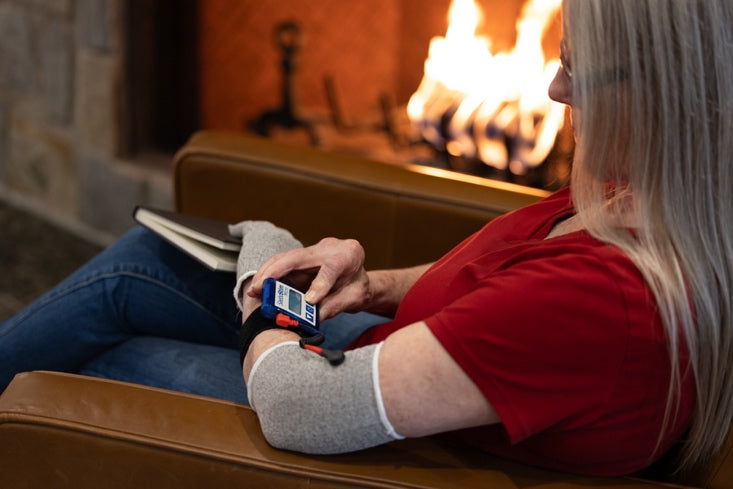
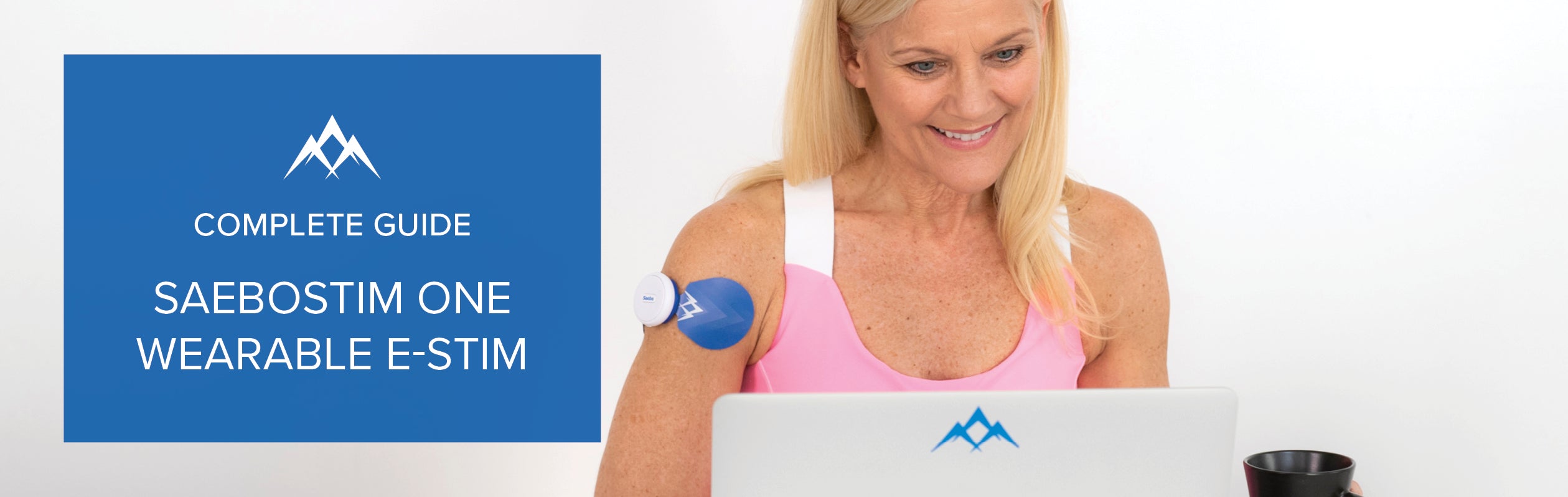
The SaeboStim One features a fully wireless, wearable design with no lead wires to manage or untangle. Its compact, lightweight form allows users to wear the device comfortably during daily activities, making it easy to integrate therapy into real-life movement. This freedom of movement supports consistent use at home, in the clinic, or on the go.
Simple, three-button operation with effective stimulation
Designed for ease of use, the SaeboStim One operates with just three buttons and a single preset program focused on activating weak muscles. There are no complicated settings or programming required. Users simply adjust the intensity to meet their needs, allowing for effective, targeted stimulation without the learning curve common in traditional NMES devices. The Stim One has one mode: cycling itself on and off for 60-minutes. This further enhances its usability and feasibility of implementing daily outside of structured therapy.
Flexible electrode wings with consistent contact
Ultra-thin, rotating electrode wings allow precise positioning over targeted muscle groups. The silver-treated conductive surface helps deliver consistent stimulation, while reusable gel pads maintain secure skin contact throughout each session.
Rechargeable, portable, and clinic-grade quality for any time use
A rechargeable lithium-ion battery provides extended use between charges, supporting continuous or repeated sessions without interruption. Portable and durable, the SaeboStim One delivers professional-level NMES wherever rehabilitation takes place.
Clinical Benefits and Functional Outcomes
The SaeboStim One delivers targeted neuromuscular electrical stimulation to support functional recovery across a range of rehabilitation goals. When incorporated into a consistent therapy program, it offers multiple clinically relevant benefits for both patients and therapists.
Muscle re-education and strength support
The SaeboStim One is designed to activate weak or inactive muscles through controlled electrical stimulation. Repeated muscle activation supports the process of muscle re-education by assisting with voluntary movement, strengthening weakened muscles, and reducing disuse-related muscle loss following stroke or neurological injury. With regular use, patients may maintain muscle activation, improve strength, and support functional recovery in both upper and lower extremities.
Spasticity management and comfort
In addition to muscle activation, the SaeboStim One may be used as part of a spasticity management approach following stroke or neurological injury. Targeted electrical stimulation can help promote improved muscle activation patterns, support more normalized muscle tone, and assist with managing post-stroke spasticity. When combined with stretching and functional movement, NMES may also contribute to improved comfort and reduced reliance on medication-based pain management strategies.
Support for shoulder subluxation recovery
The SaeboStim One is commonly incorporated into rehabilitation programs for individuals experiencing shoulder subluxation following stroke. Electrical stimulation applied to key shoulder stabilizing muscles, particularly the deltoid, may help support improved muscle activation and shoulder joint alignment following stroke. When used consistently and under clinical guidance, NMES can assist with shoulder positioning and comfort during recovery.
Neuroplasticity and motor relearning support
When paired with intentional movement and functional tasks, the SaeboStim One supports the neuroplastic processes essential for motor relearning. Repeated stimulation combined with active participation helps reinforce brain-to-muscle communication and strengthen the motor pathways responsible for voluntary movement. Over time, this approach supports the development of improved movement control, which is critical for long-term recovery after neurological injury.
How to Use the SaeboStim One in Therapy Programs
When used appropriately, the SaeboStim One can be effectively incorporated into stroke rehabilitation programs and neurological recovery plans designed to restore movement and muscle activation. Consistent use within a structured therapy plan helps support functional outcomes.
Daily use recommendations and session duration
The SaeboStim One features a built-in 60-minute stimulation program designed to support muscle activation and motor relearning. This program may be used once or multiple times per day, depending on individual tolerance, rehabilitation goals, and clinical guidance. Sessions can be completed in a single continuous cycle or incorporated into daily activities as part of a structured therapy plan. Skin should be checked regularly at electrode sites to help minimize the risk of irritation.
Combining with SaeboGlove or SaeboMAS
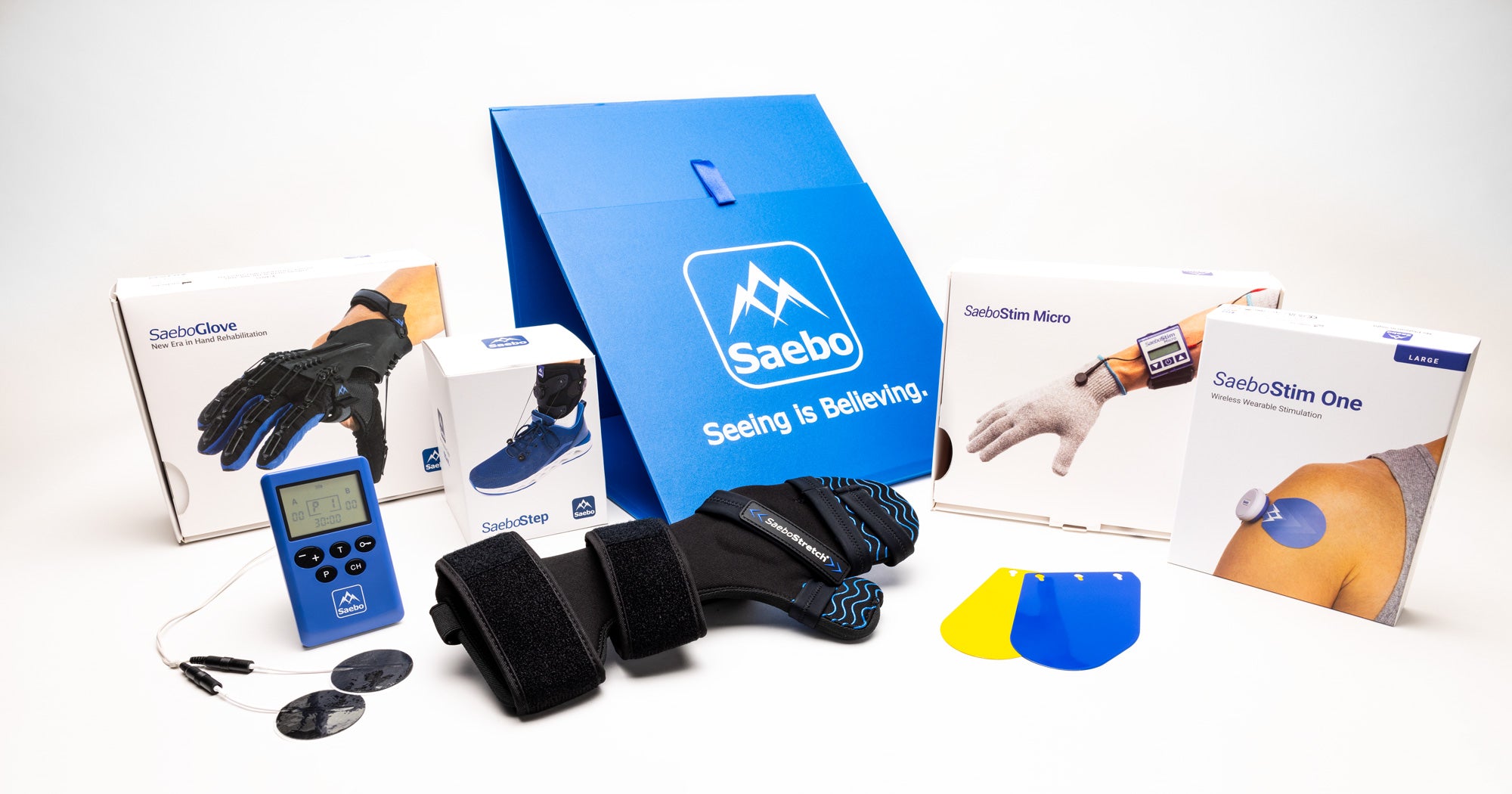
The SaeboStim One may be used alongside other Saebo rehabilitation tools, such as the SaeboFlex, SaeboGlove, SaeboStretch, or SaeboMAS Mini, to support a more comprehensive treatment approach. Electrical stimulation can be applied before therapy to prepare muscles, during functional tasks to assist movement, or after activity to support targeted muscle activation.
Using in ADL-based therapy and home programs
The wireless, wearable design of the SaeboStim One allows it to be easily incorporated into activities of daily living (ADLs). After proper setup on clean, dry skin, users can adjust stimulation intensity to a comfortable level while performing functional tasks. This flexibility makes the device well suited for home-based stroke rehabilitation programs, where consistency and real-world movement are essential for long-term recovery.
Prescription and safety considerations
The SaeboStim One is commonly recommended by rehabilitation and medical professionals, including neurologists, orthopedic specialists, physical therapists, occupational therapists, and chiropractors. Use should follow medical guidance, and individuals should be screened for contraindications prior to treatment. Electrical stimulation should not be applied in areas or conditions where it may be unsafe, and professional instruction is recommended to ensure appropriate and effective use.
Conclusion
The SaeboStim One offers a simple, effective, and clinically supported solution for individuals working to regain strength, mobility, and functional independence after neurological or orthopedic injuries. Its wearable, wireless design, three-button operation, and 60-minute preset program make it easy to integrate into daily routines, whether at home or in the clinic, without the barriers posed by traditional electrical stimulation devices.
By targeting specific muscles, supporting motor relearning, and promoting neuroplasticity, the SaeboStim One helps patients and clinicians focus on consistent, functional rehabilitation that carries over into everyday life and supports long-term stroke recovery. When combined with structured therapy programs and other Saebo rehabilitation tools, it becomes a versatile component of a comprehensive stroke and neurological recovery plan.
Does electrical stimulation help stroke recovery?
Electrical stimulation therapy can support stroke recovery by activating weakened muscles that may not respond well to signals from the brain. This technique, known as neuromuscular electrical stimulation (NMES), creates controlled muscle contractions that help reinforce brain-to-muscle communication. When combined with functional movement and rehabilitation exercises, NMES may help improve muscle activation and support recovery after stroke.
Can electrical stimulation help shoulder subluxation after stroke?
Electrical stimulation is often used in rehabilitation programs to help address shoulder subluxation after stroke. When applied to stabilizing muscles such as the deltoid and supraspinatus, NMES can assist with muscle activation that supports the shoulder joint. This may help improve shoulder positioning and comfort when combined with proper therapy and positioning strategies.
Can electrical stimulation therapy be used at home?
Yes. Electrical stimulation therapy is often incorporated into home rehabilitation programs when recommended by a healthcare professional. Wearable NMES devices allow individuals to continue muscle activation outside the clinic, helping increase therapy consistency and support long-term recovery.
Todo el contenido de este blog es únicamente informativo y no sustituye el consejo, diagnóstico ni tratamiento médico profesional. Consulte siempre con su médico u otro profesional de la salud cualificado si tiene alguna pregunta sobre una afección médica. Si cree que puede tener una emergencia médica, llame a su médico o al 911 de inmediato. Confiar en la información proporcionada por el sitio web de Saebo es bajo su propio riesgo.
