
Cerebellar Stroke Symptoms: Understanding Damage to the Cerebellum and Recovery
Cerebellar strokes are an uncommon variation of stroke, making up just 1–4% of all stroke cases. What makes them tricky is that their symptoms can be easier to miss compared to other types. These strokes happen when blood flow to the cerebellum is interrupted, which can affect balance, coordination, and other daily activities. While they can be serious, knowing the signs and acting quickly can greatly improve outcomes.
Starting rehab within 24 to 48 hours after a stroke can boost your chances to regain lost abilities. Recovery happens fastest in the weeks and months right after a stroke during the “critical window,” making quick action is a vital part of getting better.
This piece will teach you about the cerebellum's role, common cerebellar stroke symptoms, useful treatment methods, and what to expect as you recover.
What is the Cerebellum?
The cerebellum, which means "little brain" in Latin, sits at the back of your head right above where your spinal cord connects to your brain. Your cerebellum has only 10% of your brain's volume, yet this amazing structure contains over 50% of all neurons in your body.
What the cerebellum controls
Scientists once thought the cerebellum only controlled movement. Your cerebellum helps coordinate actions, maintain balance, control eye movements, and support speech. It even plays a role in certain thinking skills, like processing language. Unlike other brain areas, the cerebellum controls actions on the same side of the body—so damage here often leads to same-side symptoms. This unique feature helps doctors recognize cerebellar stroke patterns.
Why damage to the cerebellum is different from other strokes
Cerebellar strokes can be tricky to detect because their early symptoms are subtle, and the cerebellum sits in a tight space at the back of the skull. Swelling in this area can be especially dangerous, sometimes leading to life-threatening pressure on the brain. Studies show that about two-thirds of patients also experience cognitive challenges, which is why recovery needs to support both physical movement and mental function.
Common challenges after a Cerebellar Stroke
Cerebellar injury patients face unique challenges due to the cerebellum’s critical role in coordinating movement, balance, and fine motor skills. While it does not control strength or sensation directly, the cerebellum fine-tunes nearly every motion and helps maintain equilibrium. When it is damaged, everyday tasks — from walking to speaking — can become difficult. Understanding these challenges helps patients, caregivers, and therapists target rehabilitation more effectively.
Loss of coordination (Ataxia)
Ataxia is the hallmark symptom of cerebellar CVA. Mobility becomes uncoordinated, jerky, or slow. Patients may struggle with walking, reaching, grasping, and fine motor tasks like writing, buttoning, or using utensils. Over 70% of patients with cerebellar stroke and vertigo require assistance with walking, especially during quick or complex motions [1].
Treatment Options:
- Task-specific motor training: Practicing daily tasks repeatedly helps retrain the brain’s coordination pathways. Examples include reaching for cups, manipulating objects, or practicing walking sequences. Ataxia treatment or ataxia exercises are focused on practicing controlling specific movements.
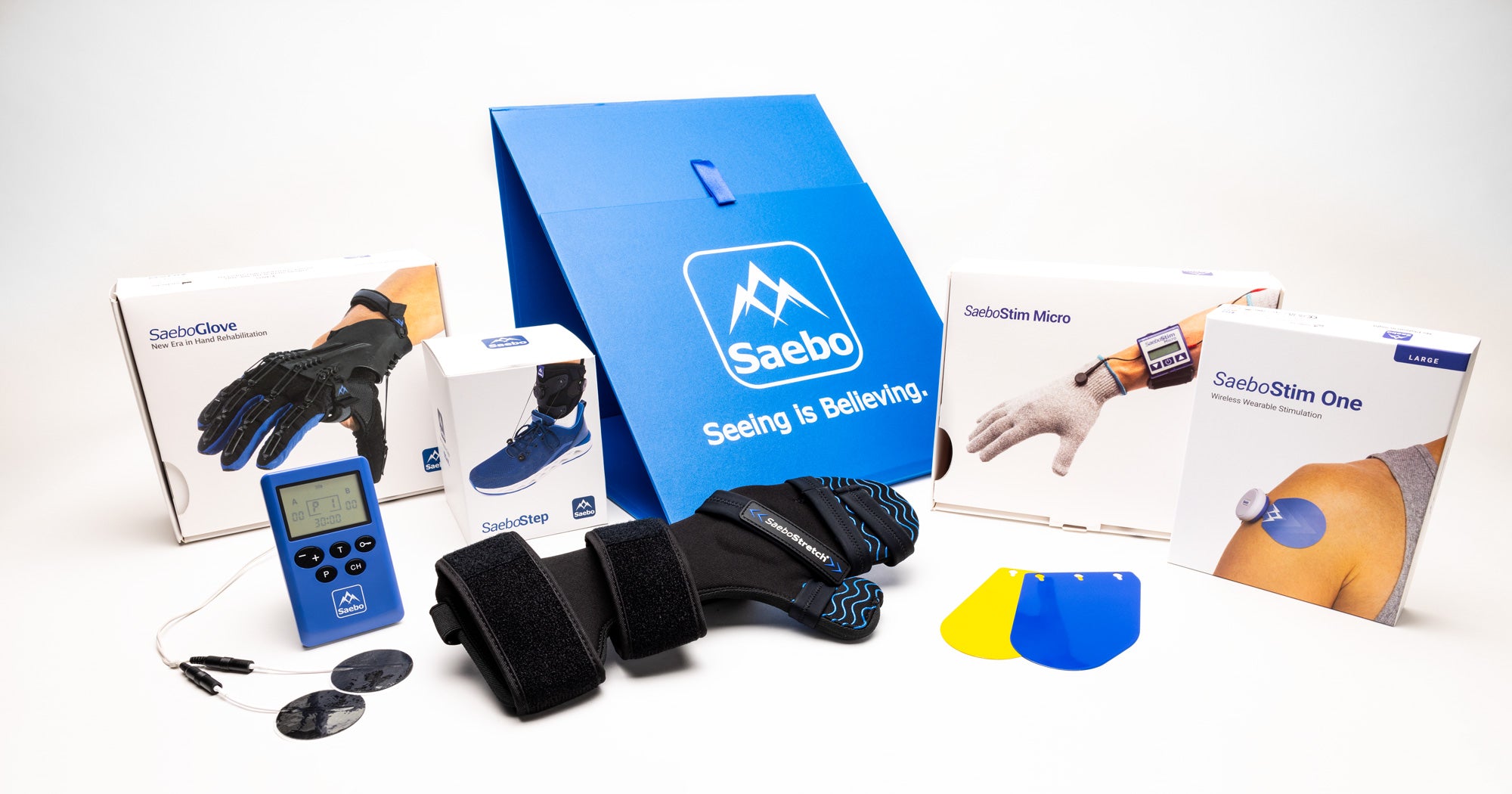
- Balance and gait training exercises: To improve gait instability after stroke, exercises like tandem walking, balance boards, and gait drills. Devices like the SaeboStep can provide support and improve safe walking if there is limited control or stability of the ankle.
- Dynamic arm support: SaeboMAS reduces fatigue and allows safe repetition of arm movements for task practice.
- Adaptive strategies: Assistive devices like weighted utensils, cups, or adding in larger grips can help support stability. By increasing the proprioceptive input, many individuals can improve their coordination during ADLs.
- Strength and endurance training: Moderate resistance exercises improve stability and control, supporting better movement patterns.
Vertigo and dizziness
Damage to the cerebellum can disrupt balance signals from the inner ear and sensory system, causing vertigo (spinning sensations) and dizziness. Over half of cerebellar injury patients experience these symptoms, which often lead to nausea, vomiting, and difficulty performing everyday activities [1].
Treatment Options:
- Vestibular rehabilitation therapy: Guided exercises can improve balance and retrain the brain to process spatial information. These can include head movement exercises, gaze stabilization, and balance retraining.
- Gradual exposure therapy: Slowly introduce increasing amounts of movement to improve tolerance and reduce dizziness to improve the fear of falling.
- Home safety adaptations: Removing trip hazards, adding handrails, and ensuring proper lighting minimizes fall risk.
Nystagmus and eye movement issues
Cerebellar injury can cause nystagmus, where eyes move involuntarily, often worsening when changing gaze direction. Patients may also experience double vision or difficulty focusing. These visual issues can affect reading, driving, and daily navigation.
Treatment Options:
- Vision therapy: Exercises designed by neuro-optometrists help retrain eye control and improve coordination.
- Gaze stabilization exercises: Patients practice keeping their eyes fixed on a target while moving their head to reduce visual instability.
- Prism glasses: May help align vision and reduce double vision in some patients.
- Adaptive strategies: Enlarging print, reducing clutter, and proper lighting can improve visual comfort.
Speech difficulties and dysarthria
Approximately 40% of cerebellar stroke survivors develop dysarthria, resulting in slurred, slow, or imprecise speech. The problem arises because the cerebellum coordinates the timing and strength of muscles involved in speaking, even though comprehension remains intact.
Treatment Options:
- Speech-language therapy: Exercises improve articulation, breath support, and muscle strength for clearer speech.
- Rate and rhythm control: Techniques like pacing boards or metronomes help regulate speech speed and clarity.
- Alternative communication tools: In severe cases, tablets or apps can facilitate communication while speech improves.
- Home practice routines: Reading aloud, repeating words, and practicing conversation reinforces therapy gains.
- Family involvement: Training family members on communication strategies ensures better support and reduces frustration.
Cognitive and memory changes
Beyond motor effects, the cerebellum contributes to cognitive functions. Survivors may experience memory deficits, reduced attention, slower problem-solving, and difficulty planning tasks. Fatigue can worsen cognitive issues, affecting independence and confidence.
Cerebellar Stroke Rehabilitation Options:
- Cognitive therapy: Neuropsychologists and occupational therapists provide exercises targeting memory, focus, and executive function.
- Energy management strategies: Pacing activities, scheduling rest, and using checklists reduce fatigue’s impact on cognition.
- Environmental supports: Calendars, reminder apps, and labeled storage improve daily functioning.
- Physical activity: Light aerobic exercise enhances blood flow to the brain and supports cognitive recovery.
- Supportive counseling: Addressing anxiety, depression, or frustration improves overall rehabilitation outcomes.
Recovery and Rehabilitation After Cerebellar Stroke
Every cerebellar stroke survivor’s recovery journey is unique and requires a personalized recovery plan tailored to their specific symptoms and abilities. Because the cerebellum influences coordination, balance, eye movement, and even cognition, recovery often involves a multidisciplinary team including neurologists, physical therapists, occupational therapists, and speech-language pathologists; all working together to achieve the best possible functional outcomes.
How neuroplasticity supports recovery
The cornerstone of post-cerebellar damage rehabilitation is neuroplasticity which is the brain’s natural ability to reorganize and form new connections after injury. When part of the cerebellum is damaged, nearby or connected regions of the brain can adapt and take over some of the lost functions through repeated practice and targeted therapy. This process of brain rewiring after stroke is critical to long-term recovery.
Research shows that stroke recovery timelines fluctuate, but that early intervention, such as task-specific rehabilitation beginning within 24–48 hours after a stroke, helps maximize neuroplastic potential. This timing promotes faster reorganization within motor networks and better long-term outcome
Using Assistive Devices in Stroke Recovery
Assistive devices play a vital role in stroke recovery by bridging the gap between limited ability and functional independence. These tools allow patients to practice more repetitions, improve confidence, and safely relearn daily activities. Depending on the severity and type of stroke, devices may support upper limb rehab, mobility, or daily living tasks.
Upper Limb Recovery Devices
- SaeboFlex: A dynamic hand orthosis that assists with grip-and-release activities by supporting finger and thumb extension. This device enables patients to complete repetitive, task-specific exercises such as grasping cups, utensils, or therapy objects—promoting neuroplasticity and functional hand use.
- SaeboMAS: A zero-gravity arm support system that reduces the effort needed to lift and move the arm. It helps patients with weakness, fatigue, or tremors engage in meaningful reaching and coordination exercises.
- Electrical Stimulation (E-stim): When paired with devices like the SaeboFlex or used on its own, E-stim stimulates weakened muscles to contract, strengthening the brain-muscle connection.
Mobility and Gait Support Devices
- SaeboStep: Designed to address foot drop, this lightweight orthotic assists patients with lifting the front of the foot during walking. By improving gait mechanics, it reduces fall risk and helps patients regain independence in mobility.
- Ankle-Foot Orthoses (AFOs): Widely used to stabilize the ankle and foot, AFOs can improve walking safety and reduce energy expenditure.
- Canes, Walkers, and Rollators: These tools provide balance and support for patients who are relearning how to walk or still experience dizziness, ataxia, or weakness after a cerebellar stroke.
Adaptive Equipment for Daily Living
- Modified utensils and dressing aids: Items such as built-up handles, button hooks, or elastic shoelaces help patients perform self-care tasks more independently.
- Voice-to-text and smart home technology: These assist patients with cognitive, memory, or speech-related challenges by simplifying communication and household tasks.
- Wheelchairs and specialized seating systems: In severe cases, these devices provide postural support, pressure relief, and safe mobility during the early phases of rehabilitation.
Why Assistive Devices Matter
The most effective stroke improvements happens when patients can practice functional movements repeatedly in safe and supported ways. Saebo devices, along with mobility aids and adaptive equipment, extend therapy beyond the clinic into daily life. Research confirms that combining these devices with structured rehabilitation programs—physical therapy, occupational therapy, and speech therapy—leads to better long-term outcomes [2].
Conclusion
Cerebellar strokes are rare but can create unique challenges because their original symptoms are subtle and can lead to serious complications. Warning signs like vertigo, coordination problems, and nausea need quick medical attention. Your cerebellum controls motor functions, balance, speech, and cognitive abilities, which explains why damage to this brain region affects many body systems at once.
Recovery comes with significant challenges, especially when you have to deal with coordination, balance, speech, and daily activities. All the same, your brain's amazing ability to rewire itself gives hope for major improvements. This natural healing works best when training starts quickly, ideally within 24-48 hours after the stroke. Regular therapy becomes vital to maximize improvement after this period.
Everyone's path to restoration is different from cerebellar stroke. Some people get most functions back within months, while others face challenges for longer periods. You can still make significant progress with proper medical care, dedicated rehabilitation, and regular therapeutic exercises. Learning about the cerebellum's vital functions and recognizing stroke symptoms leads to faster treatment and better outcomes for patients.
References
All content provided on this blog is for informational purposes only and is not intended to be a substitute for professional medical advice, diagnosis, or treatment. Always seek the advice of your physician or other qualified health providers with any questions you may have regarding a medical condition. If you think you may have a medical emergency, call your doctor or 911 immediately. Reliance on any information provided by the Saebo website is solely at your own risk.
