
How to Improve Hand Function After Stroke: New Research on CIMT and the SaeboGlove
Regaining hand function after stroke is one of the most difficult parts of recovery—and one of the most searched challenges by stroke survivors and caregivers. For many survivors, simple actions like opening the hand, improving grip strength, or holding everyday objects can feel out of reach. While rehabilitation techniques have advanced over the years, a major challenge remains: many patients don’t have enough movement early on to fully participate in the therapies designed to help them improve.
A newly published 2026 randomized controlled trial in Topics in Stroke Rehabilitation explores a promising solution. By combining a well-established therapy approach with a dynamic hand orthosis, the SaeboGlove, researchers found meaningful improvements in arm and hand function, and, importantly, expanded access to therapy for patients who might otherwise be left out.
Why Hand Recovery After Stroke Is So Challenging
Up to 80% of individuals experience upper limb impairment after a stroke. Weakness, stiffness, and the inability to open the hand after stroke can significantly limit independence and quality of life. These impairments create a frustrating cycle: the less a person uses their affected arm, the harder it becomes to regain movement and rebuild hand function after stroke.
One of the most effective, evidence-based treatments for improving arm and hand function after stroke is Constraint-Induced Movement Therapy (CIMT). This approach is grounded in the concept of neuroplasticity—the brain’s ability to reorganize and form new connections through repetition and use.
CIMT works by restricting the stronger, unaffected arm (often with a mitt), forcing the individual to use their weaker, affected arm during therapy, stroke rehabilitation exercises, and daily activities. Over time, this repeated use helps “retrain” the brain and improve function.
However, there’s a catch.
To participate in CIMT, patients must have a minimum level of movement — particularly the ability to open their hand and extend their wrist. Many stroke survivors, especially in the early stages of recovery, simply don’t meet these criteria. As a result, they miss out on one of the most effective rehabilitation strategies available.
A New Approach: Assisting Movement to Enable Recovery
The recent study addressed this limitation by asking a simple but powerful question: what if we could assist the affected hand just enough to allow more patients to participate in therapy?
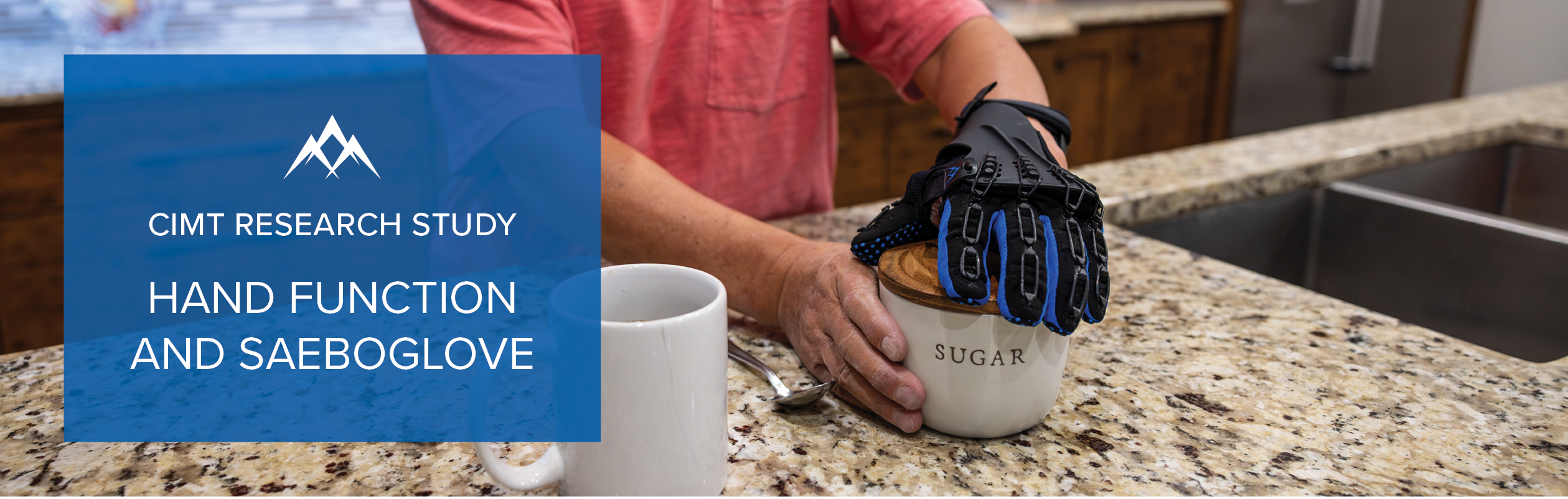
To test this idea, researchers combined modified CIMT (mCIMT) with a dynamic wrist-hand orthosis known as the SaeboGlove—a clinically used device designed to improve hand function after stroke. Unlike rigid splints, this type of orthosis uses elastic tension to help open the hand after grasping. Patients actively close their hand to grip objects, and the device assists with reopening, enabling repeated grasp-and-release movements, one of the most important stroke hand recovery exercises.
This assistance can make a critical difference. Instead of waiting for movement to return, patients can begin practicing functional tasks earlier in their recovery.
Inside the Study
The study included 56 individuals in the acute to subacute stages of stroke recovery. It was designed as a randomized controlled trial which is the gold standard for evaluating treatment effectiveness.
Participants were divided into groups receiving:
- Modified CIMT alone
- Modified CIMT combined with the dynamic orthosis
In a second part of the study, researchers also included patients who did not meet the usual criteria for CIMT due to limited hand movement. These individuals were either given orthosis-assisted therapy or placed in a control group.
All participants completed a structured rehabilitation program over three weeks, which included:
- Daily therapy sessions focused on repetitive, task-based training
- Real-world practice using the affected hand for activities like eating and dressing
- Use of a mitt on the unaffected hand to encourage use of the affected side
Those in the orthosis group wore the device during training to assist hand opening and functional use.
What the Researchers Found
The results were both encouraging and clinically meaningful.
First, patients who used the SaeboGlove orthosis alongside therapy demonstrated greater improvements in arm and hand function after stroke compared to therapy alone. These gains were measured using standardized tools like the Wolf Motor Function Test, which evaluates how well individuals can perform functional tasks with their affected limb.
Second, grip strength after stroke improved significantly more in the SaeboGlove orthosis group. This is especially important because grip strength is closely tied to independence in daily life—affecting everything from holding utensils to carrying objects.
Perhaps most notably, the study showed that patients who previously would not have qualified for CIMT were able to participate and benefit when the orthosis was introduced. In this group, participants using the device achieved better functional outcomes than those who did not receive the intervention.
Why This Matters
At its core, stroke rehabilitation is about repetition and meaningful movement—two key drivers of neuroplasticity, the brain’s ability to rewire and recover after stroke. The brain changes in response to use, but only if that use is possible.
For patients with limited movement, this creates a major barrier. If they can’t open their hand or complete basic tasks, they miss out on the repetition needed to drive recovery.
The addition of a dynamic orthosis, such as the SaeboGlove, helps bridge that gap by enabling earlier and more effective stroke hand recovery. By assisting with hand opening, it allows patients to:
- Practice functional movements earlier
- Increase the number of repetitions during therapy
- Engage more fully in daily activities
This creates the conditions necessary for neuroplasticity and recovery.
Real-World Implications
For patients, this approach offers new hope, especially in the early stages of the stroke recovery timeline when regaining hand movement is most critical. Even if movement is limited, there may still be a path to meaningful participation in therapy and improved outcomes.
For clinicians, the findings support a shift in how rehabilitation is approached. Rather than waiting for patients to meet strict criteria, assistive devices can be used to enable participation sooner. This not only increases therapy intensity but may also improve long-term recovery trajectories.
Looking Ahead
While the results from this randomized controlled trial are promising, it’s important to note that this protocol was only a three-week period. Stroke recovery is a long-term process, and additional research is needed to understand how these improvements translate over time.
Still, the findings highlight an important principle: recovery doesn’t have to be delayed by lack of movement. With the right support, patients can begin engaging in meaningful therapy earlier, and that early engagement may be key to better outcomes.
The Takeaway
This study reinforces a powerful idea in modern stroke rehabilitation: don’t wait for movement to begin therapy, enable movement early to improve hand function after stroke. By combining evidence-based techniques like CIMT with innovative tools like the SaeboGlove, clinicians can help more patients access effective treatment, perform more stroke rehabilitation exercises, and improve long-term hand function. For stroke survivors working to regain independence, that’s a meaningful step forward.
Interested in exploring the entire study? Learn more here.
Frequently Asked Questions (FAQs)
Can stroke patients regain hand function?
Yes, many stroke patients can regain hand function through consistent therapy, repetition, and the use of assistive devices like the SaeboGlove.
What is the best therapy for hand recovery after stroke?
Constraint-Induced Movement Therapy (CIMT) and task-specific training are among the most effective, especially when combined with assistive devices.
All content provided on this blog is for informational purposes only and is not intended to be a substitute for professional medical advice, diagnosis, or treatment. Always seek the advice of your physician or other qualified health providers with any questions you may have regarding a medical condition. If you think you may have a medical emergency, call your doctor or 911 immediately. Reliance on any information provided by the Saebo website is solely at your own risk.
