
Shoulder Subluxation After Stroke: How SaeboMAS Reduces Shoulder Pain & Boosts Functional Training
Shoulder pain and weakness is one of the most common complications of stroke survivors, and shoulder subluxation after stroke remains one of the most debilitating complications. For many survivors, the shoulder becomes a major source of pain after stroke, limiting movement and daily activities. Stroke survivors cannot use their arm and hand effectively without proper shoulder movement. Research suggests that high-repetition, task-specific practice helps drive the cortical changes needed to rewire the brain [1].
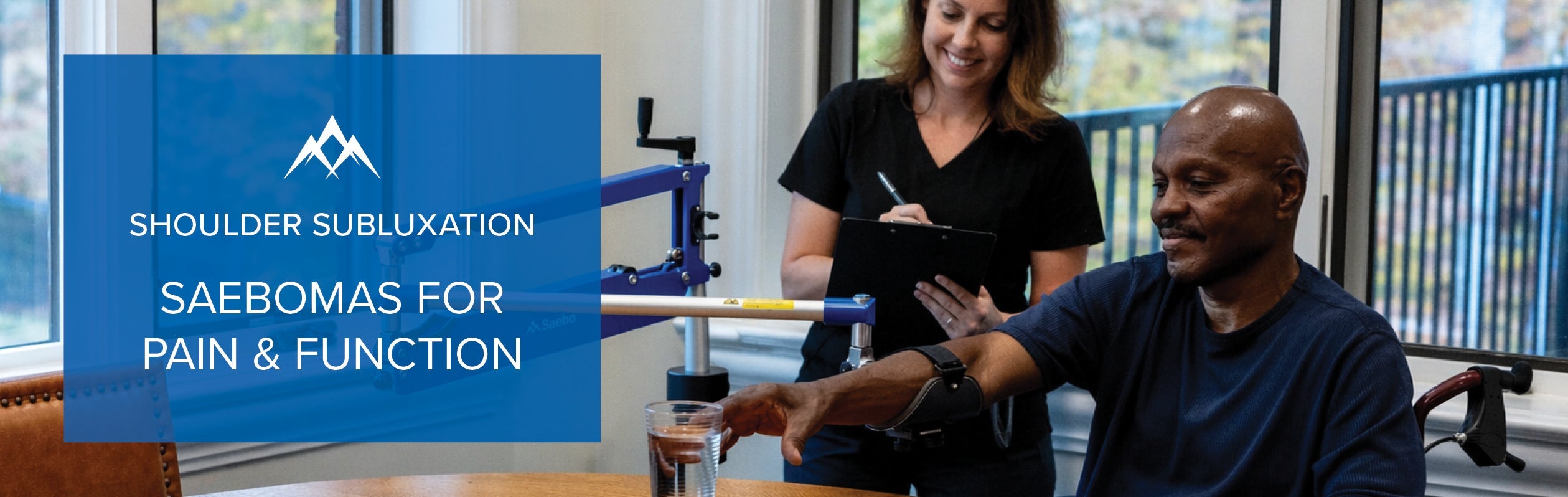
The SaeboMAS shoulder support helps patients overcome the challenges of weakness and shoulder subluxation. This device provides zero-gravity assistance that unweights the arm and allows maximum range of motion with minimal effort. Mobile arm support devices like the SaeboMAS are widely used in neurological rehabilitation to reduce shoulder strain and improve movement. It enables high-repetition training while reducing compensatory movements, allowing patients to perform higher volumes of quality repetitions, which are important for neurological recovery. This piece explores how this innovative device aids shoulder recovery, combines smoothly with rehabilitation programs, and tackles the most important barriers to upper limb function after stroke.
Understanding Shoulder Subluxation After Stroke
Shoulder subluxation is a partial separation of the shoulder joint that occurs when the head of the humerus slips downward out of its normal position in the shoulder socket. It commonly occurs after neurological injury, such as stroke or traumatic brain injury, due to muscle weakness or paralysis that reduces the stabilizing support around the shoulder. Without adequate muscular control, gravity pulls the arm downward, placing strain on the joint structures and increasing the risk of pain and instability.
Impact of gravity and muscle weakness on joint alignment
When shoulder muscles are weak, they cannot properly support the joint. As a result, gravity pulls the arm downward, placing stress on the shoulder and allowing the humeral head to drop out of alignment.
Shoulder instability after stroke often develops in two stages:
Flaccid Phase (Low Muscle Tone)
During early recovery, muscles may be too weak to stabilize the shoulder:
• Key stabilizers like the supraspinatus and deltoid provide insufficient support
• Scapular muscles weaken, reducing shoulder control
• Gravity more easily pulls the arm downward
Spastic Phase (Increased Muscle Tone)
As muscle tone returns, abnormal tightness can create new problems:
• Internal rotator muscles may become overly tight
• Muscle imbalance alters shoulder positioning
• The shoulder may shift backward or downward
Poor positioning, unsupported sitting, rough transfers, and weak posture can further worsen subluxation.
Why early intervention is critical
Shoulder subluxation commonly develops within the first few weeks after stroke. Without proper support and management, it can lead to:
- Slower motor recovery – Misalignment makes arm movement more difficult
- Reduced proprioception – Joint instability affects coordination and awareness
- Structural strain – Prolonged stress stretches joint tissues
- Functional limitations – Pain and weakness restrict daily activities
Early support helps protect the joint while movement and strength gradually return.
The SaeboMAS shoulder subluxation support helps reduce these risks by supporting the arm’s weight. Its zero-gravity assistance decreases strain on weakened muscles and promotes safer, more comfortable movement during recovery.
How SaeboMAS Reduces Shoulder Load During Therapy
The SaeboMAS shoulder subluxation support is designed to enhance upper extremity rehabilitation after stroke and neurological injury. It gives innovative solutions to patients who struggle with arm weakness and shoulder instability. This dynamic arm support system works differently from regular therapy approaches. It focuses on functional movement while protecting the vulnerable shoulder joint.
Zero-gravity support mechanism in SaeboMAS
The core of SaeboMAS technology lies in its zero-gravity support mechanism. Unlike passive supports, this system actively "unweights" the affected limb. It creates an environment where natural movement patterns can develop. Patients often report a feeling of reduced arm heaviness and improved movement control. They can often perform movements that were previously difficult or fatiguing.
It keeps consistent support as the arm moves. This dynamic support follows the arm's natural movement paths instead of limiting them. The SaeboMAS helps normal movement patterns and reduces compensatory strategies that often develop after stroke or neurological injury.
This unweighting technology serves two purposes. It reduces mechanical load on the subluxated shoulder and decreases the neural effort needed for movement. Research shows that gravity compensation devices help improve motor control, decrease spasticity, and reduce fatigue during rehabilitation exercises [2].
Adjustable tension system for graded assistance
The SaeboMAS has a precisely adjusted tension system. It lets therapists customize support levels based on each patient's needs.
Therapists can easily modify the tension by turning a knob. This helps them provide the right amount of support—not too much to prevent muscle strengthening, not too little to allow subluxation or compensatory movements. This adjustability creates a path where support gradually decreases as patients regain strength and control.
The SaeboMAS works as a precision tool to "dose" the training load. Therapists can unload the arm at different levels. This helps find the sweet spot where patients do functional activities with normal movement patterns. They still face enough challenge to stimulate neuroplasticity and muscle strengthening. Therapists can document tension settings to show objective progress.
Comparison with traditional slings and braces
Traditional slings and braces provide passive support and often hold the arm in a fixed position, which can limit active movement. While they may help with positioning or pain relief, prolonged use can sometimes contribute to weakness and further functional loss.
The SaeboMAS provides dynamic, zero-gravity assistance that supports the arm while still allowing functional movement. This helps reduce shoulder strain without restricting rehabilitation exercises.
Unlike many supports that must be removed during therapy, the SaeboMAS offers continuous assistance during both exercises and task-based training. It is available in Clinic and Mini models for use in rehabilitation and home settings.
Functional Training with SaeboMAS for Upper Limb Recovery
Functional recovery after stroke relies heavily on task-oriented, repetitive movement practice. The SaeboMAS shoulder subluxation support opens new rehabilitation possibilities. Patients can now practice meaningful activities that weakness would normally prevent.
Task-based movement practice with SaeboMAS
The SaeboMAS dynamic mobile arm support system helps patients perform real-life tasks. Patients can practice meaningful daily activities such as reaching, self-feeding, grooming, and object manipulation. The device supports arm weight so patients can focus on movement quality rather than fighting gravity.
This device helps patients move from passive to active rehabilitation. The SaeboMAS provides just enough support for independent movement while keeping the right level of challenge. This balance between help and challenge plays a vital role in motor learning.
The SaeboMAS acts as "an extra pair of hands" according to clinicians. Therapists can now focus on proper movement patterns instead of supporting the limb physically. Patients can use the device while sitting, standing, or lying down, making it useful in different therapy settings.
Repetition and neuroplasticity: building motor memory
Research suggests that higher repetition training volumes are associated with improved neuroplastic changes after stroke. The SaeboMAS makes these high-repetition exercises possible by preventing tiredness and overuse injuries that usually limit practice time.
Every repetition contributes to neuroplasticity - the brain's ability to create new neural pathways. These pathways become stronger and automatic through regular practice. Patients must stay focused during movements rather than working on "autopilot" to maximize brain changes.
The SaeboMAS lets patients do repeated task-oriented activities despite proximal weakness. This matches the proven principles of neuroplasticity: "use it or lose it," "practice early," and "practice skilled tasks."
Combining SaeboMAS with SaeboGlove or SaeboStim Pro
Combining SaeboMAS with complementary rehabilitation technologies may further enhance functional training outcomes.
The SaeboMAS works great with:
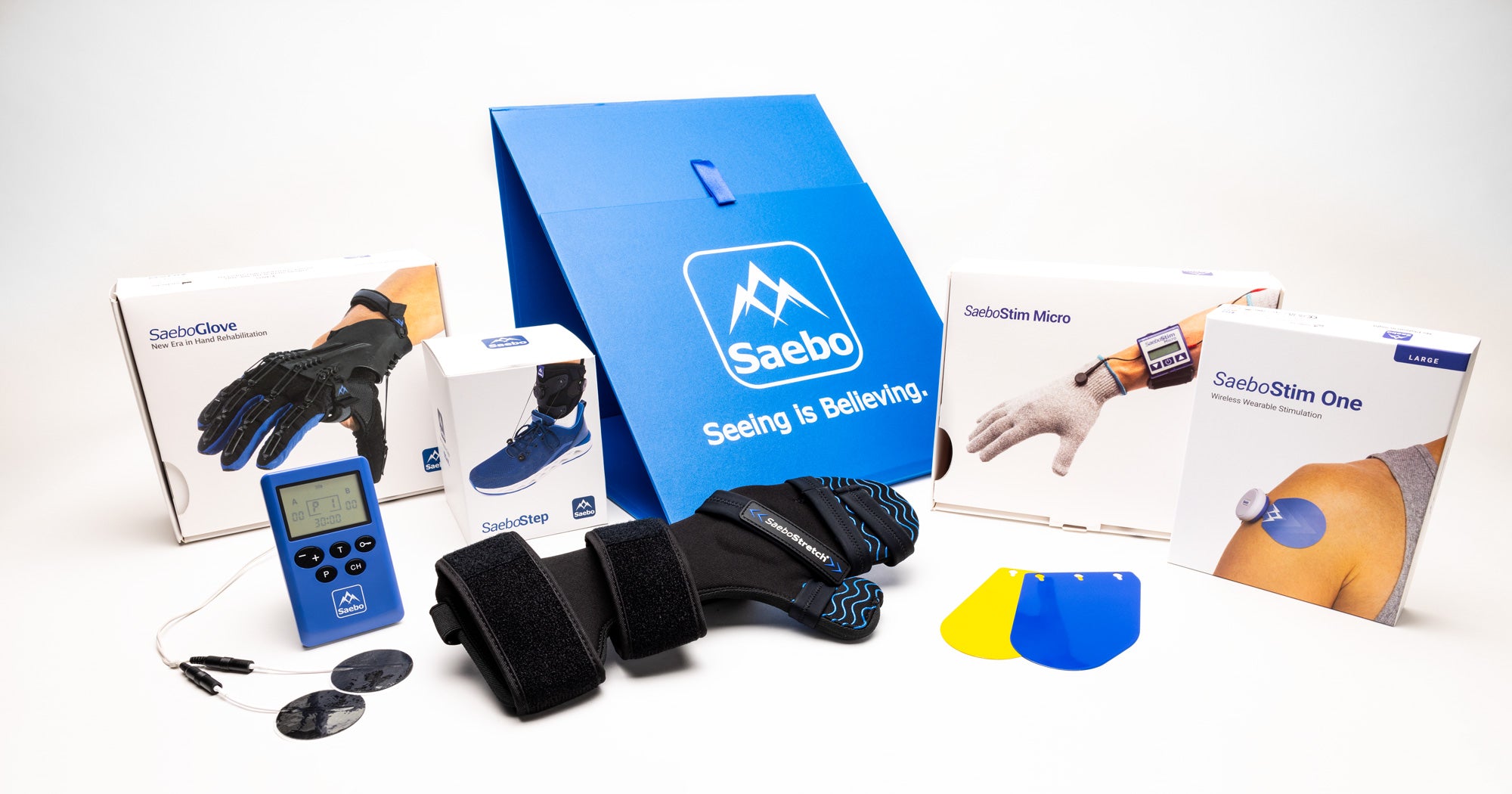
- SaeboGlove: This lightweight dynamic orthosis helps with finger and thumb extension. Patients with both proximal and distal weakness can practice functional reaching and grasping.
- SaeboStim Pro: This neuromuscular electrical stimulation device has a trigger button that times muscle activation with movement. It enables targeted stimulation during functional reach training with SaeboMAS.
The SaeboMAS can be incorporated into task-specific, high-repetition training programs commonly used in neurorehabilitation. By providing graded arm support, it enables patients with shoulder weakness to participate more actively in functional practice while reducing strain and fatigue. When combined with devices such as the SaeboGlove, clinicians may facilitate assisted movement training tailored to the individual’s abilities and goals.
Appropriate candidates often include individuals with shoulder weakness, reduced active arm movement, shoulder pain, or visible subluxation following neurological injury. The device is particularly helpful for patients who have some voluntary movement but lack sufficient strength or endurance to safely perform functional tasks against gravity.
Conclusion
The SaeboMAS shoulder subluxation support represents a significant advancement in upper extremity rehabilitation technology. This dynamic arm support system counteracts gravity, which commonly worsens shoulder subluxation after stroke or neurological injury. Unlike traditional slings that immobilize the joint, the SaeboMAS promotes active movement—an essential component of neuroplasticity and motor relearning.
Therapists can precisely adjust assistance using the device’s tension system, allowing support to be gradually reduced as patients gain strength and motor control. This progressive approach enables patients to perform high-repetition, task-specific training without excessive fatigue or shoulder pain. Early use of appropriate support is critical, as research indicates that proper positioning and joint alignment can reduce the risk of secondary complications associated with subluxation.
The SaeboMAS is particularly valuable during the flaccid stage of recovery, when weakened musculature cannot adequately stabilize the glenohumeral joint. By reducing shoulder load while permitting movement, the device helps protect vulnerable joint structures during this critical phase. Beyond exercise, the SaeboMAS facilitates participation in meaningful functional activities such as eating, grooming, and reaching. This shift from passive support to active engagement enhances both motivation and therapeutic outcomes. The system can also be integrated with complementary technologies such as the SaeboGlove or SaeboStim Pro to address broader upper limb weakness and intensive task-oriented therapy approaches.
Used in both clinical and home settings, the SaeboMAS bridges the gap between protected positioning and active rehabilitation. By enabling safe, supported movement, it helps clinicians and patients achieve the high-quality repetitions necessary for neurological recovery and improved upper limb function.
References
All content provided on this blog is for informational purposes only and is not intended to be a substitute for professional medical advice, diagnosis, or treatment. Always seek the advice of your physician or other qualified health providers with any questions you may have regarding a medical condition. If you think you may have a medical emergency, call your doctor or 911 immediately. Reliance on any information provided by the Saebo website is solely at your own risk.
