
Understanding Hand Weakness After Stroke and How to Regain Function
Stroke-related hand weakness can significantly affect function regardless of which side of the body is impacted. The extent of disability may feel different depending on how each individual uses their hands in daily life, but upper limb impairment is a common and often functionally limiting outcome after stroke. Hand weakness after stroke is especially impactful because it affects essential daily activities that require fine motor control and coordination.
Conditions such as hemiparesis and hemiplegia commonly contribute to reduced strength, coordination, and control in the affected arm and hand, limiting independence in tasks like grasping objects, dressing, and self-care. In this article, we’ll explore why the hand and arm are often heavily affected after stroke, review common patterns of hand weakness, and outline practical arm and hand exercises that support recovery. We’ll also discuss advanced rehabilitation tools, including those from Saebo, that can help support functional recovery and independence.
Why the Hand and Arm Are Most Affected After Stroke
How stroke disrupts motor pathways
Upper limb impairments affect as many as 75% of stroke survivors and are a major focus of stroke hand recovery rehabilitation programs (1). Hand and arm dysfunction becomes one of the most prevalent consequences you'll face during recovery. Stroke damages the brain's communication network with your muscles, and that's what causes these problems.
Weakness or paralysis is the primary impairment contributing to post-stroke hand and arm dysfunction, often requiring structured rehabilitation to regain function. A direct disruption in signal transmission from the movement centers, known as the motor cortex, causes this. The motor cortex generates movement impulses and sends them to the spinal cord, which executes these movements through signals sent to muscles. When a stroke damages the corticospinal tract—a major pathway carrying movement-related information from brain to spinal cord—you experience delayed initiation and termination of muscle contraction, along with slowness in developing forces.
The hand is particularly vulnerable after stroke because it occupies a disproportionately large area of the motor cortex dedicated to precise, fractionated movements. Fine motor tasks—such as writing or buttoning a shirt—depend heavily on intact corticospinal pathways that enable independent finger control. When these pathways are disrupted, the result is not just weakness, but a loss of movement precision, coordination, and speed. As a result, even when some strength returns, the brain must recruit less efficient motor patterns to produce force, making functional hand use especially difficult to recover.
Understanding hemiparesis and hemiplegia
Hemiparesis affects a significant portion of stroke survivors and is a key driver of hand weakness after stroke and impaired grip function. It describes incomplete muscular weakness or paralysis affecting either side of your body. Hemiplegia involves more severe paralysis and often requires long-term stroke hand recovery therapy and assistive rehabilitation tools. While these terms are sometimes used interchangeably, the difference matters for your recovery trajectory.
With hemiparesis, you retain some knowing how to move the affected side, though movements feel weak and uncoordinated. Hemiplegia represents a total loss of strength or complete inability to move one side of your body. Both conditions result from disrupted motor signaling between the brain and muscles, affecting hand movement recovery and coordination after stroke.
The side affected depends on stroke location. Injury to the left side of your brain results in right-sided weakness, while right hemisphere damage causes left-sided weakness. Healthcare providers call this contralateral hemiplegia, meaning opposite-side paralysis. The affected side may show reduced grip strength and difficulty grasping objects. Loss of balance and impaired coordination also occur.
The role of the motor cortex
This disproportionate impact on hand function stems from the motor cortex—particularly the “hand knob” region of the precentral gyrus, which controls precise finger movements. It serves as a key origin of the corticospinal tract, a pathway essential for fine motor control and especially vulnerable to stroke-related damage.
Because these pathways are highly specialized, even small lesions can cause significant hand impairment. While larger movements like reaching may return earlier, fine motor control often lags due to the loss of these precise neural connections.
Recovery relies on neuroplasticity, driven by high-repetition, task-specific training. Rehabilitation tools, including Saebo devices, support this process by enabling active hand use. Combined with early intervention and consistent at-home practice, this approach can improve functional recovery over time.
Common Types of Hand Weakness After Stroke
Stroke survivors face several distinct patterns of hand weakness. Each presents unique challenges for recovery. Understanding these types helps you target rehabilitation efforts more effectively.
Muscle spasticity and increased tone
Spasticity affects around 20%–40% of stroke survivors and is a major barrier to hand recovery after stroke, often limiting voluntary movement and functional use of the hand (2). This condition causes muscles to become stiff and tight. They resist movement even when you try to control them. You might notice a clenched fist with fingers bent inward or your arm held rigidly against your chest.
The stiffness worsens with faster movements. When someone tries to move your affected arm, it may jerk back toward you or shake afterward. This response is called clonus. In some cases, unmanaged spasticity can contribute to soft tissue shortening and contracture risk. Muscles shorten permanently and joints become fixed in one position. Research shows that severe spasticity early after stroke relates negatively with hand motor recovery.
Reduced grip strength
After a stroke, grip strength is commonly reduced and can significantly limit everyday hand use. This affects basic functional tasks like holding objects, carrying items, and maintaining a steady grasp during activities. Early on, the affected hand often fatigues more quickly and struggles to sustain force during repeated or prolonged use compared to the unaffected side.
Over time, the ability to generate and maintain grip force can improve, especially with consistent hand use and targeted rehabilitation. Faster force production may also recover in many individuals as coordination and motor control return. Most meaningful gains in hand strength and functional grip tend to occur within the first year, with the greatest improvements often seen in the early months when rehabilitation is most active.
Loss of fine motor control
Fine motor skills determine how you use your hands and coordinate small muscle movements that control your fingers. Stroke disrupts these precise movements needed for buttoning shirts and using utensils. Activities requiring dexterity become frustratingly difficult.
High-functioning survivors show persistent deficits in finger strength and force control despite appearing to have minimal impairment. Force variability, rather than strength alone, explains difficulty completing precision tasks. The distal part of your hand typically suffers more severe effects. Manipulation of objects and grip precision become highly impaired. Coordinated finger movements suffer as well.
Sensory changes and numbness
Stroke-related damage to sensory pathways leads to altered or decreased sensation in your hand. You may experience difficulty sensing temperature and texture. Pain perception also diminishes, which increases injury risk while handling objects. Some survivors notice tingling or burning. Others experience pins and needles or heightened sensitivity called hypersensitivity.
Without normal sensation, movements lack precision and control. Your hand becomes vulnerable to damage from pressure and burns. Excessive gripping force can also cause injury. Sensory reeducation through touching different textures and temperatures helps retrain these pathways. Objects of varying properties work well for this purpose.
Coordination difficulties
Beyond individual hand function, stroke impairs hand-eye coordination even beyond what underlying hemiparesis alone would suggest. Patients mistime movements between their eyes and hands. This creates spatial challenges when reaching for objects. Bimanual coordination also suffers. Increased alternating time between hands relates with poorer functional performance. Saebo provides rehabilitation tools designed to address these coordination challenges through targeted, repetitive practice that encourages neural adaptation.
Essential Hand Exercises for Stroke Recovery
Recovery begins with targeted exercises tailored to your current function level. Early intervention maximizes neuroplasticity and prevents complications.
Passive range of motion exercises
Passive range-of-motion (PROM) exercises are commonly introduced early in stroke rehabilitation, when medically appropriate, to help maintain joint mobility and support early hand recovery after stroke. In these exercises, your unaffected hand or a caregiver gently moves the affected joints through their available range while providing support above and below each joint to ensure proper alignment.
This helps reduce joint stiffness, maintain soft tissue flexibility, and support circulation, which may reduce swelling risk in the affected limb. Movements should be slow, controlled, and never forced into painful ranges. For example, this may include gently bending and straightening the fingers, opening and closing the hand, or moving the wrist through flexion and extension.
While PROM alone does not produce active motor recovery, it can help maintain the sensory and mechanical input needed to prepare the hand for later active movement and rehabilitation-driven neuroplastic changes.
Active finger and wrist movements
Active hand exercises begin once voluntary movement starts to return and focus on rebuilding motor control, coordination, and functional activation of the affected muscles. These movements help retrain the brain–hand connection through repetition and intent-driven practice.
Examples include wrist flexion and extension, finger extension and flexion, and forearm rotation (palm up/palm down). Functional, low-load activities can also be incorporated, such as sliding a pen across a table to guide controlled movement or picking up and releasing lightweight objects like a cup or sponge.
Performing slow, deliberate repetitions (e.g., 10–15 reps) helps reinforce movement patterns so the nervous system can better recognize and refine these motor pathways over time.
Grip strengthening activities
Grip strengthening focuses on rebuilding force production and endurance in the hand, which is essential for functional tasks like holding objects, opening containers, and carrying items. These exercises typically begin with light resistance and gradually progress as strength returns.
Common tools include therapeutic stress balls or therapy putty. Examples include squeezing a ball in the palm, pinching putty between the thumb and each finger, or rolling putty into a log and pressing it flat. These variations target different muscle groups involved in grip and pinch strength.
Progression is typically based on tolerance and control, not just force, ensuring the hand can maintain grip without compensatory movement patterns.
Task-specific training for daily activities
Task-specific training focuses on practicing meaningful, real-world activities to improve functional hand use. This approach is widely used in occupational therapy because it directly links movement practice to daily life demands.
Examples include buttoning a shirt, using utensils during meals, picking up coins from a table, opening containers, or folding laundry. Even simple grooming tasks like brushing hair or stabilizing toothpaste can be used as structured practice.
Repetition and consistency are key, as the goal is to reinforce efficient movement patterns that transfer directly into everyday function.
Advanced Rehabilitation Tools and Therapies
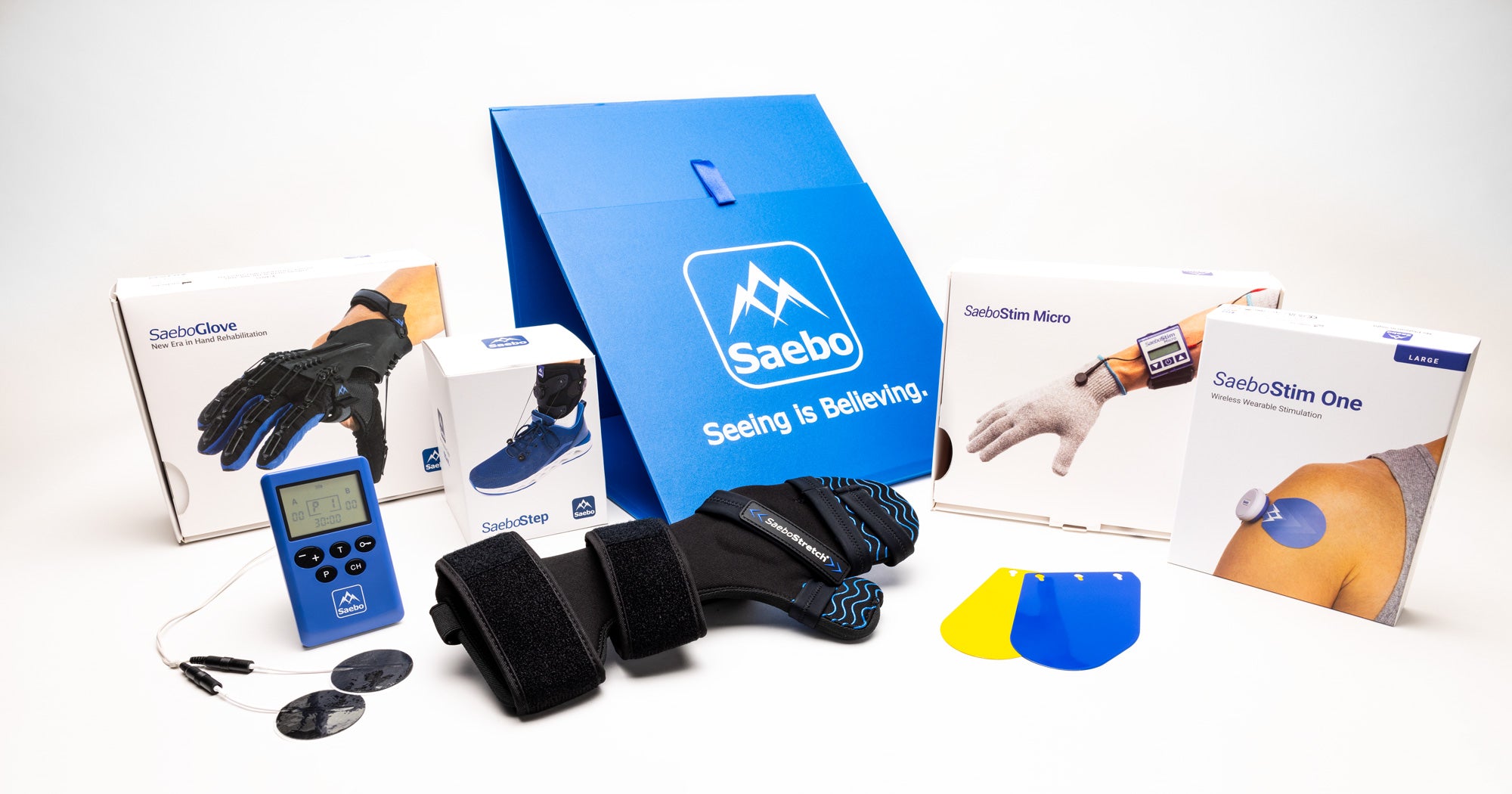
Advanced rehabilitation tools can help increase repetition, intensity, and engagement during stroke hand recovery. Devices such as the SaeboGlove are designed to assist grasp-and-release movements, allowing individuals with limited hand function to practice functional tasks more effectively.
Other technologies may include electrical stimulation devices, which help facilitate muscle activation and repetitive movement practice. Some devices like the SaeboStim One, SaeboStim Pro, or SaeboStim Micro can all help hand function by using different types of sensory stimulation. The core principle across these approaches is high-repetition, task-oriented movement, which is important for promoting motor relearning and functional recovery over time.
These tools are typically used as part of a broader rehabilitation program rather than in isolation, supporting consistent practice of meaningful hand movements.
Conclusion
Hand weakness challenges most stroke survivors because the motor cortex dedicates excessive space to hand control. These pathways become vulnerable to damage. Early intervention in stroke hand recovery significantly improves the likelihood of regaining functional hand use and reducing long-term disability. Passive range-of-motion exercises are often introduced early in medically stable patients under clinical guidance. Saebo’s rehabilitation tools support this process by enabling high-repetition, task-specific hand training, which is critical for neuroplastic recovery after stroke.
References
All content provided on this blog is for informational purposes only and is not intended to be a substitute for professional medical advice, diagnosis, or treatment. Always seek the advice of your physician or other qualified health providers with any questions you may have regarding a medical condition. If you think you may have a medical emergency, call your doctor or 911 immediately. Reliance on any information provided by the Saebo website is solely at your own risk.
