
Recovery After Mild Stroke: Timeline, Recovery Stages, Signs of Healing, and What to Expect from Week 1 to Year 5
Recovery after a mild stroke is highly variable, but it follows well-described biological and functional phases influenced by neuroplasticity, rehabilitation intensity, and individual health factors. While many people experience the fastest gains in the first 3–6 months, research consistently shows that meaningful recovery can continue for years with ongoing, task-specific practice [1].
Each year, hundreds of thousands of people in the United States experience a stroke, and a large proportion of survivors live with persistent motor, sensory, cognitive, or communication challenges. Mild strokes may still result in significant upper extremity weakness, hand dysfunction, gait changes, fatigue, or coordination deficits that impact daily life.
This guide breaks down what actually happens in the brain after stroke, what recovery typically looks like from week 1 through year 5, and how evidence-based rehabilitation strategies—including high-repetition training and assistive technologies such as those developed by Saebo—can support long-term functional improvement.
What Is Neuroplasticity and Why It Matters After Stroke
Neuroplasticity is the brain’s ability to reorganize, adapt, and form new neural connections after injury. Following a stroke, areas of the brain responsible for movement, sensation, language, or cognition may be damaged due to interrupted blood flow. Recovery occurs when surviving neural networks compensate for lost function.
Rather than “relearning from scratch,” the brain gradually re-maps functions across remaining healthy tissue.
How the brain reorganizes after stroke
After a stroke, several key neuroplastic mechanisms are activated:
- Cortical reorganization (remapping): Nearby brain regions take over functions previously managed by damaged areas.
- Axonal sprouting: Surviving neurons form new projections to reconnect disrupted neural networks.
- Synaptogenesis: The brain increases synapse formation to strengthen communication between neurons.
- Dendritic remodeling: Structural changes improve the efficiency of surviving pathways.
- Interhemispheric adaptation: The opposite hemisphere may partially compensate for lost functions.
These changes occur in regions surrounding the lesion (perilesional cortex) as well as more distant brain networks. Importantly, they are strongly influenced by activity and experience—meaning what you repeatedly practice physically shapes how your brain rewires.
Why Stroke Recovery Can Continue Beyond 6 Months
A long-standing misconception in stroke rehabilitation is that recovery “plateaus” at 3–6 months. While recovery does slow during the chronic phase, the brain does not lose its ability to adapt.
Modern research shows:
- Functional improvements can occur well into the chronic phase when training is consistent [1]
- Motor recovery is strongly dependent on continued use and task practice [2]
- Individuals may regain function years—or even decades—after stroke with targeted rehabilitation [3]
The key difference is not whether recovery is possible, but how much effort, repetition, and specificity are required as time passes.
In early recovery, the brain is in a heightened state of plasticity. In later stages, plasticity is still present but requires more structured and intensive input to drive change.
The Role of Repetition in Rewiring the Brain
One of the strongest drivers of neuroplastic change after stroke is high-repetition, task-specific practice.
The principle is simple: “Neurons that fire together, wire together.”
Every repeated attempt to grasp an object, extend the wrist, step forward, or complete a daily task strengthens the underlying neural pathways that support that movement.
Why repetition matters clinically
In many traditional outpatient settings, upper-extremity therapy may only include a limited number of movement repetitions per session. Research suggests this volume is often insufficient to drive maximal neuroplastic change on its own [4].
That is why recovery programs increasingly emphasize:
- Home exercise programs
- Task-specific functional practice
- High-repetition training outside of therapy sessions
Assistive technology and repetition
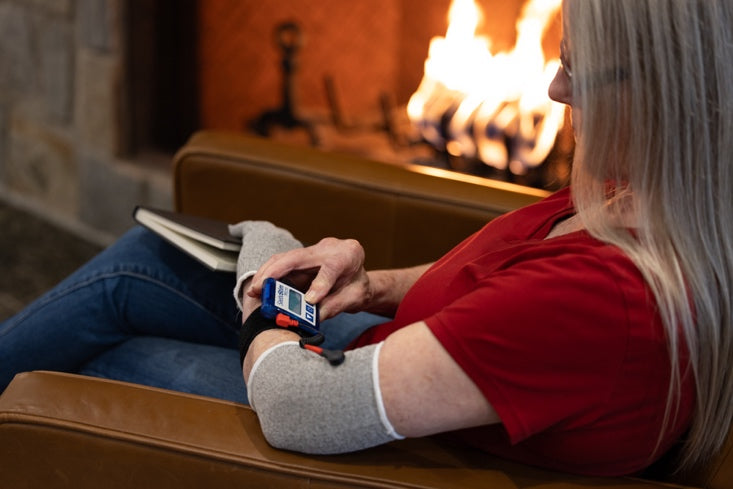
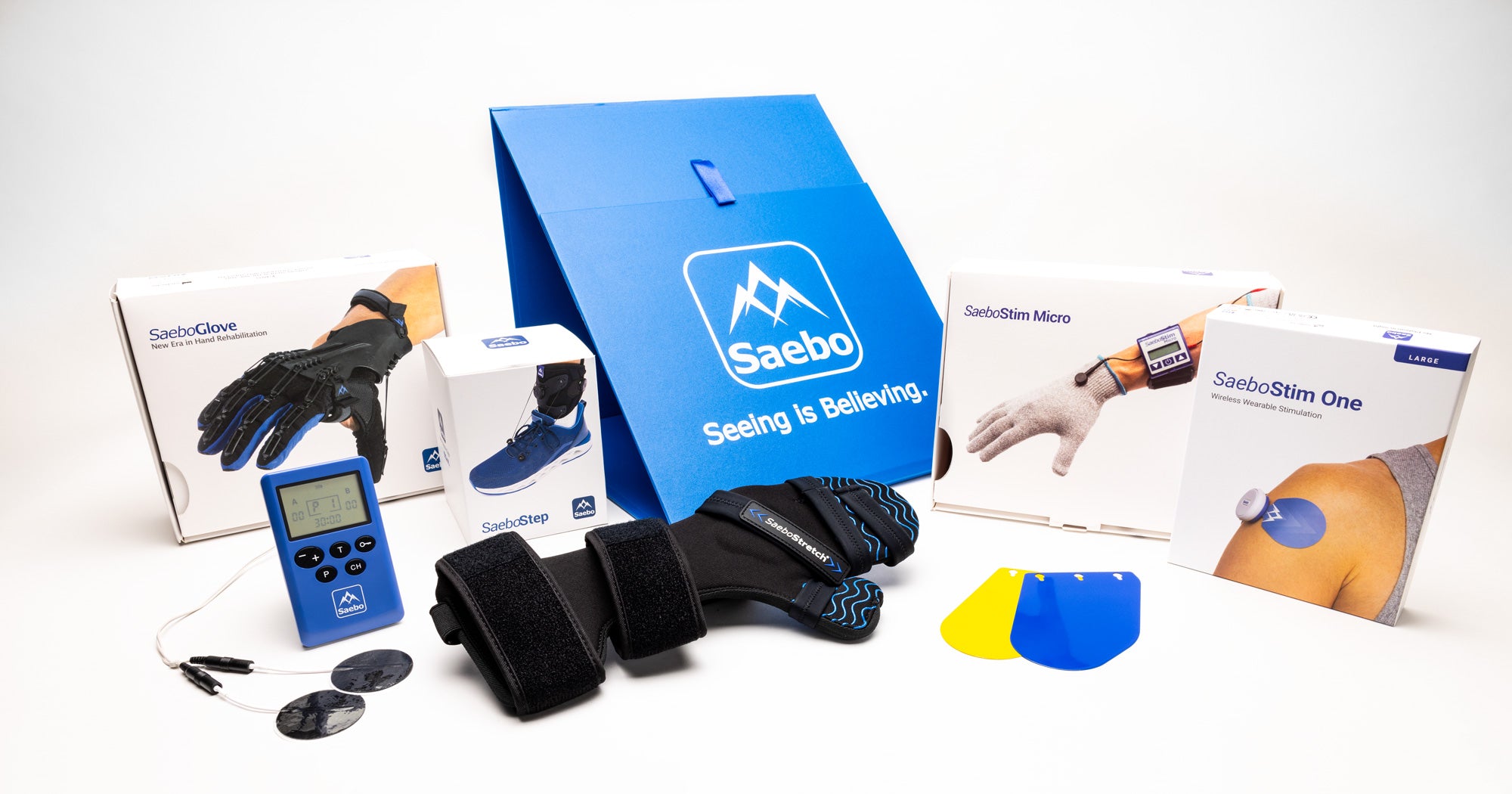
Devices designed to support movement quality and repetition can help bridge this gap. Saebo rehabilitation products are widely used in clinical neurorehabilitation to increase safe, meaningful practice:
- SaeboGlove – supports functional hand opening and grasp/release practice
- SaeboFlex – assists with dynamic hand extension for individuals with spasticity
- SaeboMAS – provides mobile arm support to enable functional upper-extremity movement training
These tools allow individuals to perform more repetitions of real-world movements, which is critical for cortical reorganization and functional recovery.
Factors That Promote Neuroplasticity After Stroke
Recovery is influenced by multiple interacting factors. The most important include:
1. High-repetition, task-specific training
Task-specific practice—such as reaching for a cup, buttoning a shirt, or walking to the bathroom—produces stronger cortical activation than isolated exercise.
Effective recovery programs prioritize:
- Functional, goal-oriented tasks
- High repetition of meaningful movement
- Gradual progression in difficulty
Constraint-induced movement strategies may also be used clinically to encourage use of the affected limb and reduce learned non-use.
2. Aerobic exercise and intensity
Aerobic activity supports cardiovascular health and promotes brain recovery through multiple pathways, including increased neurotrophic support and improved cerebral blood flow.
Once medically cleared, structured aerobic exercise is commonly recommended:
- 20–40 minutes per session
- 3–5 times per week
- Moderate-to-vigorous intensity depending on tolerance
3. Sleep and brain recovery
Sleep plays a critical role in memory consolidation and neuroplasticity. During deep sleep, the brain strengthens newly formed neural connections.
Sleep disturbances are common after stroke and may negatively affect:
- Motor recovery
- Cognitive function
- Emotional regulation
Addressing sleep apnea, insomnia, or fragmented sleep can significantly improve rehabilitation outcomes.
4. Motivation, mood, and engagement
Depression and apathy are common after stroke and can reduce participation in therapy. Emotional health directly impacts recovery consistency.
Support systems—including family, therapists, and structured goal-setting—help improve adherence to rehabilitation programs and increase long-term outcomes.
Stroke Recovery Timeline: Week 1 to Year 5
Recovery is best understood in phases. Each phase reflects changes in neuroplastic potential and functional adaptation.
Early Recovery Phase (Week 1–12)
The first three months represent the most rapid period of neurological change.
Key characteristics:
- Early spontaneous recovery begins within days
- Rehabilitation often starts within the first week (once medically stable)
- Rapid improvements in strength, movement, and basic function
During this phase, the brain undergoes heightened plasticity driven by acute injury response and early reorganization.
Common goals include:
- Regaining basic mobility
- Improving arm and hand activation
- Restoring balance and gait
- Increasing independence with activities of daily living (ADLs)
Intermediate Recovery Phase (Months 3–6)
Recovery continues but at a slower, more gradual rate.
Typical focus shifts from basic movement to:
- Strength building
- Coordination refinement
- Endurance training
- Task complexity (e.g., dressing, cooking, driving readiness)
Many individuals experience a transition from “regaining movement” to “improving quality of movement.”
Long-Term Recovery Phase (6 Months–5 Years)
Recovery does not end at 6 months.
Instead, the brain enters a lower but persistent state of plasticity that responds to:
- Consistent exercise
- Functional task practice
- Rehabilitative technology
- Lifestyle-based activity programs
Improvements in this stage are often slower but can still be highly meaningful, particularly for upper extremity function, balance, and independence.
Importantly, lack of continued activity may lead to deconditioning or regression in function over time.
Signs of Healing After Stroke
While recovery is individualized, common signs of neurological improvement include:
- Increased voluntary movement in affected limbs
- Improved grip strength or finger activation
- Better coordination during daily tasks
- Reduced spasticity or stiffness over time
- Improved balance and walking endurance
- Enhanced cognitive clarity and attention
- Reduced fatigue during activity
Even small changes in movement control can reflect meaningful neural reorganization.
Chances of Recovery from Stroke Over Time
Recovery outcomes depend on multiple factors:
- Stroke severity and location
- Time to medical intervention
- Age and baseline health status
- Consistency and intensity of rehabilitation
Individuals with mild strokes generally have a higher potential for functional recovery, especially when engaging in early and sustained rehabilitation.
The strongest predictor of long-term improvement is continued, task-specific practice over time.
Conclusion: Recovery Is a Long-Term Process, not a Fixed Timeline
Recovery after a mild stroke is not defined by a fixed endpoint. While early gains often occur quickly, the brain remains capable of adaptation for years through neuroplasticity.
Sustained progress depends on:
- High-repetition functional practice
- Consistent aerobic and strength exercise
- Quality sleep and emotional support
- Long-term engagement in rehabilitation
Most importantly, recovery is driven by what is practiced consistently over time—not just what happens in early therapy sessions.
Tools such as SaeboGlove, SaeboFlex, SaeboMAS, and other Saebo rehabilitation technologies can help bridge the gap between clinic-based therapy and daily life, enabling higher-quality repetition and improved functional outcomes at home and in clinical settings.
Long-term recovery is possible. The key is structured, repetitive, meaningful movement—performed consistently enough to drive lasting neuroplastic change.
References
Todo el contenido de este blog es únicamente informativo y no sustituye el consejo, diagnóstico ni tratamiento médico profesional. Consulte siempre con su médico u otro profesional de la salud cualificado si tiene alguna pregunta sobre una afección médica. Si cree que puede tener una emergencia médica, llame a su médico o al 911 de inmediato. Confiar en la información proporcionada por el sitio web de Saebo es bajo su propio riesgo.
