
Ataxia after Cerebellar Stroke: Best Exercises for Balance, Coordination, and Recovery

Exercises for ataxia after stroke play a vital role in cerebellar stroke recovery, particularly when balance, coordination, and walking are affected. Although these strokes account for only 2–3% of all U.S. strokes each year, their impact can be severe, with high complication rates and significant long-term disability [1]. Many patients experience serious complications after cerebellar stroke, and a significant portion continue to face functional challenges months later. Worldwide, stroke affects millions of people each year, and ataxia is especially common when the vertebrobasilar system is involved. This can lead to difficulties with balance, walking, coordination, speech, and eye control, all of which can greatly impact daily life.
Research shows that ataxia recovery after cerebellar stroke is possible, especially with early, high-repetition rehabilitation. Patients who receive specialized physical therapy after cerebellar stroke, especially in structured inpatient programs, can make measurable gains in balance, walking speed, step length, and overall coordination.
This guide explains evidence-based exercises for ataxia after stroke, including strategies to improve ataxic gait, balance, and coordination. It’s designed for both clinicians seeking practical tools and patients working to regain independence, offering research-supported methods to help rebuild control and confidence.
What is Ataxia After Cerebellar Stroke?
The cerebellum is your brain’s coordination center. This small but powerful region helps control balance, posture, and smooth, accurate movements. When a cerebellar stroke occurs, it can disrupt these functions and lead to ataxia after stroke, a neurological movement disorder that affects coordination, balance, and motor control.
How cerebellar damage affects coordination and balance
The cerebellum fine-tunes almost every movement your body makes. Although it does not directly control muscle strength or sensation, it sends constant excitatory and inhibitory signals that ensure each motion is well-timed and fluid.
When a stroke damages the cerebellum, this coordination system becomes impaired. Everyday tasks like reaching for a cup, walking across a room, or maintaining balance while standing can become difficult due to post-stroke coordination problems. For example, during a simple arm movement, the cerebellum normally tells certain muscles to activate while others relax. After injury, this timing can break down, leading to shaky, inaccurate motions.
Balance problems after stroke are also common, particularly when the cerebellum is involved. Staying upright depends on your visual system, inner ear (vestibular system), and proprioception working together. The cerebellum integrates all this information to keep you stable. When it’s damaged, many individuals experience unsteadiness, difficulty walking, or challenges maintaining posture during movement.
Common symptoms: ataxic gait, postural instability, motor planning issues
Cerebellar stroke ataxia can appear in several ways:
- Motor symptoms: Uncoordinated movements, poor balance, reduced muscle tone, and difficulty with fine motor tasks such as writing or buttoning clothes
- Vestibular symptoms: Blurry, shaky, or double vision; involuntary eye movements (nystagmus); dizziness; and vertigo
- Cognitive symptoms: Changes in thinking, emotional regulation, attention, and social awareness
The most recognizable sign is ataxic gait after stroke, often described as a wide-based, unsteady, staggering walking pattern. Many people with cerebellar stroke who experience vertigo and imbalance have severe gait instability and often require assistance with walking or standing, especially early after the event. One study found that a large majority of patients with cerebellar infarction and isolated vertigo were unable to walk without support [2].
Additional post-stroke motor coordination issues may include dysmetria (overshooting or undershooting targets), dysdiadochokinesia (difficulty with rapid alternating movements), intention tremors, delayed movement initiation, and hypotonia (reduced muscle tone). Many patients also develop ataxic dysarthria, a slow or slurred speech pattern caused by impaired coordination of the muscles used for speech.
Why targeted rehabilitation is essential
People once believed cerebellar ataxia symptoms couldn’t improve, but research now shows that targeted rehabilitation can make a meaningful difference. Therapy that promotes neuroplasticity after stroke — the brain’s ability to reorganize and strengthen new neural pathways through repeated practice — can gradually improve movement control.
Starting rehabilitation early after stroke is especially important for improving long-term cerebellar stroke recovery outcomes. Studies show that rehabilitation helps both adults and children with ataxia improve mobility, balance, and overall function. Task-specific exercises with high repetition are key to rebuilding coordination pathways.
The best outcomes come from therapy that engages remaining cerebellar learning and control mechanisms rather than relying on impaired systems. This approach acknowledges the challenges of cerebellar damage while helping patients recover through alternative neural pathways.
Core Principles of Ataxia Rehabilitation
Rehabilitation for cerebellar ataxia requires a specialized approach focused on how the cerebellum relearns movement. The most effective programs use task-specific, high-repetition training, where patients repeatedly practice meaningful functional tasks, not just generic exercises, to drive neuroplasticity. Research shows that repetitive, task-specific training, with far more repetitions than typically occur in standard therapy, leads to stronger functional improvements after stroke, because motor learning and neuroplasticity depend on repeated practice of meaningful tasks [3].
Recovery also depends on motor learning and neuroplasticity, which can still occur after cerebellar stroke. Studies show structural changes and improved motor function months or even years after injury, highlighting the brain’s ability to reorganize and strengthen new pathways when rehabilitation is targeted and consistent.
Finally, early and intensive intervention delivers the best outcomes. Starting rehab during the acute and subacute stages maximizes the brain’s responsiveness to change. Intensive, goal-focused programs often combining physical therapy, occupational therapy, and balance training help patients make faster gains and maintain improvements over time.
How Long Does Ataxia Recovery Take After Cerebellar Stroke?
Recovery timelines vary depending on stroke severity, lesion location, overall health, and rehabilitation intensity. Some individuals see early improvements in balance and coordination within weeks, while others require months of consistent therapy. Even in the chronic stage, targeted, high-repetition training can continue to drive neuroplastic changes and functional gains.
Evidence-Based Exercises for Ataxia Recovery
Targeted exercises that improve coordination, balance, and motor control are essential for cerebellar ataxia rehabilitation. Research shows that high-repetition, task-focused practice leads to meaningful functional gains.
1. Balance practice
Balance exercises for ataxia after stroke challenge stability and gradually reduce reliance on the arms. Exercises progress from sitting lateral weight shifts on unstable surfaces to standing heel-to-toe walking, single-leg balance, and dynamic movements like turning or stepping over obstacles. Short home programs (example: 20–30 minutes, 3 times per week) have been shown to improve clinical measures such as the Berg Balance Scale and walking speed. Regular practice helps the brain integrate visual, vestibular, and proprioceptive information for safer mobility.
2. Coordination exercises for upper and lower limbs after stroke
These exercises emphasize repetitive, controlled movements that work with natural body sway rather than against it. Examples include:
- Quadruped weight shifts with opposite arm and leg extensions
- Lying bent-knee rotations to improve segmental control
- Kneeling press-ups to strengthen core stability and trunk control
By repeatedly practicing these patterns, patients retrain timing, accuracy, and smoothness of movement.
3. Gait training strategies for ataxic gait
Improving ataxic gait after a CVA often requires multiple rehabilitation strategies. Treadmill training, sometimes combined with obstacles or auditory cues, helps patients regain rhythm and step consistency. Body-weight support systems allow safer practice of walking longer distances. Both conventional and robotic-assisted gait training improve step length, cadence, and overall walking speed, making mobility more efficient and reducing fall risk.
4. Bilateral arm training for symmetry
Bilateral Arm Training (BAT) is commonly used in stroke rehabilitation to improve symmetry and coordination. This approach engages neurons in the brain that respond specifically to bimanual activity, helping improve coordination on both sides. Exercises can include arm swings, reaching tasks, and lifting or moving objects with both hands. Consistent practice (for example: 1–2 hours per day, 2–5 times per week) enhances arm function more effectively than unilateral exercises alone.
5. Weight-bearing and postural control exercises for stroke balance recovery
Improving postural stability begins with gradually increasing weight-bearing challenges. Standing exercises like side steps, forward/backward weight shifts, and lateral lunges train the muscles and reflexes needed for real-world stability. Patients with more severe ataxia may start seated on unstable surfaces, progressing to standing as control improves. These exercises help maintain alignment, reduce sway, and prevent falls.
Coordination drills can be combined with weight-bearing tasks to enhance feedback and recovery. For example, quadruped weight shifts with alternating arm reaches or controlled weight transfers provide additional sensory input, reinforcing balance and movement accuracy.
6. Visual feedback strategies for ataxia and coordination after stroke
People with cerebellar ataxia rely heavily on visual cues to correct movement errors. Exercises that provide modified visual feedback, like visual targets, cursor adjustments, or mirrored movement, help reduce overshooting and timing errors. Sensory retraining, including texture discrimination and object localization, strengthens proprioception and improves the brain’s ability to sense limb position without looking.
7. High-repetition hand exercises for neurological injury
Fine motor control improves with small muscle exercises performed repeatedly. Key activities include:
- Object manipulation in rice, beans, or small tools to build tactile awareness
- Forearm rotation tasks, such as pouring water between cups, to improve coordination
- Progressive resistance exercises for finger strength
High-repetition practice enhances dexterity, grip strength, and hand-eye coordination, which supports daily tasks like dressing, eating, and writing.
8. Functional mobility and walking exercises after cerebellar stroke
Applying coordination and balance skills to daily tasks helps translate therapy into real-life independence. Exercises include sit-to-stand transitions, stepping over small obstacles, navigating turns, and walking on uneven surfaces. Evidence shows that challenging balance and task relevance are more important than exercise duration for improving functional outcomes. Consistent practice builds confidence, reduces fall risk, and restores independence in everyday activities.
Tools and Technologies That Support Recovery
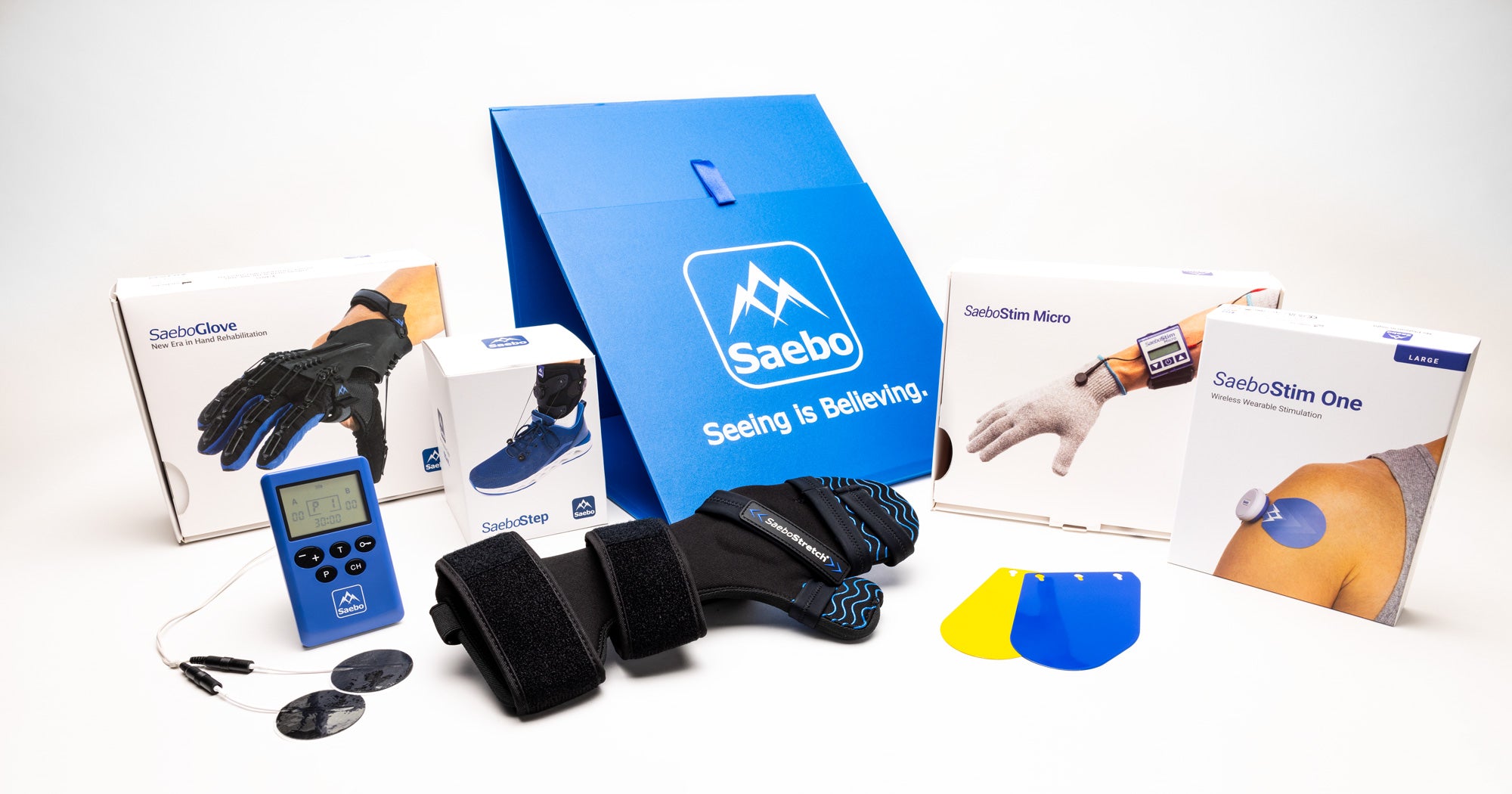
Innovative tools have expanded rehabilitation options for people with cerebellar ataxia. These technologies enhance traditional exercises by providing targeted assistance, feedback, and motivation throughout the recovery process. Devices developed by Saebo are commonly used in stroke rehabilitation programs to address upper limb weakness, foot drop, and impaired motor control.
Using SaeboStep for foot drop and ataxic gait after stroke
The SaeboStep addresses foot drop, a common contributor to walking and balance problems after stroke. This lightweight brace attaches outside the shoe and helps lift the foot during walking. Its adjustable dial allows quick changes to tension and foot lift angle, promoting safe clearance. The design works with most footwear, including sandals, offering a secure and comfortable fit for daily use.
SaeboGlove and SaeboVR for upper limb recovery after stroke
The SaeboGlove supports hand recovery after stroke by assisting finger extension during task-specific training. It helps retrain the brain through purposeful movements and is effective for both neurological and orthopedic injuries. Patients using the SaeboGlove for four weeks showed substantial improvement in upper-limb function, nearly double that observed in historical controls.
Electrical stimulation for motor relearning
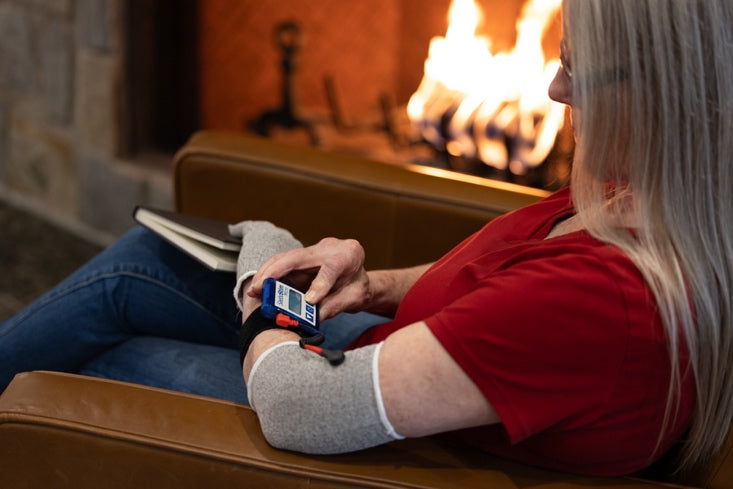
Electrical stimulation is widely used in stroke rehabilitation and neurorecovery to improve muscle activation and motor relearning. Devices such as SaeboStim One and SaeboStim Pro deliver targeted stimulation to support neuroplasticity and functional recovery after stroke. By delivering repeated, targeted activation and sensory feedback, these devices reinforce correct movement patterns and support functional recovery and independence.
Designing an Ataxia Rehab Program
Designing an effective ataxia rehab program after stroke requires more than selecting exercises, it depends on structured delivery, progression, and intensity that maximize neuroplasticity. Whether therapy occurs in a clinic, at home, or in a hybrid model, patients benefit most from frequent, high-repetition practice supported by clear guidance from a clinician.
Therapists can enhance outcomes by integrating devices like the SaeboFlex, SaeboGlove, SaeboStep, and SaeboStim systems into functional tasks, using them during sessions and as part of structured home programs. A phased plan including an assessment, device fitting, task-integration, and home carryover helps patients build movement patterns gradually and safely. Ongoing assessment allows therapists to adjust difficulty by increasing task complexity, reducing support, altering environments, or speeding up movement demands.
Consistent daily practice is one of the strongest predictors of stroke recovery and coordination improvement. Blending exercises into everyday routines and staying connected to support networks helps maintain motivation and encourages long-term recovery. With the right structure, targeted exercises, and consistent repetition, meaningful ataxia recovery after stroke is possible, even months or years after a cerebellar stroke.
Frequently Asked Questions (FAQ’s)
Can ataxia improve after cerebellar stroke?
Yes. Research shows that balance, coordination, and walking can improve through neuroplasticity when patients engage in high-repetition, task-specific rehabilitation.
What exercises help ataxia after stroke?
Balance training, coordination drills, gait practice, and visual feedback exercises are among the most effective interventions.
Do braces or devices help ataxic gait?
In some cases, orthotic and assistive devices may improve safety, stability, and foot clearance during walking.
References
All content provided on this blog is for informational purposes only and is not intended to be a substitute for professional medical advice, diagnosis, or treatment. Always seek the advice of your physician or other qualified health providers with any questions you may have regarding a medical condition. If you think you may have a medical emergency, call your doctor or 911 immediately. Reliance on any information provided by the Saebo website is solely at your own risk.
