
Foot Drop Treatment Physical Therapy: Evidence-Based Exercises That Actually Work
Foot drop can make walking difficult by causing the front of the foot to drag during each step. Whether it's caused by a stroke, nerve injury, multiple sclerosis, or another neurological condition, foot drop can increase the risk of tripping, falls, and loss of independence.
The good news is that many people can improve their walking with a combination of physical therapy, targeted exercises, gait training, and assistive devices. Recovery focuses on strengthening weak muscles, improving ankle dorsiflexion, and retraining the brain and nervous system through neuroplasticity—the brain's ability to form new neural connections after injury.
In this guide, you'll learn evidence-based foot drop exercises, along with additional treatment strategies such as functional electrical stimulation (FES), ankle-foot orthoses (AFOs), and gait training. We'll also discuss how devices like the SaeboStep can improve foot clearance during walking while rehabilitation continues.
Whether you're recovering from a stroke, managing a neurological condition, or supporting a loved one, these evidence-based strategies can help improve mobility, reduce fall risk, and support long-term recovery.
Understanding Foot Drop: Causes, Symptoms, and Why Physical Therapy Works
What is foot drop and how does it affect walking
Foot drop is a condition that makes it difficult or impossible to lift the front of the foot (ankle dorsiflexion). As a result, the toes may drag across the ground while walking, increasing the risk of tripping and falls. Rather than a diagnosis itself, foot drop is a symptom of an underlying neurological or muscular condition that affects the nerves or muscles responsible for lifting the foot.
To compensate, many people develop abnormal walking patterns. One of the most common is steppage gait, where the knee is lifted higher than normal to prevent the toes from catching on the ground. Others may use a circumduction gait, swinging the affected leg outward in a semicircle during each step. While these strategies help clear the foot, they often make walking slower, less efficient, and more tiring.
Foot drop can affect one foot (unilateral) or both feet (bilateral) and is frequently associated with poor balance, reduced walking confidence, and an increased risk of falls. Fortunately, many people improve with early intervention and a structured rehabilitation program.
Common causes: stroke, nerve damage, and neurological conditions
Foot drop occurs when the muscles responsible for lifting the foot become weak or the nerves controlling those muscles are damaged. Because several muscles contribute to ankle dorsiflexion, weakness or injury anywhere along the pathway—from the brain to the peripheral nerves—can result in foot drop.
Common causes include:
- Stroke, one of the most common causes of foot drop in adults
- Peripheral nerve injuries, particularly injury to the common peroneal nerve
- Multiple sclerosis (MS)
- Traumatic brain injury (TBI)
- Spinal cord injury
- Cerebral palsy
- Parkinson's disease
- Charcot-Marie-Tooth disease
- Diabetic peripheral neuropathy
- Lumbar nerve compression or spinal stenosis
Identifying the underlying cause is important because treatment recommendations and recovery potential vary depending on the diagnosis.
The role of tibialis anterior muscle and dorsiflexion
The tibialis anterior is the primary muscle responsible for lifting the foot during walking. It works alongside the extensor hallucis longus and extensor digitorum longus to clear the toes and position the foot for a safe heel strike.
Weakness in these muscles—or damage to the nerves that control them—can lead to foot drop, toe drag, and abnormal walking patterns.
Why Physical Therapy Works
Physical therapy helps improve foot drop by strengthening weak muscles, retraining walking patterns, and promoting neuroplasticity—the brain's ability to reorganize after injury. Repetitive, task-specific exercises reinforce communication between the brain and muscles, improving movement over time.
Treatment often combines strengthening, balance training, gait retraining, and functional electrical stimulation (FES) to improve muscle activation, walking mechanics, and overall mobility.
Evidence-Based Foot Drop Exercises
The best foot drop exercises strengthen the muscles responsible for ankle dorsiflexion while improving balance, coordination, and walking mechanics. Start with simple seated movements to activate weak muscles, then gradually progress to standing and functional exercises as strength and control improve.
1. Ankle Dorsiflexion and Assisted Toe Raises
Ankle dorsiflexion is the foundation of most foot drop rehabilitation programs because it directly targets the muscles responsible for lifting the front of the foot. If active movement is limited, begin by assisting the motion with your hands, a resistance band, or your unaffected foot. As strength improves, gradually perform the movement independently.
Recommended: 2 sets of 10–15 repetitions
2. Eccentric Toe Raises
Once you can lift your foot, focus on controlling the lowering phase. Use assistance to raise your toes toward your shin, then slowly lower your foot over 4–6 seconds without help. Eccentric strengthening improves muscle control and can reduce toe slap during walking.
Recommended: 2 sets of 8–12 repetitions
3. Heel Raises and Ankle Strengthening
Strong calf and ankle muscles provide stability throughout the walking cycle. Perform heel raises while holding a sturdy surface for balance, then add ankle inversion and eversion exercises to strengthen the muscles that stabilize the ankle and improve overall foot control.
Recommended: 2 sets of 10–15 repetitions for each exercise
4. Calf Stretching and Ankle Mobility
Tight calf muscles can limit ankle dorsiflexion and make foot drop more pronounced. Stretch your calf using a towel or resistance band for 20–30 seconds, then improve ankle mobility by performing slow ankle circles or tracing the alphabet with your toes.
Recommended: Hold stretches for 20–30 seconds and repeat 3 times. Perform ankle circles for 10 repetitions in each direction.
5. Single-Leg Balance
Improving balance is an important part of foot drop rehabilitation. Stand next to a stable surface and shift your weight onto your affected leg while lifting the opposite foot. As your balance improves, gradually increase the hold time or practice on different surfaces under supervision.
Recommended: 5–10 repetitions, holding up to 30 seconds each
6. Hip Strengthening and Rotation
Walking efficiently requires more than just a strong ankle. The muscles around your hips help stabilize the leg and control foot placement during each step. While seated or standing, practice rotating your leg inward and outward or perform gentle hip strengthening exercises to improve lower-extremity control.
Recommended: 2 sets of 10 repetitions
7. Task-Specific Gait Training
The final step is practicing real-world walking. Step over small obstacles, walk on different surfaces, or use a treadmill under the guidance of a rehabilitation professional. Task-specific practice helps retrain normal walking mechanics and improves confidence during everyday activities.
Recommended: Incorporate gait training into each therapy session or home exercise routine as tolerated.
Why These Exercises Work
These exercises progress from improving isolated muscle activation to strengthening, balance, and functional walking—the same progression commonly used in neurological rehabilitation. Consistent, repetitive practice promotes neuroplasticity, helping strengthen communication between the brain and muscles. When combined with interventions such as functional electrical stimulation (FES) and gait training, these exercises can improve foot clearance, reduce fall risk, and support long-term recovery.
Additional Physical Therapy Strategies for Foot Drop Rehabilitation
Exercises are the foundation of foot drop recovery, but additional treatments can improve muscle activation, walking safety, and overall mobility. A comprehensive rehabilitation program often combines strengthening, gait training, and targeted interventions to improve communication between the brain, nerves, and muscles.
Functional Electrical Stimulation (FES) and NMES
Functional electrical stimulation (FES) is a rehabilitation technology that uses small electrical impulses to activate weakened muscles and improve movement during functional activities. For individuals with foot drop, FES is commonly timed with the swing phase of walking to stimulate the muscles responsible for ankle dorsiflexion, helping improve foot clearance and walking mechanics.
Neuromuscular electrical stimulation (NMES) uses electrical stimulation to activate muscles during exercise or rest. It may help improve muscle activation, maintain strength, and provide sensory feedback to the nervous system when voluntary movement is limited.
By repeatedly pairing electrical stimulation with intentional movement, FES and NMES can support neuroplasticity—the brain's ability to reorganize and strengthen connections after neurological injury.
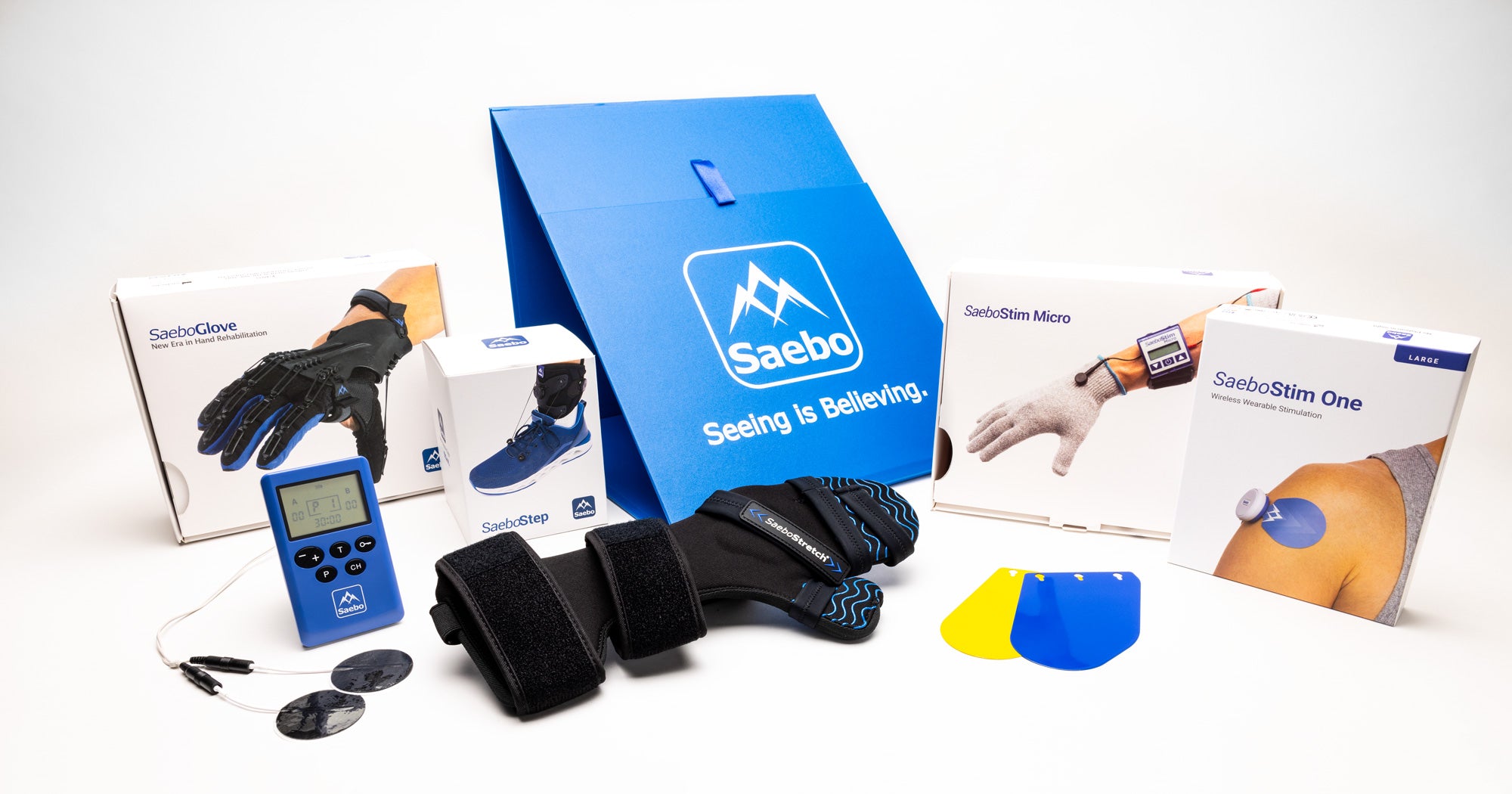
Saebo offers several electrical stimulation solutions designed to support individuals throughout different stages of neurological rehabilitation:
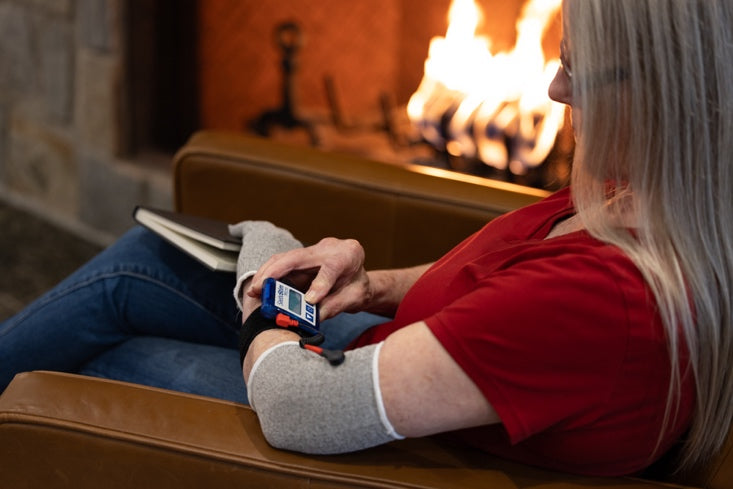
- SaeboStim One is a portable, wireless electrical stimulation device designed for convenient use during therapy sessions or home exercise programs. It can help activate weakened muscles, improve sensory input, and support repetitive practice outside of the clinic.
- SaeboStim Pro is a multi-channel electrical stimulation system designed for rehabilitation professionals. It provides clinicians with greater programming flexibility and is commonly used during neurological rehabilitation to target specific muscle groups and incorporate stimulation into functional activities.
- SaeboStim Spa is designed to provide electrical stimulation and sensory input in a comfortable, easy-to-use format that supports muscle activation and rehabilitation outside traditional therapy settings.
When combined with therapeutic exercise, gait training, and task-specific practice, electrical stimulation can help reinforce the connection between the brain and muscles, improve movement quality, and support functional recovery.
AFOs and Foot Drop Support Devices
Ankle-foot orthoses (AFOs) help improve foot positioning, stability, and safety during walking by supporting the ankle and improving toe clearance. Solid AFOs provide more stability, while hinged AFOs allow greater ankle movement when appropriate.
For individuals looking for a lightweight alternative, the SaeboStep is designed to assist with foot clearance while allowing users to continue wearing their preferred footwear. By providing support during walking, devices like the SaeboStep can improve safety and confidence while individuals continue working on strengthening, gait training, and long-term recovery.
Mirror Therapy and Combining Treatments
Mirror therapy uses visual feedback to activate areas of the brain involved in movement. By creating the illusion of movement in the affected limb, it may help reinforce motor pathways and support recovery when combined with repetitive practice, exercise, and other rehabilitation strategies.
The Saebo Mirror Box is designed to support mirror therapy by providing a structured way to incorporate visual feedback into neurological rehabilitation. When combined with strengthening exercises, balance training, gait practice, and technologies such as FES, mirror therapy can be part of a comprehensive approach to improving functional mobility.
Creating a Foot Drop Home Exercise Program
Consistency is one of the most important factors in foot drop recovery. The nervous system responds best to frequent, repetitive practice, which is why short, focused sessions performed regularly are often more effective than occasional long workouts.
A typical home exercise program may include:
- Strength exercises: 1–2 sets of 10–15 repetitions daily to improve muscle activation and control of ankle dorsiflexion
- Stretching: 20–30 second holds repeated 2–3 times to maintain ankle mobility and prevent stiffness
- Balance training: Short, frequent practice sessions to improve stability, confidence, and fall prevention
- Walking practice: Repetitive practice of functional tasks, such as walking on different surfaces or stepping over obstacles, to reinforce proper movement patterns
When possible, spread exercises throughout the day rather than completing everything at once. Even a few minutes of focused practice each day can provide the repetition needed to support neuroplasticity, strengthen brain-muscle connections, and improve functional mobility over time.
A physical or occupational therapist can help determine the appropriate exercises, intensity, and progression based on the cause and severity of foot drop.
Conclusion
Foot drop recovery requires consistency, repetition, and the right combination of rehabilitation strategies. Evidence-based exercises, gait training, balance activities, and technologies such as functional electrical stimulation (FES) can help improve muscle activation, walking mechanics, and mobility.
Through neuroplasticity, repeated practice strengthens the connection between the brain, nerves, and muscles. Each exercise repetition and functional activity provides an opportunity to reinforce movement patterns and support recovery.
Whether recovering from a stroke, managing a neurological condition, or supporting a loved one, combining a personalized exercise program with tools such as the SaeboStep for foot clearance and SaeboStim technologies for electrical stimulation can help maximize rehabilitation outcomes.
With consistent practice and guidance from rehabilitation professionals, individuals with foot drop can continue working toward improved mobility, confidence, and independence.
All content provided on this blog is for informational purposes only and is not intended to be a substitute for professional medical advice, diagnosis, or treatment. Always seek the advice of your physician or other qualified health providers with any questions you may have regarding a medical condition. If you think you may have a medical emergency, call your doctor or 911 immediately. Reliance on any information provided by the Saebo website is solely at your own risk.
