
Left Hemisphere Stroke Recovery: Symptoms, Effects, and Rehabilitation Guide

Understanding what you're facing is the first step toward effective stroke rehabilitation. A left hemisphere stroke affects brain regions responsible for speech, language, and right-side movement, creating challenges that often require specialized stroke rehabilitation.
In this guide, you’ll learn what left brain stroke symptoms look like, the long-term effects they may cause, and how left hemisphere stroke recovery typically unfolds. Knowing how these strokes impact communication, mobility, cognition, and vision can help you or your loved one prepare for the rehabilitation journey ahead. Early action and targeted therapy make a powerful difference, and this article walks you through everything you need to know to start strong.
What Happens During a Stroke?
A stroke is often described as a ‘brain attack,’ a sudden event that interrupts blood flow and can lead to lasting neurological deficits without immediate treatment. It occurs when blood flow to part of the brain is blocked or disrupted. Without a steady supply of oxygen and nutrients, brain cells begin to die within minutes. This is why stroke is a medical emergency that requires immediate treatment.
How a stroke affects the brain
The brain relies on continuous blood flow to work properly. There are two main types of stroke that impact proper blood flow:
- Ischemic stroke (most common) – happens when a blood clot blocks an artery leading to the brain.
- Hemorrhagic stroke – occurs when a blood vessel bursts and causes bleeding into or around the brain.
When blood flow to part of the brain stops, damage begins very quickly. The center of the affected area is called the core and loses its blood supply first. Because this region is completely cut off from oxygen and nutrients, brain cells in the core die within minutes.
Surrounding the core is a larger area called the penumbra. In the penumbra, blood flow is reduced but not completely gone. The brain cells here are weak, stressed, and at risk of dying, but they are not permanently damaged yet. With fast medical treatment such as medications that dissolve clots or procedures that remove blockages much of this tissue can be saved.
The effects of a stroke depend heavily on which hemisphere and brain networks are affected, influencing movement, speech, cognition, and perception. Different regions control different abilities such as movement, speech, memory, and emotions. The more severe the stroke, the more significant the potential changes in function.
Left vs. Right Hemisphere Stroke
Each half of the brain controls the opposite side of the body for motor function, and each have slightly different areas of emphasis for cognitive function. Left hemisphere strokes are slightly more common and may present with more severe symptoms at the hospital.
Left Hemisphere Functions
The left side of the brain handles language and logical thinking. A stroke here may cause:
- Difficulty speaking or understanding language
- Problems with reading, writing, or math
- Challenges with step-by-step reasoning
- Weakness or sensory changes on the right side
Right Hemisphere Functions
The right hemisphere manages awareness, visual-spatial skills, and emotional processing. A stroke here may lead to:
- Trouble noticing the left side (neglect)
- Difficulty judging distance or space
- Changes in emotional understanding or social cues
- Weakness or sensory changes on the left side
Why Hemisphere Matters
Knowing which side was affected helps guide the stroke recovery and rehabilitation plan, including therapy priorities and safety considerations. Left hemisphere strokes often need more communication and sequencing support. Right hemisphere strokes often require visual-spatial training and safety awareness.
Understanding these differences helps patients and therapists choose the most effective rehabilitation strategies and tools.
Recognizing Left Hemisphere Stroke Symptoms
Quick and accurate identification of a left hemisphere stroke can make a major difference in long-term recovery. Because each side of the brain controls the opposite side of the body, left hemisphere strokes typically produce motor weakness on the right side, called hemiparesis. These symptoms often appear suddenly and often also involve language, thinking skills, and vision.
Speech and language difficulties
A left hemisphere stroke commonly causes aphasia after stroke, a communication disorder affecting speech production, comprehension, reading, or writing.
Many stroke survivors experience some form of aphasia.
Two common types include:
- Broca’s aphasia: Patients know what they want to say but struggle to form full sentences. Understanding language is usually stronger than speaking.
- Wernicke’s aphasia: Speech flows easily, but the words or sentences may not make sense. Patients may create long strings of phrases that sound fluent but lack clear meaning, and they may have difficulty understanding what others are saying.
These communication challenges can significantly impact daily life, but early speech-language therapy and consistent practice can drive meaningful improvement through neuroplasticity.
Right-side weakness or paralysis
Because the left hemisphere controls the right side of the body, patients often experience right-sided weakness (hemiparesis) or right-sided paralysis (hemiplegia) after a stroke. This may affect the face, arm, leg, or the entire right half of the body.
Common difficulties include:
- Poor balance and stability
- Trouble walking or fatigue during movement
- Difficulty gripping and holding objects with the right hand
- Reduced coordination during everyday tasks
These motor changes often require stroke physical therapy and occupational therapy, focusing on rebuilding strength, coordination, and functional independence.
Cognitive and memory issues
Many stroke survivors experience cognitive deficits after stroke, including changes in attention, memory, planning, and decision-making. Due to these challenges, strokes make everyday tasks more difficult. Some people may notice challenges with remembering appointments, following complex instructions, or organizing daily routines.
Early recognition of these difficulties is important. Cognitive screening and rehabilitation can help survivors develop strategies to support memory, improve problem-solving skills, and maintain independence in daily life. Simple tools, structured routines, and cognitive rehabilitation strategies can make a meaningful difference.
Visual field loss on the right side
Stroke can also affect vision, including the loss of part of the visual field (often the right side after a left hemisphere stroke). This can make it difficult to see objects on one side, read full lines of text, or navigate safely in unfamiliar environments. Because these changes may not always be obvious, early vision screening is important.
Vision rehabilitation and adaptive strategies, including visual scanning exercises and compensatory techniques, help survivors navigate daily environments more safely. Support from caregivers and therapists is also crucial for maintaining independence and quality of life.
Long-Term Effects of Left-Brain Stroke
Life after a left-brain stroke can involve ongoing challenges that extend beyond the early recovery stage. Long-term effects depend on the severity of the stroke, the location in the brain, and how quickly treatment began. Many survivors continue to make progress, but some effects may require long-term support, adaptive strategies, and consistent rehabilitation.
Aphasia and communication challenges
The left hemisphere plays a major role in language, so long-term communication difficulties are common. Aphasia can affect the ability to speak, understand others, read, or write. Some people may know what they want to say but struggle to find the right words, while others may speak fluently but have trouble making meaningful sentences.
Although these challenges can be persistent, left brain stroke recovery can continue for months or years with consistent therapy and repetition.
Motor skill impairments
Because the left hemisphere controls the right side of the body, survivors may experience ongoing weakness, reduced coordination, or limited fine motor control on their right side. Some people develop learned nonuse, a common stroke complication where the affected limb is avoided despite recovery potential.
Long-term movement patterns may feel slower, less accurate, or less coordinated, making everyday tasks more challenging. Continued practice, task-specific training, and use of the affected side help support lasting improvement.
Emotional and behavioral changes
Emotional and personality changes are also common after left brain stroke. Survivors may experience low mood, reduced motivation, irritability, or increased frustration. Emotional lability like crying or laughing unexpectedly can occur and may feel difficult to control.
These changes are often related to the stroke’s impact on brain networks that regulate mood and behavior, and they can significantly affect relationships and daily life. Support, counseling, and education for families can make these changes easier to navigate.
Swallowing and vision problems
Some survivors develop dysphagia, or difficulty swallowing, which can affect nutrition, safety, and quality of life. Speech-language pathologists may be involved long term to support safer eating and drinking.
Vision problems can also persist. A left hemisphere stroke can lead to right-sided visual field loss (right homonymous hemianopia), making reading, navigating spaces, and noticing objects on the right side more challenging. Many survivors benefit from vision rehabilitation, scanning strategies, and environmental adjustments.
Rehabilitation and Recovery After Left Hemisphere Stroke
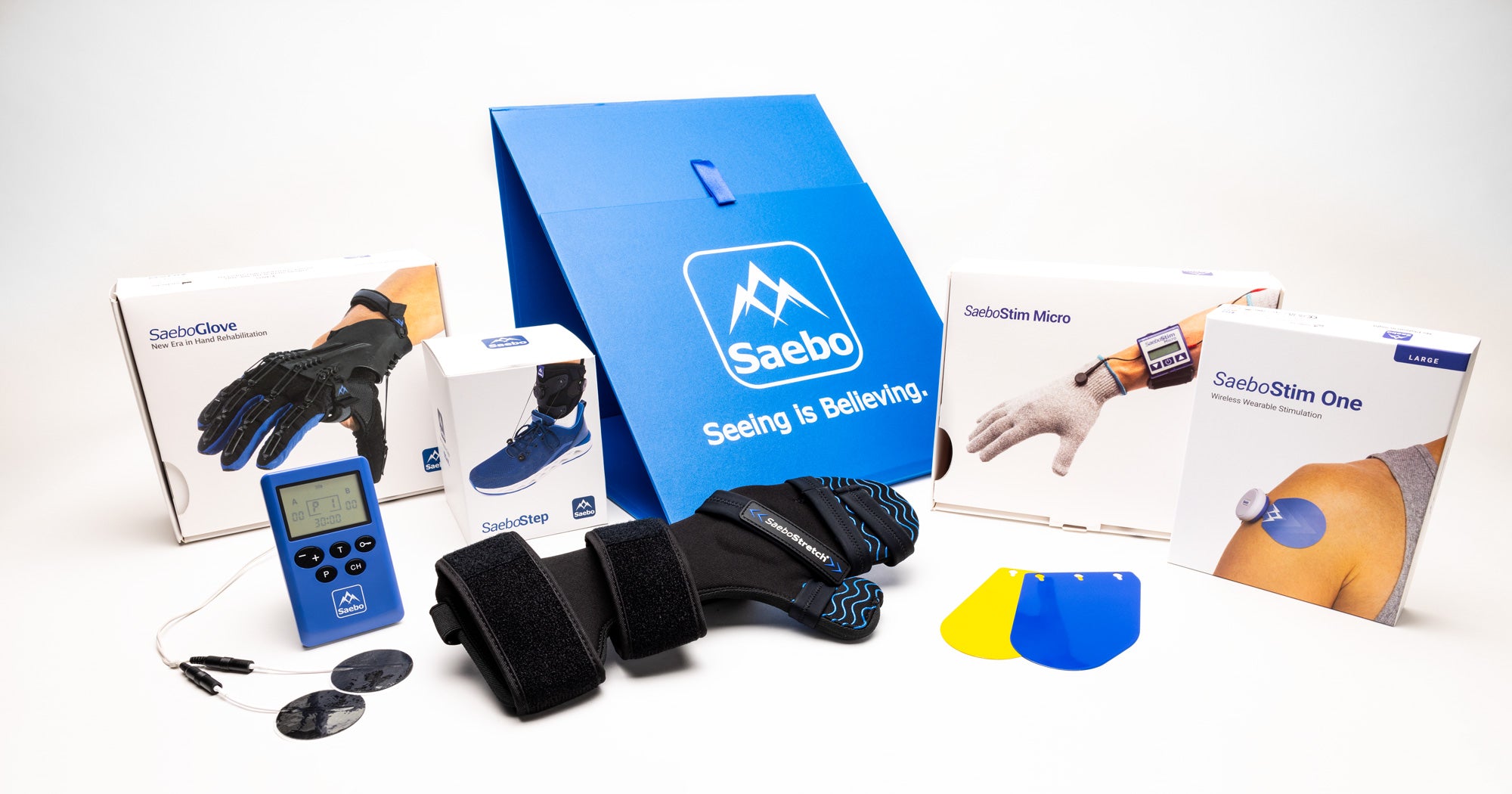
Rehabilitation usually begins 24 to 48 hours after a left hemisphere stroke, once the patient is medically stable. Early and consistent therapy is essential because it stimulates the brain’s ability to reorganize, create new neural pathways, and regain lost functions. A personalized rehabilitation plan helps survivors improve strength, communication, cognition, and emotional well-being. Some survivors benefit from home-based rehabilitation tools, such as Saebo devices, designed to encourage active movement practice and repetition.
Exercises right-side weakness
A left hemisphere stroke often causes right-side weakness or paralysis. Physical therapy focuses on waking up affected muscles, rebuilding strength, and restoring movement patterns.
Therapists may recommend stroke rehabilitation exercises such as:
- Shoulder shrugs and blade squeezes to activate the shoulder girdle and support upper-extremity control.
- Tabletop reaching, sliding, or tapping tasks to improve arm range of motion and functional reach.
- Daily task practice like flipping cups, turning cards, stacking objects, or folding towels helps promote task-specific neuroplasticity and functional arm recovery.
These exercises help retrain the nervous system, especially when performed with high repetition and progressive challenge. Neuroplasticity — the brain’s ability to reorganize and form new neural pathways — is central to stroke recovery and is activated through hundreds of meaningful repetitions. Repetition can be supported by structured home programs and rehabilitation technology like Saebo’s functional recovery devices.
Speech-language therapy for aphasia
Speech therapy is a vital part of left hemisphere stroke recovery, particularly for survivors experiencing aphasia or speech production difficulties. SLPs use personalized exercises to strengthen speaking and understanding skills. With regular, repeated practice, survivors take advantage of the brain’s lifelong ability to rewire, leading to steady improvements in communication.
Cognitive therapy and memory training
Left hemisphere strokes can affect memory, attention, problem-solving, and other thinking skills. Cognitive rehabilitation helps strengthen these abilities through structured exercises and practical strategies.
Helpful cognitive recovery strategies include:
- Writing information down in notebooks or digital apps.
- Using visual prompts, such as labels, calendars, or checklists.
- Establishing predictable routines to reduce memory load.
- Keeping items in designated places to make daily tasks easier.
- Puzzles, board games, and memory-matching activities to stimulate cognitive recovery in a fun and engaging way.
Support for emotional recovery
Emotional healing is a key part of long-term stroke recovery. About one-third of stroke survivors experience post-stroke depression or anxiety, which can influence motivation and therapy participation.
Supportive strategies include:
- Therapy tasks and activities that are relevant and meaningful to the individual
- Positive psychology techniques, such as gratitude journaling or strength-based exercises, to shift attention toward progress.
- Relaxation techniques, including deep breathing, mindfulness, or light stretching.
- Staying socially connected, which helps reduce isolation and improves motivation during recovery.
Stroke recovery timeline: what to expect
The brain heals most rapidly in the first three months after stroke, often called the critical window. However, progress can continue for months and years after the initial injury with consistent therapy.
Research shows that:
- Many survivors who cannot walk at first regain mobility through structured rehabilitation [1].
- Consistent repetition and task-specific practice drive meaningful gains by strengthening new neural pathways [2].
- Even years after a stroke, survivors may continue improving through long-term neuroplasticity and consistent home therapy [3].
Recovery often progresses through overlapping stages: the acute phase (medical stabilization), subacute phase (intensive rehabilitation), and chronic phase (long-term functional improvement). Each stage benefits from consistent, task-specific therapy.
Conclusion
A left hemisphere stroke can bring long-term challenges, but understanding these effects helps patients and caregivers prepare for the road ahead. Even when speech, movement, cognition, or vision are affected, recovery remains possible thanks to the brain’s lifelong neuroplasticity. With consistency and a strong rehabilitation plan, survivors can continue making meaningful progress over time especially when therapy is repetitive, task-specific, and progressively challenging.
Every recovery journey is unique, and improvement can happen long after the initial phase. Support from therapists, healthcare providers, and loved ones creates a strong foundation for rebuilding skills and confidence. Many survivors regain independence through steady practice, persistence, and evidence-based stroke rehabilitation strategies. Long-term improvement can be supported by therapists, caregivers, and home rehabilitation solutions such as those developed by Saebo.
References
All content provided on this blog is for informational purposes only and is not intended to be a substitute for professional medical advice, diagnosis, or treatment. Always seek the advice of your physician or other qualified health providers with any questions you may have regarding a medical condition. If you think you may have a medical emergency, call your doctor or 911 immediately. Reliance on any information provided by the Saebo website is solely at your own risk.
