
Stroke Recovery Stages and Exercises: Why Repetition Works Even Without Movement After Stroke
Stroke recovery stages can feel overwhelming, especially when you are dealing with flaccid paralysis and wondering how early stroke arm exercises or high-repetition stroke rehab exercises can help when there is little or no voluntary movement. Research shows that stroke rehabilitation exercises and physical therapy can significantly improve arm function, walking distance, and overall recovery when high repetition is used [1]. The brain's knowing how to rewire itself through neuroplasticity means that repetition works even during the earliest post stroke recovery stages.
In this piece, we’ll walk through the different stages of stroke recovery, explain how neuroplasticity drives improvement, and show examples of stroke exercises that can help even when movement is limited. You'll see specific techniques like flaccid stroke arm exercises and hemiplegia exercises that use repetition for early stroke recovery.
Understanding Post Stroke Recovery
Why Strokes Affect Function
The brain controls movement through a cross-connection system, meaning each side of the brain controls the opposite side of the body. Because of this, a stroke on one side of the brain often causes weakness or paralysis on the other side, a condition called hemiplegia. These changes are why stroke recovery exercises, physical or occupational therapy, and high-repetition practice are needed to help the brain relearn movement during every stage of stroke recovery.
A stroke happens when part of the brain loses blood supply, which prevents brain cells from getting oxygen. The area of the brain that is injured determines which functions are affected. If the motor areas are involved, it can lead to weakness, loss of movement, or difficulty controlling the arm or leg.
Stroke symptoms can include weakness, trouble speaking, memory problems, fatigue, or changes in mood. Every stroke is different, and recovery depends on the area of the brain affected and how the nervous system responds to rehabilitation.
Rehabilitation often begins soon after a stroke, sometimes within the first few days, depending on medical stability, stroke severity, and any comorbid conditions. Physical and occupational therapy focus on helping the brain relearn movement through repetition, guided exercises, and task-specific practice. The goal is to improve function as much as possible and help the body adapt as recovery continues.
Flaccidity Before Spasticity in Recovery
Motor recovery after stroke often follows a general pattern, although the exact timeline is different for everyone. Many people first experience flaccid paralysis, followed by small or inconsistent movement, and later may develop muscle stiffness or spasticity as the brain begins reconnecting with the body.
Flaccid paralysis is common in the early stage after stroke. The affected arm or leg may feel heavy, limp, or difficult to move because the brain is not sending strong signals to the muscles. This does not mean recovery is impossible. In many cases, the brain is still in a period of shock, and movement can return as the nervous system begins to reorganize.
As recovery begins, some people notice small movements returning, while others may develop muscle tightness or spasticity; however, not everyone experiences spasticity, and its onset and severity vary between patients. This can feel frustrating, but it often means the brain is starting to reconnect with the muscles. Recovery does not happen at the same speed for everyone, and progress may move forward, slow down, or change over time. Even in the flaccid stage, the brain can still respond to therapy and repetition.
The Science Behind Repetition in Stroke Physical Therapy
Why Repetition Creates New Neural Pathways
Neuroplasticity drives stroke recovery by allowing the brain to reorganize and form new connections after injury. After a stroke, damaged brain cells cannot work normally, but healthy parts of the brain can learn to take over through new pathways. This rewiring happens as the brain strengthens existing connections and builds new ones, allowing movement to improve with practice and repetition.
A common rule in rehabilitation is “neurons that fire together, wire together,” meaning the more a movement is practiced, the stronger the brain connections become. Each time a movement is practiced, the brain strengthens the pathway between the brain and the muscles, making future movement easier. Research shows the brain needs a high number of repetitions to create real change after stroke. Studies suggest that hundreds of repetitions per day may be needed during stroke rehabilitation to help the brain relearn movement. Many therapy sessions include far fewer repetitions than what the brain needs, which is why extra practice at home is often recommended.
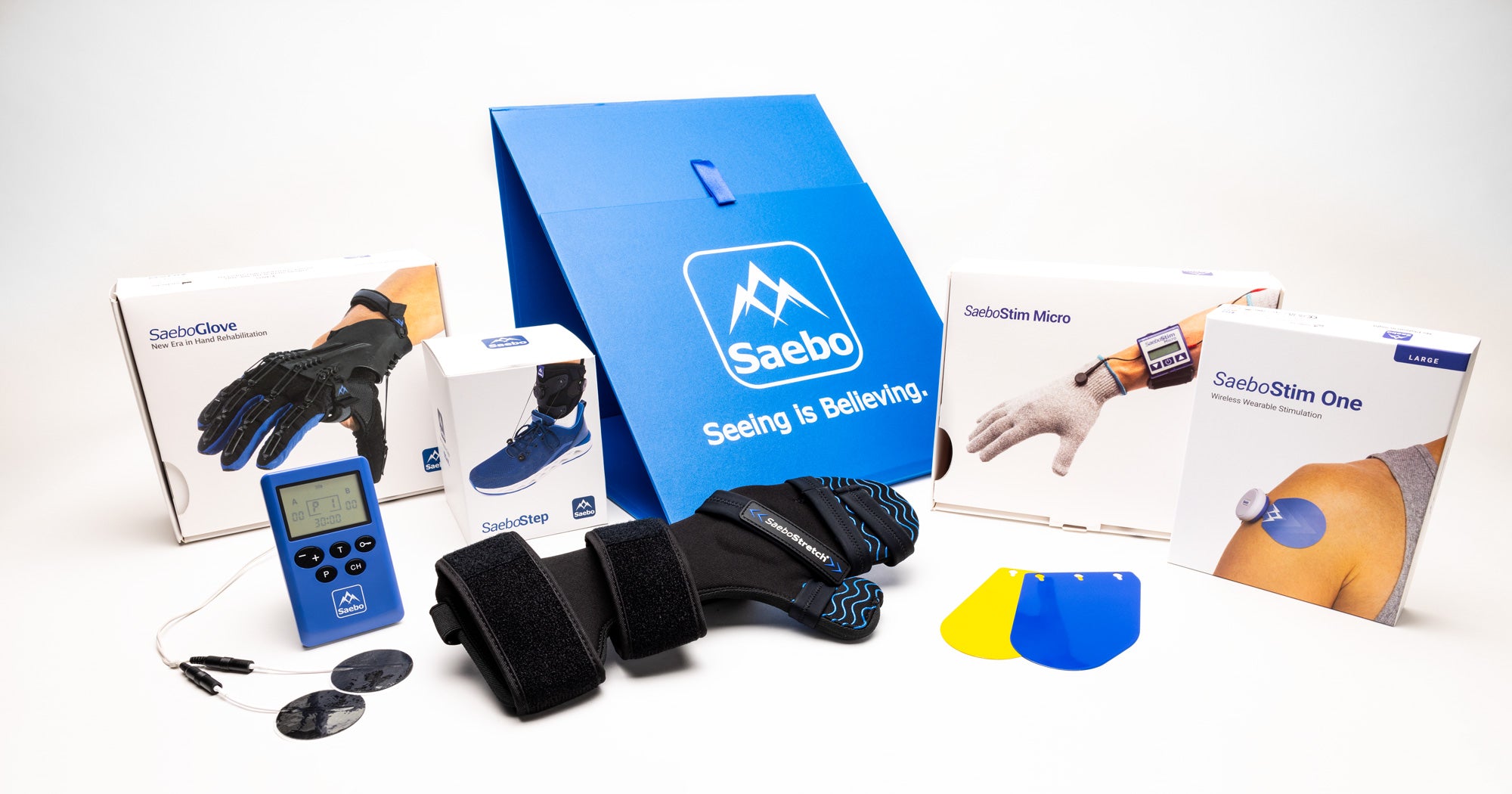
Some research suggests thousands of repetitions may be needed to create lasting changes in the brain after stroke [2]. Stroke survivors who practice at home or use rehabilitation tools can often perform far more repetitions than during standard therapy sessions. Rehabilitation devices, including Saebo therapy tools such as the SaeboGlove or SaeboMAS, are often used to help patients safely increase repetition when active movement is limited. When repetition is too low, recovery may slow down, which is why consistent practice is important even months after a stroke.
The Role of Task-Specific Practice
Repetitive task training is a common stroke therapy approach that involves practicing specific movements such as reaching, grasping, standing, or walking. Research shows that task-specific stroke exercises can improve arm function, hand use, and walking ability [1]. These improvements can help people walk farther, use their hands more easily, and perform daily activities more independently.
Task-specific training focuses on practicing real-life movements, such as reaching, grasping, and standing, which helps the brain relearn skills needed for daily activities and supports home exercises for hemiplegia recovery. Higher repetition, consistent practice, and exercises that match real-life tasks are strongly linked to better stroke recovery. People can improve with repetitive practice at any stage of stroke recovery, even when movement is very limited.
How Repetition Works Without Active Movement
Mental Practice and Motor Imagery Techniques
Motor imagery is useful during the flaccid stage of stroke recovery when there is little or no voluntary movement. This technique involves mentally rehearsing a movement without physically performing it. For example, a person can imagine opening the hand, bending the elbow, or reaching forward while looking at the affected arm.
Research shows that the brain can become active during mental practice in a similar way to real movement [3]. This makes motor imagery a helpful way to begin stroke recovery exercises even when the muscles are not responding. Mental practice works best when done slowly and with attention, and it can be combined with passive movement, assisted exercises, or rehabilitation devices to increase repetition. Patients can start with 10–15 minutes of mental practice daily and gradually increase time as tolerated.
Mirror Therapy and Visualization
Mirror therapy is often used during the flaccid stage because it does not require active movement. A mirror is placed so the reflection of the stronger arm looks like the affected arm. When the stronger arm moves, the brain sees the reflection and may respond as if the weaker arm is moving.
Simple exercises like opening and closing the hand, lifting the arm, or turning the wrist can be practiced while watching the mirror. Even if the affected arm does not move, the visual feedback can help stimulate the brain and support neuroplasticity. Visualization and watching movements can also help activate the motor system when muscles are still flaccid.
Electrical Stimulation (NMES/FES)
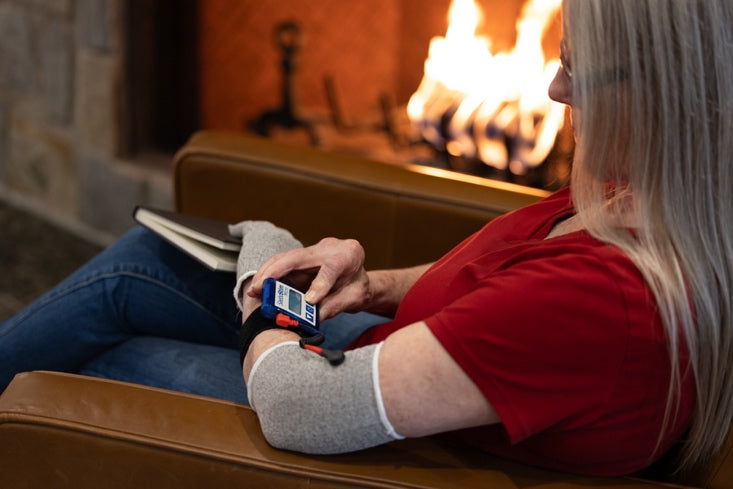
Neuromuscular electrical stimulation (NMES) is commonly used in stroke rehabilitation to activate muscles that cannot move on their own. Small electrical signals cause the muscle to contract, which can help maintain muscle health and provide feedback to the brain during the flaccid stage.
Electrical stimulation may be used to help open the hand, lift the wrist, straighten the elbow, or activate the ankle. Saebo devices can be paired with electrical stimulation to allow safe, high-repetition practice even when voluntary movement is limited. These movements can be repeated many times to help the brain relearn the connection to the muscle. Rehabilitation tools, including Saebo devices, are often used with electrical stimulation to allow safe, high-repetition practice when voluntary movement is limited.
Active Assisted and Bilateral Arm Training
Active-assisted exercises are commonly used when the arm is flaccid. The stronger arm, a therapist, or a device helps move the weaker arm through the correct motion so the brain can experience the movement. For example, a person may use the stronger hand to help lift the weaker arm, guide the hand to the mouth, or assist with opening and closing the fingers.
Bilateral arm training can also help during early recovery. Both arms move together at the same time, allowing the stronger side to help guide the weaker side. Simple exercises like lifting both arms, sliding both hands on a table, or holding an object with both hands allow safe repetition while the brain is still relearning movement.
Applying Repetition Across Different Recovery Stages
Repetition should begin as early as possible after a stroke, even when movement is very limited or the arm feels flaccid. Early therapy often starts with positioning, assisted movement, mental practice, and simple exercises that help stimulate the brain. These activities may seem small, but they help prepare the nervous system for recovery.
As the brain begins to respond, therapy becomes more active and may include assisted arm exercises, mirror therapy, electrical stimulation, and task-based practice like reaching or standing. The brain is often most responsive to repetition during the first few months after stroke, which is why frequent practice is important during this stage.
Most therapy sessions alone do not provide enough repetition to fully drive recovery. The brain may need hundreds of repetitions per day to relearn movement, so home exercise programs, guided practice, and rehabilitation tools are often used to increase the amount of practice.
Even when recovery starts slowly, consistent repetition over time can help the brain reconnect with the body and improve movement.
Conclusion
Recovery after stroke depends on repetition, even in the early stage when the arm or leg feels flaccid or difficult to move. The brain can begin to relearn movement through neuroplasticity, but it requires frequent practice to build new connections. Techniques such as mental practice, mirror therapy, electrical stimulation, assisted exercises, and high-repetition training allow recovery to begin even when voluntary movement is limited.
Research shows the brain often needs far more repetition than what is provided during standard therapy sessions. Because of this, home exercises, guided practice, and rehabilitation tools such as Saebo devices are often used to safely increase repetition and support continued progress.
Recovery may start slowly, but consistent practice over time can help the brain reconnect with the body and improve function well beyond the first few months after stroke.
References
All content provided on this blog is for informational purposes only and is not intended to be a substitute for professional medical advice, diagnosis, or treatment. Always seek the advice of your physician or other qualified health providers with any questions you may have regarding a medical condition. If you think you may have a medical emergency, call your doctor or 911 immediately. Reliance on any information provided by the Saebo website is solely at your own risk.
