
Mental Practice for Stroke Recovery: How SaeboMind Uses Neuroplasticity to Improve Movement
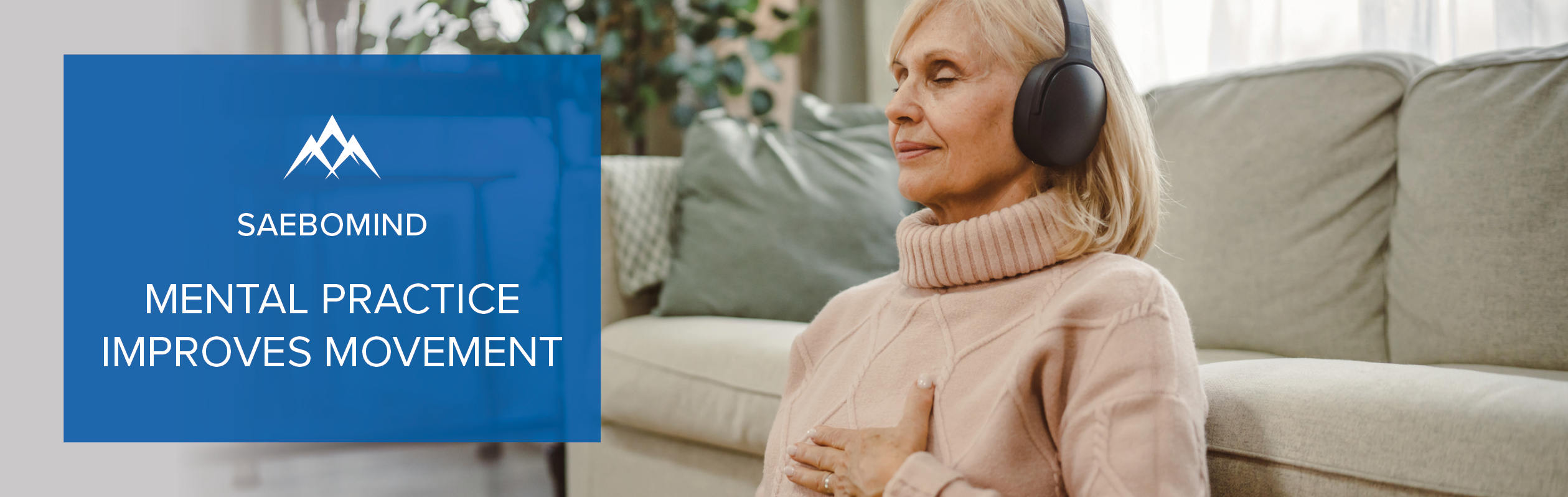
Mental practice, also called motor imagery or mental rehearsal, allows stroke survivors to mentally rehearse movements without physically performing them. This neurorehabilitation technique activates brain regions involved in movement and support neuroplasticity during stroke recovery.
Stroke affects nearly 12 million people worldwide each year, making effective home stroke rehabilitation and neuroplasticity-based recovery strategies increasingly important. Many don't realize the brain can rewire neural pathways around damaged areas through focused mental rehearsal. There are high levels of clinical evidence that support mental practice and motor imagery to improve upper extremity motor function after stroke, especially when combined with conventional stroke rehabilitation exercises. What is mental practice, and can mental imagery improve stroke recovery beyond traditional physical therapy alone? Mental practice vs physical practice isn't an either-or decision. Motor imagery complements hands-on rehabilitation, as mental practice examples show.
Mental practice after stroke is one of the most researched cognitive rehabilitation techniques used to support motor recovery and neuroplasticity.
What Is Mental Practice in Stroke Recovery?
Mental Practice Definition: Using Your Mind to Retrain Movement
Motor imagery involves visualizing yourself performing a movement without physically executing it, allowing the brain to rehearse movement patterns even when mobility is limited after stroke. This technique, often called mental practice, activates the brain's motor, sensory, and perception centers just as if you were performing the actual physical task.
The approach may benefit stroke survivors during acute, subacute, and chronic recovery stages, especially individuals experiencing post-stroke paralysis, learned nonuse, or limited mobility. Visualizing specific movements stimulates neural pathways and triggers the brain's natural healing mechanisms even if you can't move affected muscles.
How Mental Practice Triggers Neuroplasticity
Neuroplasticity refers to the brain’s ability to reorganize itself by forming and strengthening neural connections around damaged areas after neurological injury. Mental practice sparks changes in regions that relate to movement, such as the primary motor cortex. Research suggests stroke recovery involves strengthening existing neural connections, recruiting alternative neural pathways, and forming new connections through neuroplasticity and repetitive practice [1]. This process, often described as “rewiring the brain after stroke,” plays a critical role in regaining movement, coordination, and functional independence.
Repetition strengthens these neural pathways. The connections become stronger the more a movement is practiced mentally or physically.
Mental Practice vs Physical Practice: How They Work Together
Research suggests mental practice combined with conventional physical or occupational therapy may improve upper and lower extremity function more effectively than physical rehabilitation alone [2]. Studies focusing on chronic stroke survivors between one and fourteen years post-stroke found that combining mental practice with physical exercise substantially improved arm function. Stroke survivors engaging in both approaches display greater skill generalization to new environments than those using physical practice alone.
The combination works because mental practice primes the brain before physical movement. Neurons stay active around the damaged brain area when you think about moving and create a foundation for physical rehabilitation. You can transition from mental practice to physical practice as recovery progresses, resulting in behavioral changes and improved movement capability.
Mental Practice Examples in Stroke Rehabilitation
You can practice motor imagery from two perspectives. Internal motor imagery involves visualizing yourself from the first-person point of view and looking at your surroundings as if through your own eyes. External practice uses a third-person view and observes yourself from outside. Both approaches stimulate neuroplasticity.
Upper extremity activities include:
- Handwriting, grasp-and-release activities, buttoning clothing, and counting money
- Eating food with utensils
- Petting an animal
Lower extremity activities include:
- Walking, balance training, weight shifting, and navigating uneven surfaces safely
- Standing up from a seated position
- Using stairs safely
Many therapists recommend spending 3–5 minutes mentally rehearsing a task before attempting it physically to help prime the brain for movement. The practice's effectiveness increases when you engage multiple senses during visualization.
SaeboMind Exercises Review: How They Work (2026 Tested)
What Are SaeboMind Mental Practice Exercises?
Saebo, Inc. offers SaeboMind as a guided motor imagery program designed to support neurological recovery and home stroke rehabilitation. Stroke survivors and caregivers receive unlimited access at no cost, making the program accessible for long-term home rehabilitation. The program works for anyone who can actively listen and follow simple instructions.
The catalog has familiar daily activities tailored for both upper and lower extremities. Upper extremity options include handwriting, eating with utensils, grasp-and-release tasks, petting an animal, and counting money to reinforce functional arm and hand recovery after stroke. Lower extremity sessions focus on walking, standing balance, sit-to-stand transfers, stair navigation, and lower body coordination needed for daily mobility. You select activities that match your current rehabilitation goals rather than generic exercises.
Each audio file requires 20-30 minutes total. You sit comfortably, close your eyes and follow guided narration that describes what each movement looks like and feels like. The recordings present rich, vibrant descriptions while you imagine performing tasks in a relaxed, self-reflective state.
The 3 Phases of Each SaeboMind Session
Phase 1 introduces meditation through deep breathing exercises and progressive muscle relaxation (PMR). This technique guides you through systematic muscle group awareness and helps you forget immediate surroundings and focus inward.
Phase 2 delivers the mental practice component. You participate in detailed descriptions of functional activities and focus on your affected arm or leg as if performing the task without difficulty. The narration captures sensory details and movement sequences.
Phase 3 closes with guided return to awareness. You transition back to your real environment through reversed PMR and deep breathing techniques.
How SaeboMind Exercises Support Recovery
The program builds on four foundational principles for motor learning through neuroplasticity. First, belief in mind-body integration matters. You must trust that mental rehearsal produces real results, as skepticism undermines progress.
Second, achieving a meditative state matters for effectiveness. Research associates meditation and relaxation techniques with lower stress levels, improved attention, better emotional regulation, and reduced pain perception during recovery [3]. The relaxation techniques help repair balance in the brain following neurological injury.
Third, anticipating positive outcomes shapes recovery trajectory. Each session ends with successful task completion and focuses on meaningful activities. Meaningful, goal-directed activities may stimulate neuroplasticity more effectively than repetitive nonfunctional tasks alone.
Fourth, self-reflection promotes growth. The recordings prompt you to assess your experience during mental practice regularly and support the motor-learning process. The approach provides safe, affordable practice opportunities with level 1a evidence supporting motor rehabilitation.
Using Mental Practice at Home: Practical Guide, Benefits, and Limitations
Step-by-Step: How to Do Mental Practice at Home
One of the biggest advantages of mental practice after stroke is accessibility. Stroke survivors can perform motor imagery almost anywhere without special equipment, making it a practical option for home stroke rehabilitation, travel, or rest periods between therapy sessions. Many survivors practice mental rehearsal while seated comfortably in a chair, lying in bed, or relaxing in a quiet environment.
For guided mental practice using SaeboMind Exercises, you only need a supportive chair or upright bed position, an internet-connected device, and headphones or speakers. Find a quiet location free from distractions where you can focus for approximately 20–30 minutes uninterrupted. Reducing lighting and minimizing background noise may improve concentration during guided motor imagery sessions.
Visit the official SaeboMind website and submit a request form for access to the exercise portal. Select one meaningful activity aligned with your occupational or physical therapy goals, especially tasks connected to independence and daily living. If you work with a therapist, coordinate your audio file selection with current rehabilitation objectives. Listening to the same one or two guided exercises for multiple consecutive sessions may help reinforce motor learning and neuroplasticity before progressing to new activities.
A common recommendation is at least one guided mental practice session daily, five days per week, combined with physical rehabilitation whenever possible. Mental rehearsal helps familiarize the brain with task requirements before physical movement practice begins.
How Mental Practice Complements Physical Rehab Tools
Mental practice slots between physical therapy sessions or assistive device training. Use it when your body's needs rest but your brain remains alert. The approach requires no special equipment and works with orthotic devices or adaptive tools.
Benefits of Mental Practice for Stroke Recovery
Stroke survivors may experience improvements in motor planning, limb awareness, coordination, and functional movement in affected extremities. Motor planning develops with increased limb awareness and helps overcome learned nonuse patterns. The practice builds better spatial judgment for body-object relationships. It reduces stress and regulates emotions through meditative elements.
Frequently Asked Questions About Mental Practice and SaeboMind
Who qualifies for mental practice?
Anyone able to concentrate for 20-30 minutes and understand spoken directions works well with this approach, even without limb movement or sensation.
Can mental practice help stroke survivors with paralysis?
Yes. Mental practice may help activate movement-related brain regions even when physical movement is severely limited. Many stroke survivors begin motor imagery exercises before visible movement returns.
Is mental practice better than physical therapy?
Mental practice is not a replacement for physical or occupational therapy. Research suggests it may work best when combined with conventional stroke rehabilitation exercises.
Can chronic stroke survivors still improve?
Yes. Neuroplasticity can continue for months or years after stroke, especially with repetitive, meaningful practice.
Conclusion
SaeboMind Exercises deliver what stroke survivors need: evidence-based mental practice without barriers. The program is free, works on any device, and requires no special equipment. Mental imagery is not a replacement for physical or occupational therapy, but it may help stroke survivors continue stimulating neuroplasticity between rehabilitation sessions when physical fatigue limits movement practice. Stroke survivors using SaeboMind may also benefit from combining mental practice with other neuroplasticity-based rehabilitation approaches, including task-specific training, electrical stimulation, and home exercise programs.
Consistent, meaningful practice may benefit stroke survivors at nearly every recovery stage, particularly individuals experiencing limited mobility, learned nonuse, or difficulty participating in traditional stroke recovery exercises at home.
References
Todo el contenido de este blog es únicamente informativo y no sustituye el consejo, diagnóstico ni tratamiento médico profesional. Consulte siempre con su médico u otro profesional de la salud cualificado si tiene alguna pregunta sobre una afección médica. Si cree que puede tener una emergencia médica, llame a su médico o al 911 de inmediato. Confiar en la información proporcionada por el sitio web de Saebo es bajo su propio riesgo.
