
“How Much Therapy Is Enough for Stroke Recovery? What Saebo Mind Research Reveals About Neuroplasticity and Rehabilitation Intensity”
Introduction
Research on stroke rehabilitation intensity reveals a striking reality: many stroke survivors receive less than 8 minutes of daily task-specific upper limb therapy focused on arm and hand recovery [1]. The average therapy session delivers only about 30 functional repetitions, yet neurorehabilitation research suggests that 300 to 400 task-specific repetitions per session may be needed to stimulate neuroplasticity and meaningful motor recovery after stroke. This gap between the therapy stroke survivors receive and the repetition volume required for brain rewiring may significantly affect long-term recovery outcomes. This article explores evidence-based stroke therapy dosage guidelines and explains how home rehabilitation tools like SaeboMind, SaeboFlex, and SaeboGlove may help bridge this recovery gap outside the clinic. We'll also provide practical strategies to maximize your therapy dose both in clinic and at home.
Why the Amount of Therapy Matters for Stroke Recovery
Neuroplasticity and Brain Rewiring After Stroke
Stroke recovery depends heavily on neuroplasticity, the brain’s ability to reorganize and form new neural connections after injury. This isn't abstract theory. After a stroke, the brain can adapt by creating and strengthening new pathways that help regain lost movement and function. With consistent practice, healthy parts of the brain can begin helping take over skills affected by the stroke. Cortical reorganization remaps brain functions to undamaged territories. These neuroplastic changes do not occur automatically and require consistent, repetitive, task-specific practice. They require intentional, repeated stimulation through therapy.
The Science Behind Repetition-Driven Recovery
Stroke recovery improves when survivors perform large amounts of meaningful, repetitive practice. In simple terms, the brain learns through repetition. The more often you practice a movement, the more the brain strengthens the pathways needed to perform that movement again.
This is why high-repetition, task-specific exercises are such an important part of stroke rehabilitation. Repeated practice helps retrain the brain and improve functions like reaching, grasping, walking, and everyday activities.
Studies have found that stroke survivors who complete higher numbers of daily repetitions during structured home therapy programs often experience better improvements in arm function and mobility [2]. Even years after a stroke, consistent practice may still help improve movement and independence.
Time vs Repetitions: What Actually Drives Progress
Time scheduled for therapy is different from actual therapeutic activity. Time attending therapy isn't equivalent to minutes of active therapy or number of repetitions performed. This difference matters. Research suggests crossing specific thresholds activates the brain's healing mechanisms needed for functional gains, with evidence pointing to approximately 2 hours of targeted practice daily. Yet reviews found that fewer than 13% of rehabilitation studies reached this threshold. The amount of therapy may be the main parameter driving outcomes, with frequency and duration as secondary factors.
Evidence-Based Guidelines: How Much Therapy Is Enough
Recommended Therapy Hours by Recovery Phase
Clinical guidelines often recommend several hours of therapy per day after stroke. However, research increasingly suggests that the number of meaningful repetitions performed during therapy may matter more than the total time spent in a clinic.
In other words, a person can attend therapy for hours but still complete relatively few functional movements. What appears to drive neuroplasticity and motor recovery is active, task-specific practice repeated over and over again.
For stroke survivors, this means recovery is less about simply logging therapy hours and more about consistently practicing meaningful movements like reaching, grasping, standing, walking, and using the affected arm during daily activities.
Research also suggests there may be an important window for intensive rehabilitation during the first few months after stroke [3]. During this time, higher repetition training may help maximize the brain’s ability to reorganize and recover function. That said, studies continue to show that recovery and neuroplastic changes can still occur months or even years later with consistent, high-repetition practice.
How Many Repetitions Are Needed Per Session
Human research shows that more practice leads to better recovery after stroke. For arm rehab, therapy programs often involve hundreds of repeated movements per session, and higher repetition helps improve strength and function. For walking rehab, patients typically take a few hundred to about 1,000 steps per day in early recovery, and higher amounts of walking practice are linked with better walking speed and endurance.
These findings suggest that hundreds of daily arm and hand repetitions — and thousands of walking repetitions — may be necessary to drive meaningful neuroplastic recovery.
The Gap Between Current Practice and Optimal Dosage
In real-world stroke rehab, patients often get less therapy than research suggests is needed. Upper-limb sessions may include only about 30 repetitions, and walking sessions around a few hundred steps. Most community programs provide just 1–2 short sessions per week. Some studies suggest that recovery may require more therapy than is typically provided in standard care.
Mental Practice and Saebo Mind: Adding Therapy Without Physical Fatigue
What Is Mental Imagery for Stroke Recovery
Mental practice, also called motor imagery, involves mentally rehearsing movements without physically performing them. This cognitive rehearsal triggers the brain's motor, sensory, and perception centers in a way that is similar to physical task performance. At the time you mentally rehearse an activity, overlapping neural networks activate as if you were performing the movement and induce motor learning over time. Brain imaging studies show that imagined movements activate many of the same neural pathways involved in actual movement.
How Saebo Mind App Works
Saebo Mind provides free guided mental imagery exercises designed to support stroke recovery, upper limb rehabilitation, and neuroplasticity training at home. Each session lasts 20 to 30 minutes and follows three structured phases. The introduction meditation promotes relaxation through progressive muscle relaxation and deep breathing. The mental practice phase delivers vivid descriptions of functional activities and allows you to imagine performing tasks with your affected limb. The closing meditation guides you back to awareness. Patients and caregivers can access unlimited guided sessions through the Saebo Mind platform to increase therapy intensity outside traditional rehabilitation sessions.
Combining Mental and Physical Practice
Mental practice works most effectively when you combine it with physical practice of the same skill. The combination improves upper extremity function and activities of daily living more than either intervention alone. Physical practice creates motor programs that mental practice reinforces.
Recommended Dosage for Saebo Mind Exercises
Research indicates consistent mental practice of motivating tasks for 20 to 45 minutes produces best results. Therefore, minimum recommendations include one session daily, at least 5 times per week. Listen to the same audio file for multiple consecutive sessions before changing activities to reinforce learning.
Practical Strategies to Increase Your Therapy Dose
Home Therapy After Stroke: Making It Count
Home therapy after stroke allows survivors to dramatically increase repetition volume beyond what is typically possible during outpatient rehabilitation sessions. Stroke rehabilitation often begins within 24 to 48 hours after medical stabilization and should continue with consistent home exercise practice for months or even years.
Saebo Products Enable More Repetitions
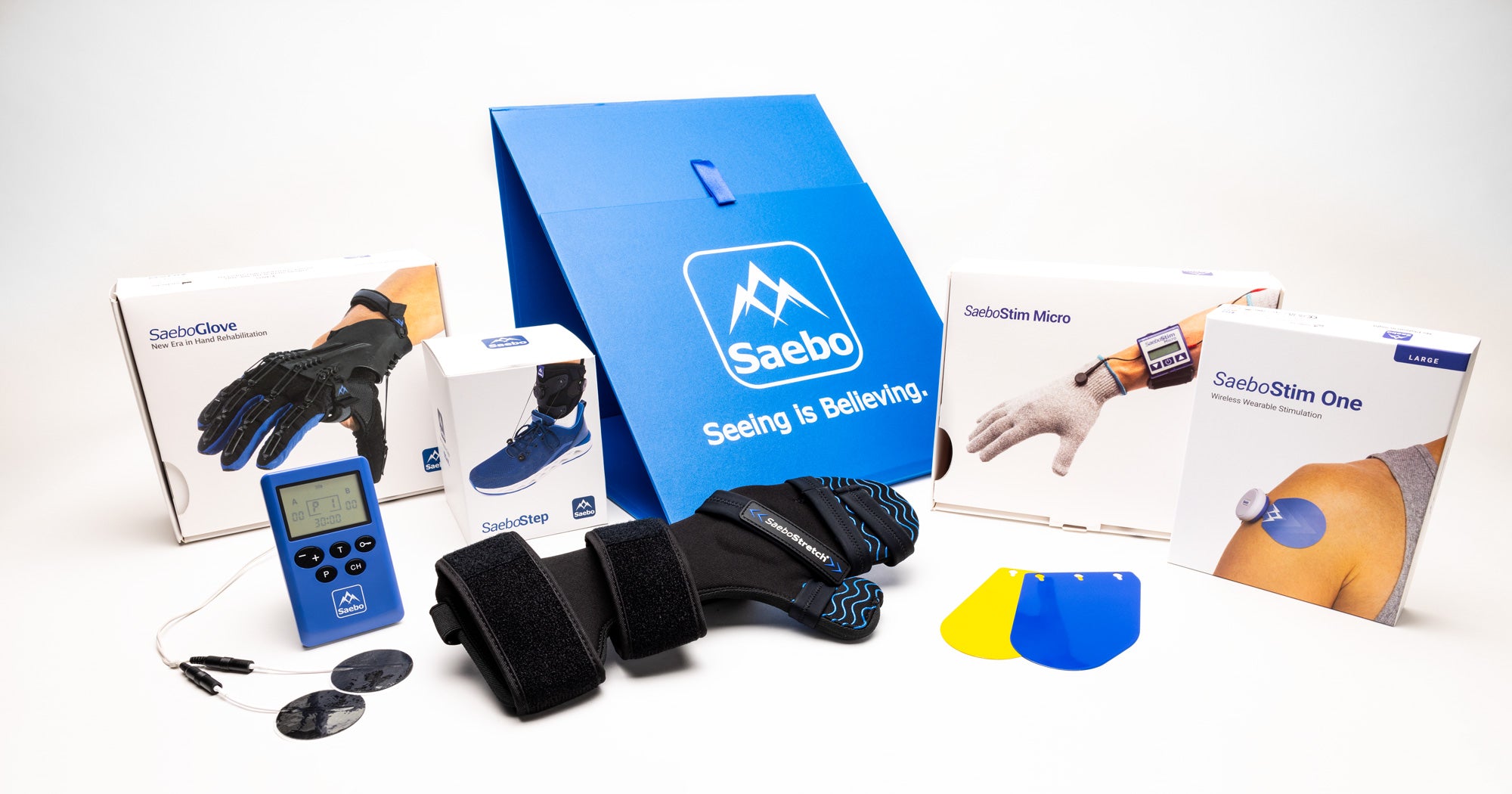
Survivors accomplish only 32 repetitions during typical therapy sessions. Home therapy devices can accomplish 400 repetitions in half an hour for those with limited mobility, while higher-ability patients achieve over 1,600 repetitions in the same timeframe. The SaeboFlex helps stroke survivors perform high-repetition grasp-and-release exercises that may otherwise be difficult due to hand weakness or spasticity. Use the SaeboStretch for 6 hours daily, preferably overnight. The SaeboGlove may support repetitive hand-opening practice and modified constraint-induced movement therapy for individuals with mild hand impairment after stroke.
Structure Your Daily Practice Schedule
Space repetitions throughout the day rather than completing them consecutively. Incorporate exercises into everyday routines for little-and-often practice. Mental practice sessions with Saebo Mind should occur 2-3 times before you actively practice each task.
Conclusion
The evidence increasingly suggests that stroke recovery outcomes improve when survivors perform high volumes of meaningful, task-specific repetitions that stimulate neuroplasticity. We now have the tools to bridge this gap. Combining outpatient therapy with structured home rehabilitation using tools like Saebo Mind, SaeboFlex, and SaeboGlove may help survivors continue improving long after formal therapy ends. Track your repetitions each day and want to stay consistent rather than perfect. Even years after stroke, the brain may retain the ability to adapt and recover when challenged with consistent, high-repetition, task-specific practice.
References
- https://pmc.ncbi.nlm.nih.gov/articles/PMC10492439/
- https://www.sciencedirect.com/science/article/pii/S0003999325002564
- https://www.nih.gov/news-events/nih-research-matters/critical-time-window-rehabilitation-after-stroke
All content provided on this blog is for informational purposes only and is not intended to be a substitute for professional medical advice, diagnosis, or treatment. Always seek the advice of your physician or other qualified health providers with any questions you may have regarding a medical condition. If you think you may have a medical emergency, call your doctor or 911 immediately. Reliance on any information provided by the Saebo website is solely at your own risk.
