
How Saebo Products Help Improve Stroke Recovery
Stroke ranks as one of the leading causes of disability worldwide. Upper limb motor impairment affects a majority of stroke survivors, with many of these individuals experiencing chronic deficits. Innovative rehabilitation tools have become essential to support recovery and restore independence.
This blog will explore how Saebo stroke rehabilitation devices help stroke survivors improve arm and hand function through neuroplasticity-focused therapy, repetitive task practice, and evidence-based stroke rehabilitation exercises. The SaeboGlove hand therapy rehabilitation glove, SaeboFlex glove and SaeboStim devices form the core of this approach. This piece also covers the science behind stroke rehabilitation, common upper extremity challenges, and how stroke survivors can improve hand function through high-repetition, task-specific therapy at home and in clinical settings. These tools support task-specific training to promote meaningful, long-term recovery.
Understanding Stroke Recovery and Upper Extremity Challenges
How Stroke Affects Hand and Arm Function
Stroke damages the motor cortex or corticospinal tract and disrupts the connection between brain and muscles. The arm opposite to the brain lesion experiences weakness or paralysis. Hand and wrist function takes a bigger hit than shoulder and elbow movement. Full hand recovery remains challenging after stroke, which is why early rehabilitation, repetitive movement practice, and neuroplasticity-focused therapy are critical for improving long-term hand and arm function.
The problem goes deeper than weakness alone. Motor deficits often come with sensory loss in touch and proprioception, which makes controlling movements without visual feedback hard. A cascade of secondary problems follows immobility. Soft-tissue changes reduce compliance, spasticity develops, and muscle fibrosis eventually contributes to abnormal limb posturing and pain. Hand and arm function play a major role in independence after stroke because they directly affect activities of daily living such as eating, dressing, grooming, and using household objects.
The Role of Neuroplasticity in Recovery
Neuroplasticity, or the brain’s ability to reorganize and form new neural connections after injury, offers genuine hope for stroke recovery. Neuroplasticity operates through several mechanisms. Surviving neurons near damaged areas sprout new connections. Undamaged brain regions take over functions from damaged areas through cortical remapping, and synaptic connections strengthen or weaken based on activity. Research shows that repetitive, task-specific movement of the affected arm and hand helps stimulate neuroplasticity and improve motor recovery after stroke [1].
Brain rewiring begins within hours after stroke. The process remains most pronounced during the first few weeks and gradually tapers over time but never stops. Although recovery is often fastest during the early stages after stroke, neuroplasticity can continue for months or years, meaning meaningful improvements may still occur during chronic stroke recovery.
Why Early Intervention Matters
The first several months after stroke are often considered the most important window for recovery because the brain demonstrates heightened responsiveness to rehabilitation and motor relearning. Early physical therapy, occupational therapy, and speech therapy can help stroke survivors begin rebuilding movement patterns, preventing secondary complications, and improving functional recovery outcomes.
Early intervention prevents secondary complications and reduces mental decline. It establishes a foundation for later rehabilitation stages. The brain demonstrates heightened receptivity during acute and subacute phases and creates an optimal environment for neuroplastic changes.
Common Barriers to Upper Limb Rehabilitation
Recovery faces big obstacles. Most participants prioritize walking over arm function at two months after stroke, but all participants expressed concern about their upper limb by twelve months. Therapy often becomes infrequent by six months. Many stroke survivors experience reduced access to therapy over time, which can make long-term upper extremity recovery more difficult without structured home rehabilitation programs and ongoing support.
Stiffness and spasticity create clear barriers to arm use. Cold weather, pain, or physical effort often triggers these problems. Being in public consistently limited arm use because of embarrassment and decreased confidence.
Stroke Recovery Exercises That Support Hand and Arm Rehabilitation
Stroke rehabilitation exercises are essential for improving mobility, coordination, and hand function after stroke. Repetitive, task-specific practice helps stimulate neuroplasticity and encourages the brain to rebuild motor pathways. Many occupational therapists recommend combining home exercises with rehabilitation technology to increase repetition and functional use of the affected arm.
Examples of stroke recovery exercises may include:
- Tabletop towel slides for shoulder mobility
- Wrist extension exercises
- Repetitive grasp-and-release training
- Object transfer activities
- Mirror therapy exercises
- Sensory re-education drills
- Functional reaching activities
Saebo rehabilitation devices can help stroke survivors perform these exercises more effectively by assisting movement, reducing compensatory patterns, and enabling higher repetition during therapy.
Core Saebo Products for Stroke Recovery
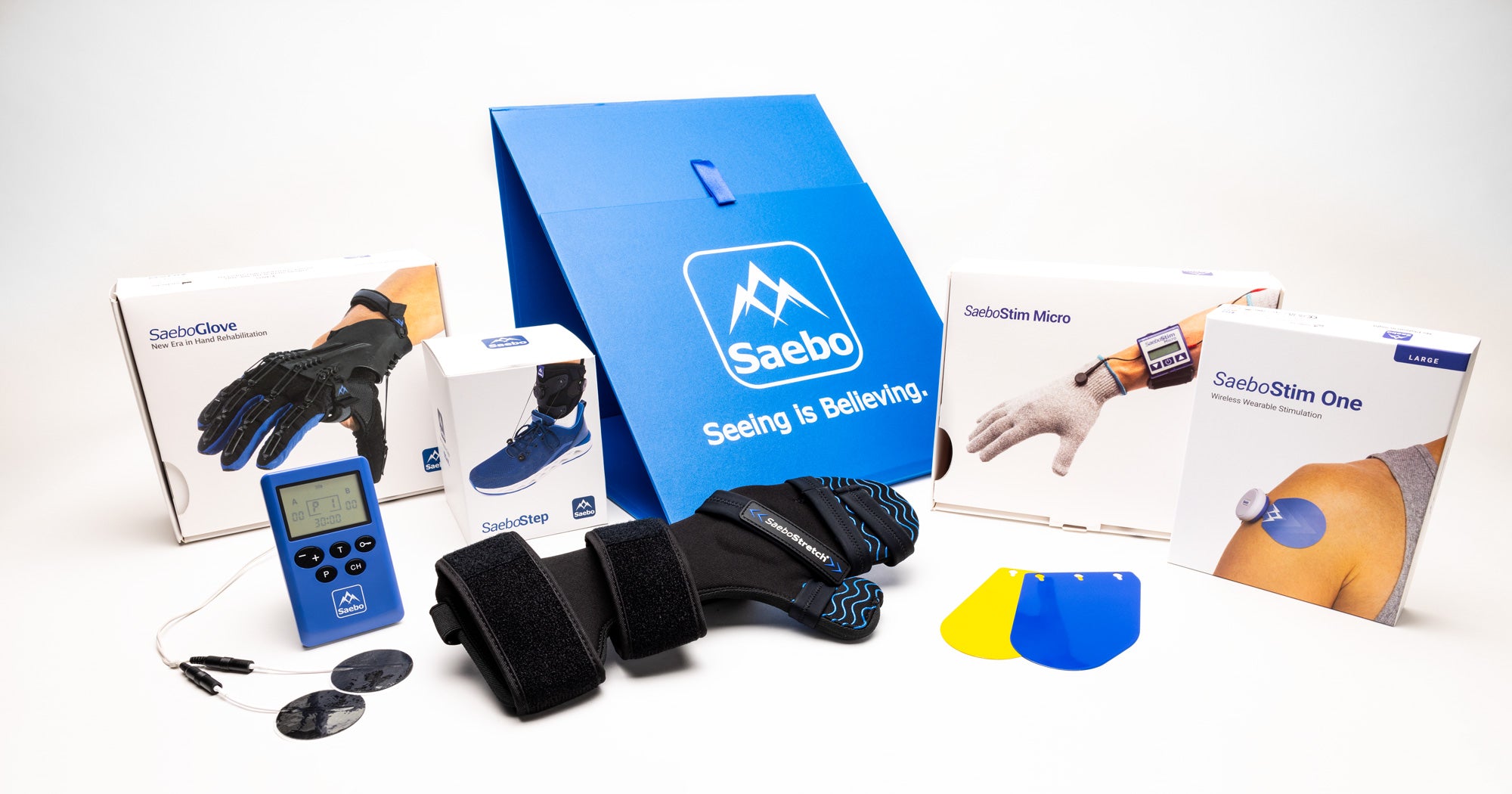
Saebo offers a range of rehabilitation tools designed to deal with different recovery needs. Each product targets specific impairments that limit hand and arm function after stroke.
SaeboGlove Hand Therapy Rehabilitation Glove
The SaeboGlove hand therapy rehabilitation glove helps stroke survivors improve hand function by assisting finger extension during repetitive functional activities such as grasping, releasing, eating, and self-care tasks. This lightweight option features fingertips with silicone grips to get better traction and adjustable tension levels to match individual needs. The spiral forearm design secures the wrist in neutral position and helps fingers extend after grasping objects. Patients can bend their fingers actively to grab items. Elastic bands help the hand open back up. The glove works best if you have low tone, flaccidity, or general weakness and need support for weak finger extensors.
SaeboFlex Glove for Moderate to Severe Impairment
The SaeboFlex positions the wrist and fingers into extension using a spring-loaded outrigger mechanism. Users grasp objects by flexing their fingers voluntarily. Once they relax, the extension spring system assists in re-opening the hand to release the object. This rigid design with digicaps provides structural support for clients with moderate to high tone or spasticity. The device requires custom fitting by a qualified professional. Clinical research on dynamic hand orthoses suggests that repetitive task-oriented training may help improve upper extremity movement, wrist extension, and functional task performance after stroke.
SaeboMAS Mobile Arm Support
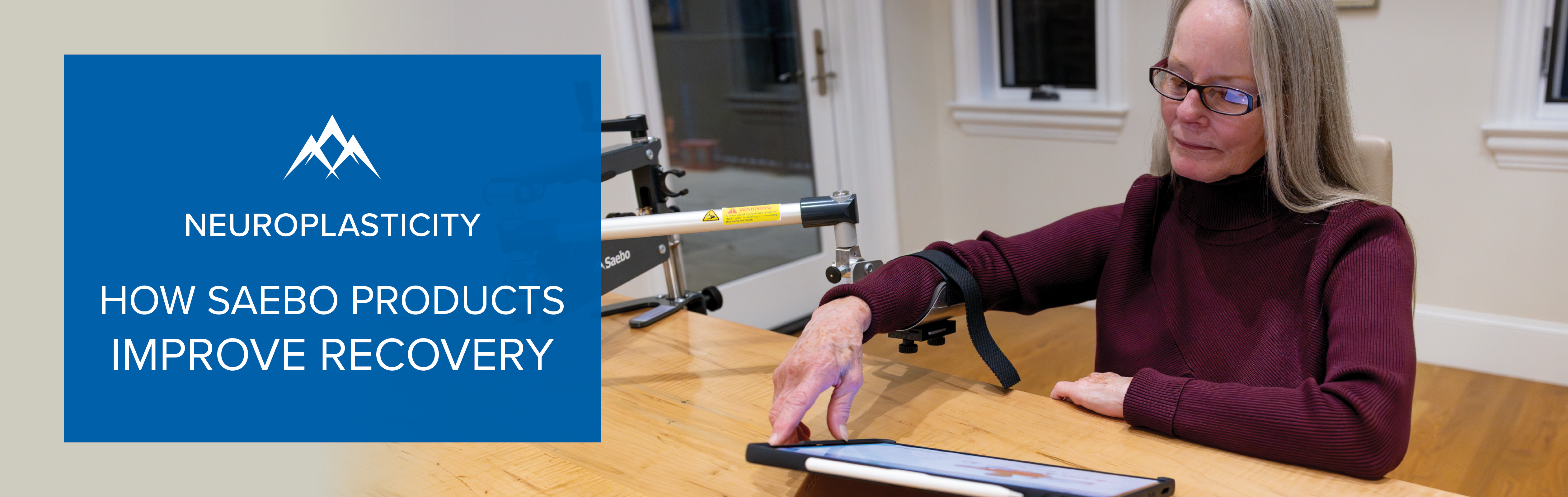
The SaeboMAS provides zero-gravity arm support that reduces the effects of gravity. This enables patients to practice reaching and functional tasks more often. An adjustable spring system allows the affected arm to move throughout all planes of movement. As functional strength improves, spring support decreases and continues challenging patients at appropriate levels.
SaeboStim Electrical Stimulation Devices
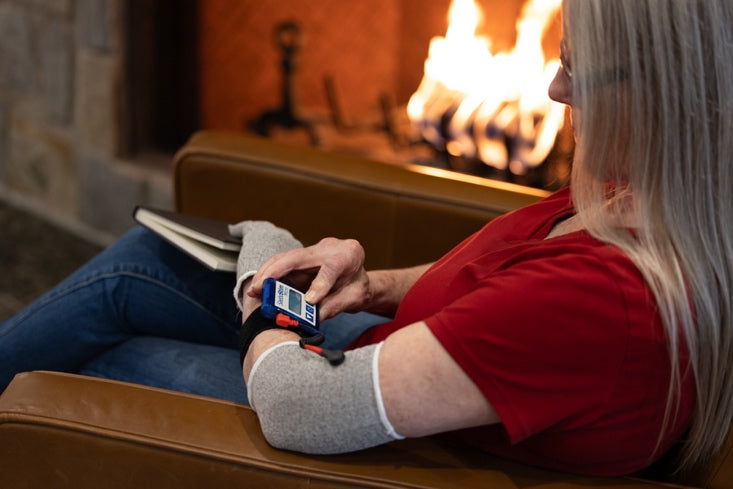
Saebo offers multiple stimulation devices – most commonly used are the SaeboStim Pro, SaeboStim Micro, and SaeboStim One. The SaeboStim Pro offers multiple forms of electrical stimulation, including neuromuscular electrical stimulation (NMES) and functional electrical stimulation (FES), which may help improve muscle activation, motor relearning, and functional movement after stroke. The built-in trigger button allows stimulation to be timed with specific movements like grasping a cup or to assist finger extension during object release. The SaeboStim Micro is sensory focused mesh glove ideal for targeting those with loss or fluctuations in sensation. Lastly, the SaeboStim One, is a low profile, simple to use NMES device that is ideal for home programs or independent use.
SaeboStretch Resting Hand Splint
The SaeboStretch uses flexible hand plates that accommodate changes in muscle tone. As spasticity increases, fingers move into flexion. As tone decreases, the splint guides fingers back into extension gently. Three interchangeable dynamic hand plates accommodate various levels of spasticity.
How Saebo Products Address Specific Recovery Needs
Supporting Hand Function and Finger Extension
Hemiplegic individuals struggle to open their hands due to paralysis. They need to strengthen extensor muscles through repeated hand-opening motions. The SaeboFlex and SaeboGlove step in to compensate for biomechanical disadvantages and allow prehension grasp and release activities. Task-specific training with these rehabilitation gloves improves upper extremity function in people with neurological injuries. Participants showed decreases in time to perform functional tasks and increases in blocks grasped and released during assessments.
Managing Spasticity and Muscle Tightness
The SaeboStretch's energy-storing technology lets people with spasticity stretch comfortably and safely. This results in increased motivation and compliance. Dynamic splints prevent contracture after stroke while reducing joint pain and protecting joints. The flexible design allows fingers to move through flexion caused by postural changes, then repositions them into extension gradually.
Treating Shoulder Subluxation and Pain
Shoulder subluxation affects up to 81% of stroke patients [2]. The SaeboMAS provides zero-gravity assistance that unweights the arm and reduces strain on weakened muscles. This promotes safer movement. Electrical stimulation strengthens deltoid muscles, the strongest proximal migrators. The humerus can then migrate upward back into the joint.
Improving Sensory Awareness and Feedback
The SaeboStim Micro provides low-level sensory stimulation without producing muscle contractions. This increases signals delivered to the brain. The cortex gets primed so more activation appears during therapy, which leads to improved sensory and motor recovery. Research shows that 50-80% of survivors experience sensory deficits after stroke [3]. Sensory stimulation becomes vital for motor function recovery.
Enabling Task-Specific Practice
Research suggests many stroke survivors do not receive enough high-repetition upper extremity practice during traditional therapy sessions to fully maximize neuroplastic recovery. Saebo products enable high-repetition functional training throughout the day. Stroke survivors can practice meaningful daily tasks like brushing teeth and using utensils while wearing devices that assist movement. High-repetition practice helps strengthen neural pathways through neuroplasticity, which is one of the foundational principles of modern stroke rehabilitation.
Maximizing Recovery with Saebo Products
Combining Multiple Products for Better Outcomes
Multiple symptoms require integrated approaches instead of single solutions. Patients with no hand function have improved when using the SaeboGlove with electrical stimulation. The electrodes attach to finger-closing muscles while the SaeboGlove fits over them, and the SaeboStim Pro's trigger button provides complete control during grasp and release. Pairing SaeboMAS with other devices supports arm weight during practice. This prevents fatigue and increases repetition counts.
Integrating Products into Daily Activities
Consistent daily rehabilitation is often more important than occasional high-intensity sessions. Many stroke survivors benefit from frequent, repetitive practice integrated into everyday activities and home exercise routines. You want to get hundreds of repetitions per day, spaced throughout your routine. SaeboMAS makes tasks like eating, computer work and grooming possible through zero-gravity support. This approach changes everyday activities into therapy sessions.
Setting Realistic Goals and Tracking Progress
Keep your milestones clear and practical using specific, measurable, achievable, relevant, and time-bound criteria. Think about a weekly planner, written diary or activity log to monitor improvements. Reflection helps you see where adjustments are needed and celebrate progress. Consistency trumps intensity. Regular daily practice with proper device selection drives neuroplasticity and lasting recovery.
Conclusion
Saebo rehabilitation products offer stroke survivors hope for improved arm and hand function. You create the conditions for neuroplastic recovery at the time you combine evidence-based tools like the SaeboFlex and SaeboGlove with consistent, task-specific practice. Without doubt, recovery just needs patience and dedication, but these devices make high-repetition training available throughout your day. Start with the right tool for your impairment level and practice regularly. Your independence will return gradually.
References
All content provided on this blog is for informational purposes only and is not intended to be a substitute for professional medical advice, diagnosis, or treatment. Always seek the advice of your physician or other qualified health providers with any questions you may have regarding a medical condition. If you think you may have a medical emergency, call your doctor or 911 immediately. Reliance on any information provided by the Saebo website is solely at your own risk.
