
How to Walk Again After Stroke: Walking Recovery Exercises, Gait Training, and Foot Drop Solutions
Walking problems are one of the most common challenges after stroke. As many as 80% of stroke survivors have trouble walking, and many require rehabilitation to regain safe and independent mobility [1]. While many survivors recover the ability to walk independently, many people have gait challenges long after their initial injury.
The good news is that walking recovery after stroke is possible. The first three to six months represent a critical period for recovery, when the brain is especially responsive to rehabilitation. During this time, targeted gait training, balance exercises, and strengthening activities can help improve walking ability and independence.
Stroke recovery largely occurs because of neuroplasticity—the brain's ability to reorganize itself and form new neural connections. Through repetitive, task-specific practice, stroke survivors can strengthen the neural pathways involved in standing, balance, and walking. This is why consistent gait training remains one of the most effective components of stroke rehabilitation.
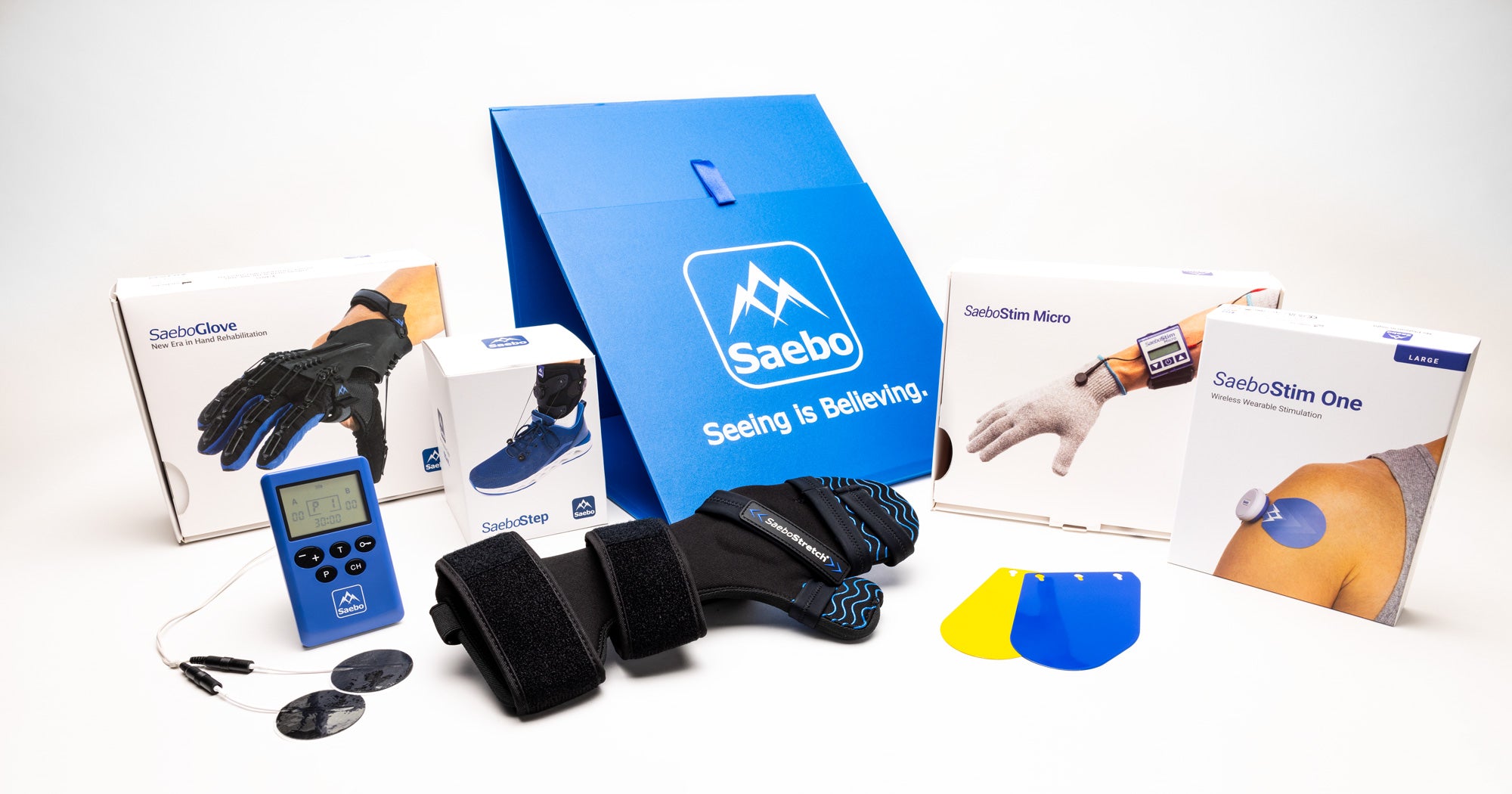
In this guide, you'll learn why walking becomes difficult after stroke, what recovery typically looks like, and some common exercises that can help improve gait, balance, and mobility. We'll also discuss assistive technologies such as SaeboStep, SaeboStim One, and SaeboStim Pro that may support your rehabilitation program.
Why Walking Becomes Difficult After Stroke
Common Gait Problems and Motor Impairments
Walking difficulties often occur because a stroke disrupts the communication pathways between the brain and the muscles responsible for movement. This can result in muscle weakness, impaired coordination, altered muscle tone, and abnormal movement patterns that affect walking efficiency and safety.
One of the most common impairments is hemiparesis, or weakness on one side of the body. A stroke affecting the right side of the brain often causes weakness on the left side of the body, while a stroke affecting the left side of the brain often causes weakness on the right side. This asymmetry frequently leads to uneven weight-bearing, reduced balance, and inefficient walking patterns.
Foot drop is another common cause of walking difficulty after stroke. It occurs when weakness or impaired motor control of the ankle dorsiflexor muscles prevents the front of the foot from lifting properly during walking. As a result, the toes may drag on the ground, increasing the risk of tripping and falls. Some survivors compensate by lifting their knee excessively high during walking, a pattern known as steppage gait.
Spatial neglect may also contribute to walking difficulties. This condition affects a person's awareness of one side of their environment and is most common after right hemisphere strokes. Survivors with neglect may lean, drift, or fail to recognize obstacles on one side while walking.
How Stroke Affects Balance and Coordination
Balance impairment affects nearly half of stroke survivors and is a major contributor to reduced mobility and fall risk. Weakness in the ankle dorsiflexors, knee extensors, and hip muscles can significantly impact stability during standing and walking.
Strokes involving the cerebellum can be particularly challenging because this area of the brain plays an important role in balance and coordination. Cerebellar strokes may cause ataxia, dizziness, impaired coordination, and difficulty maintaining a stable walking pattern.
Walking Recovery Timeline After Stroke
The first three to six months after stroke represent a critical period for motor recovery and walking rehabilitation. During this time, neuroplasticity is heightened, allowing the brain to adapt more efficiently in response to therapy and exercise.
Research suggests that up to 85% of stroke survivors regain independent walking within six months, although recovery timelines vary widely depending on stroke severity, balance, leg strength, cognition, and overall health [2].
Importantly, recovery does not stop after six months. While progress may occur more slowly, improvements in walking ability can continue for months or even years through consistent rehabilitation and practice.
Walking Recovery After Stroke: What to Expect
Walking recovery often occurs in stages. During the early stage, rehabilitation often focuses on sitting balance, standing tolerance, trunk control, and weight shifting.
As strength and stability improve, rehabilitation can then progress standing activities, then to stepping activities, gait training exercises, and dynamic balance work. In more advanced stages, therapy may focus on stair climbing, obstacle negotiation, uneven surfaces, community mobility, and dual-task walking challenges.
Understanding these stages can help set realistic expectations and encourage consistent participation in rehabilitation.
Pre-Gait Exercises to Build a Strong Foundation
Before practicing walking, it is important to build strength, balance, and postural control.
Seated Leg Strengthening Exercises
Seated exercises provide a safe starting point for gait retraining and help rebuild the lower extremity strength needed for walking recovery.
Useful exercises include:
- Seated marching
- Knee extensions
- Hip internal and external rotation
- Seated clamshells
- Inner thigh squeezes
- Seated heel raises
Additional stroke leg exercises such as heel slides, bridges, and seated ankle dorsiflexion exercises can further improve strength, motor control, and preparation for walking.
Sit-to-Stand Practice
Standing up independently is a foundational skill for walking.
Sit near the front edge of a chair with your feet positioned beneath your knees. Lean forward and push through your legs to stand. Pause briefly before slowly returning to sitting. Research shows that repetitive sit-to-stand training can improve lower extremity strength, weight-bearing symmetry, and functional mobility after stroke [3].
Standing Weight Shifts
Weight-shifting exercises improve standing balance, weight acceptance through the affected leg, and overall walking stability.
Stand with your feet shoulder-width apart and slowly shift your weight from one side to the other while maintaining an upright posture.
Balance and Core Stability Training
Core stability plays an important role in walking recovery. The trunk provides a stable base for leg movement and helps maintain balance during standing and walking.
Exercises that involve trunk flexion, extension, rotation, and weight shifting can improve postural control and gait performance.
Hip and Ankle Mobility Exercises
Adequate ankle mobility is essential for efficient walking.
One simple exercise involves standing on a step with the heel hanging slightly off the edge. Lower the heel until a stretch is felt in the calf and hold for 20 seconds before switching sides.
Gait Training Exercises to Improve Walking After Stroke
Once foundational strength and balance improve, gait training becomes the next step in stroke rehabilitation. At this stage, the goal is no longer just strength—it is retraining coordination, weight transfer, foot clearance, and walking efficiency through repetitive, task-specific movement.
These exercises help improve walking after stroke by targeting the key components of gait: single-leg balance, stepping symmetry, and dynamic stability.
What are the best gait training exercises after stroke?
The most effective gait training exercises are those that directly simulate components of walking. This includes marching, stepping, lateral movement, and obstacle negotiation. These movements help retrain the brain and body through neuroplasticity, which improves motor control over time.
Standing Marches (Single-Leg Control and Foot Clearance)
Standing marches are one of the most important early gait training exercises because they directly train hip flexor strength, foot clearance, and single-leg balance—all essential for walking after stroke.
Stand near a stable surface for support. Shift your weight onto one leg and slowly lift the opposite knee toward hip height. Pause briefly, then lower with control and alternate sides.
As control improves, reduce hand support or increase speed to further challenge balance and coordination during walking practice.
Forward Stepping Practice (Weight Transfer and Step Control)
Forward stepping retrains one of the most important components of walking: weight shifting from one leg to the other during gait.
Step forward with one foot while maintaining upright posture, then return to the starting position before repeating on the opposite side.
This exercise helps improve step initiation and symmetry, both of which are commonly affected after stroke. As ability improves, add visual targets or small obstacles to challenge foot clearance and stepping accuracy.
Side Stepping (Hip Stability and Balance Control)
Side stepping targets the hip abductors, which are responsible for stabilizing the pelvis during walking. Weakness in these muscles often contributes to compensatory gait patterns after stroke, including hip drop or trunk lean.
Step laterally in one direction, then bring the trailing leg underneath the body without letting the feet fully come together. Maintain an upright posture and controlled movement.
For progression, resistance bands can be placed around the knees to increase muscle activation and improve lateral stability during gait.
Step-Ups and Stair Training (Functional Walking Strength)
Step-ups bridge the gap between basic gait exercises and real-world walking ability.
Step onto a low platform with one foot, bring the opposite foot up, then step back down in a controlled manner. Focus on slow, symmetrical movement rather than speed.
This exercise improves functional leg strength, balance, and confidence during stair negotiation, which is a major component of community mobility after stroke. Gradually increase step height as strength improves.
Walking with Natural Arm Swing (Gait Efficiency and Coordination)
Arm swing plays an important but often overlooked role in walking recovery after stroke. Natural reciprocal arm movement helps improve balance, trunk rotation, and walking efficiency.
Practice walking while allowing the opposite arm to swing naturally with each step. If one arm is affected, focus on encouraging rhythmic movement to support overall gait symmetry.
Restoring arm swing can help improve stride length and reduce compensatory walking patterns.
Obstacle Training (Real-World Walking Ability)
Obstacle training challenges the ability to adapt walking patterns to real-life environments. This is a critical step in progressing toward independent community mobility after stroke.
Examples include:
- Walking over small objects to improve foot clearance
- Zig-zag walking around cones to train directional control
- Stepping onto low platforms to improve elevation control
- Walking along marked pathways to improve gait consistency
These tasks improve balance, reaction time, foot clearance, and confidence while walking in real-world settings.
How gait training improves walking after stroke
Gait training works because it repeatedly activates neural pathways involved in walking. Through neuroplasticity, the brain adapts by strengthening motor connections that support movement, balance, and coordination.
Consistent practice is key. Improvements in walking ability after stroke are strongly linked to repetition, task-specific training, and progressive challenge.
Foot Drop After Stroke: Treatment and Recovery Options
Foot drop is one of the most common gait impairments after stroke and can significantly affect walking safety and efficiency.
Treatment often involves a combination of:
- Strengthening exercises
- Gait training
- Functional electrical stimulation
- Ankle-foot orthoses (AFOs)
The appropriate intervention depends on the individual's strength, motor control, and rehabilitation goals.
Assistive Technology for Walking Recovery
Assistive devices can complement gait training by improving stability, mobility, and muscle activation.
SaeboStep for Foot Drop Management
For stroke survivors with foot drop, the SaeboStep provides a lightweight ankle-foot orthosis (AFO) solution designed to improve foot clearance, reduce tripping risk, and support safer walking during rehabilitation.
Its lightweight design works with a variety of shoe styles and allows users to adjust foot lift assistance as needed.
SaeboStim One and SaeboStim Pro for Muscle Activation
Neuromuscular electrical stimulation (NMES) can help facilitate muscle activation and support motor relearning after stroke.
The SaeboStim One delivers wireless electrical stimulation through a simple home-use program designed to promote muscle re-education and reduce disuse-related weakness.
The SaeboStim Pro combines NMES, TENS, sensory stimulation, and functional electrical stimulation capabilities in a single device. By pairing stimulation with movement, the device may help reinforce neural pathways through neuroplasticity and improve motor relearning during functional activities such as walking.
When to Use Walking Aids and Braces
Research suggests that ankle-foot orthoses can improve walking speed, endurance, and gait mechanics in individuals with foot drop after stroke [4].
Canes and walkers may also improve stability and confidence during walking, particularly for those with significant balance impairments.
A rehabilitation professional can help determine which assistive device is most appropriate based on your needs and goals.
Frequently Asked Questions About Walking Recovery After Stroke
Can you walk normally after a stroke?
Many stroke survivors regain independent walking through consistent rehabilitation. Recovery outcomes vary based on stroke severity, overall health, and participation in therapy.
How long does it take to walk again after a stroke?
Many improvements occur within the first three to six months after stroke, but recovery can continue for months or years with ongoing rehabilitation and practice.
Can walking improve years after a stroke?
Yes. Neuroplasticity continues throughout life, allowing stroke survivors to make meaningful gains in walking ability even years after their stroke.
What causes foot drop after stroke?
Foot drop occurs when weakness or impaired motor control prevents the ankle from lifting the front of the foot during walking, increasing the risk of tripping.
How often should I practice walking exercises?
Research supports frequent, repetitive, task-specific practice. Your rehabilitation team can help determine the safest and most effective exercise program for your situation.
Conclusion
Walking recovery after stroke is a gradual process that requires patience, consistency, and repetition. By building strength through pre-gait exercises, progressing to gait training activities, and addressing challenges such as balance deficits and foot drop, many stroke survivors can improve mobility and regain independence.
The first few months after stroke are especially important, but meaningful recovery can continue long after that initial period. Every repetition strengthens the neural pathways involved in walking and supports ongoing recovery through neuroplasticity.
When combined with a comprehensive rehabilitation program, assistive technologies such as SaeboStep, SaeboStim One, and SaeboStim Pro may provide additional support for improving walking ability, confidence, and participation in daily life.
References
All content provided on this blog is for informational purposes only and is not intended to be a substitute for professional medical advice, diagnosis, or treatment. Always seek the advice of your physician or other qualified health providers with any questions you may have regarding a medical condition. If you think you may have a medical emergency, call your doctor or 911 immediately. Reliance on any information provided by the Saebo website is solely at your own risk.
